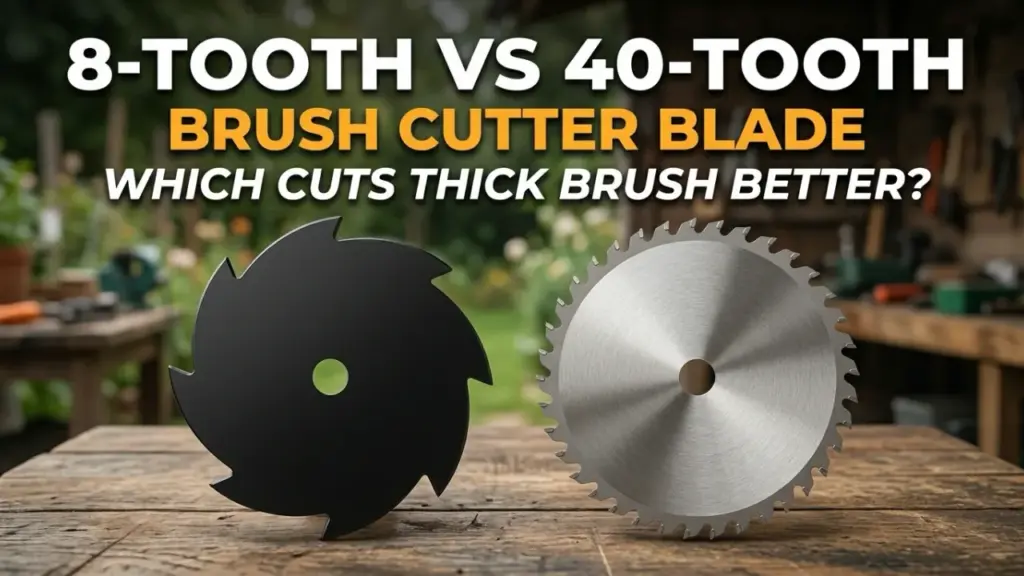
Switching out the blade on a circular saw can make it feel like a completely new machine. One blade throws chips all over the place and leaves fuzzy edges. Another cuts smoothly, quietly, and leaves plywood surfaces so clean you can skip a sanding step. Yet it’s the same saw. And you’re cutting the same wood. The only difference? Tooth count.
That little number on the side of the blade affects more than most people realize. Tooth count changes how fast you can cut. The quality of the finish. Chip removal. Heat buildup and even how hard your saw motor works while cutting. A ripping blade is surprisingly different from those meant for clean work on plywood or hardwood.
In this guide, we explain how circular saw blade tooth count has such a dramatic impact on actual cutting performance.
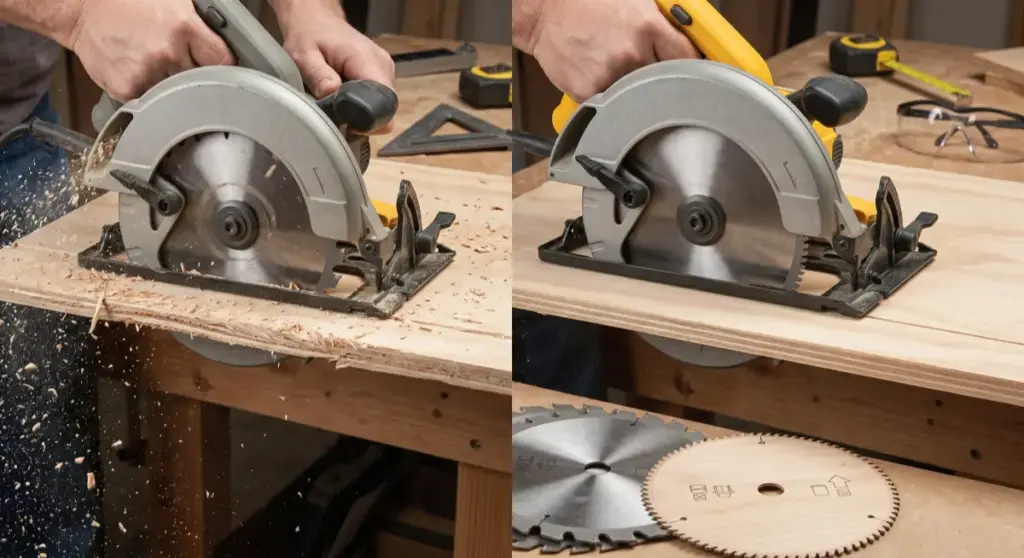
Table of Contents
- Circular Saw Blade Tooth Count Explained
- Why Do Fewer Teeth Cut Faster?
- Why Do Higher Tooth Counts Create Smoother Cuts?
- 24T vs 40T vs 60T Circular Saw Blades: What’s the Real Difference?
- How Tooth Count Affects Ripping Cuts
- How Tooth Count Affects Finish Quality
- What Tooth Count Works Best for Plywood and Hardwood?
- Common Circular Saw Blade Tooth Count Mistakes
- FAQs About Circular Saw Blade Tooth Counts
- Conclusion
Circular Saw Blade Tooth Count Explained
The tooth count of a circular saw blade simply refers to how many teeth there are around the circumference of the blade. However, it greatly affects the feel of the saw more than most realize. It’s noticeable as soon as you pick up the saw. Some blades really bite into the wood and eject chips aggressively. Others operate more smoothly and quietly, seeming as if they’re gliding through the cut instead of chewing it up.
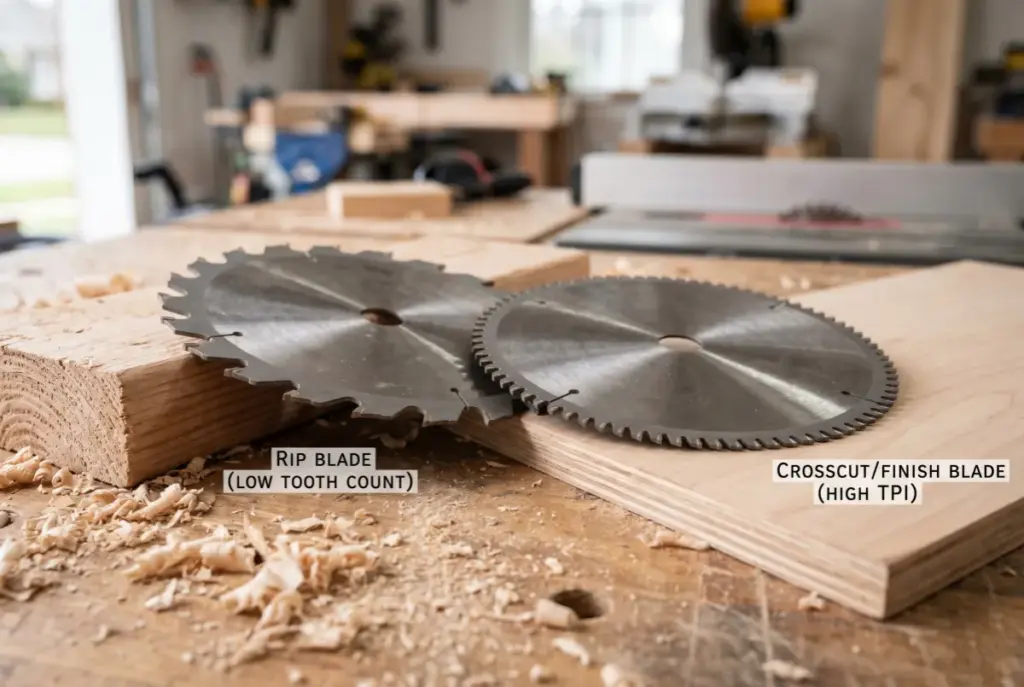
Remember, every tooth strikes the workpiece thousands of times per minute. The lower the tooth count, the larger each tooth’s bite will be. This means faster material removal and less feed pressure. Low tooth-count blades typically feature a high positive hook angle. This design excels at making long rip cuts and tearing through rough framing lumber. On the other hand, blades with more teeth utilize a lower hook angle. This distributes the cutting workload, resulting in a clean, tear-free finish on delicate plywood and hardwood.
Spacing between teeth affects the feel of the saw as well. Teeth with wider spacing (meaning more space in the gullets) clear sawdust quicker and help prevent gumming up when ripping aggressively. Tighter tooth spacing usually produces cleaner cuts, although higher tooth counts can also create more friction and heat during long cuts. Some premium blades use laser-cut expansion slots to help reduce vibration and noise during long cuts. This action allows the blade to run cooler longer.
Why Do Fewer Teeth Cut Faster?
Each tooth removes more material per pass. A 24T blade doesn’t gently shave material as most finish blades do. It guts it out. You can tell the difference as soon as you pick it up. The blade pulls through framing lumber like it’s butter. Chips fly. And it feeds smoothly, without that grain-binding hesitation you get from high-tooth blades.
That’s why 24T blades are common for framing and rough carpentry work. They release sawdust faster and stay clean on long rip cuts. Deck boards, construction 2×4s, and sheathing don’t need a smooth finish edge. In this case, speed is king.
However, you pay for that power. The resulting cut will be rougher. Splinters galore. Tear-out city. Run a low-tooth blade across veneered plywood, and chipped edges are almost guaranteed. Good for those hidden inside cuts on your framing jobs. Not so much for that furniture or cabinet work.
Why Do Higher Tooth Counts Create Smoother Cuts?
More teeth means more points of contact on the workpiece. Instead of carving out large slices of material, the blade sheds smaller amounts of material with every revolution. The cut itself also feels smoother. There’s less grabbing. Less vibration. The edge also comes out cleaner on plywood or hardwood, rather than appearing chewed up at the corners.
It’s no surprise then that 60T blades are popular for cabinetmaking, trim work, shelving, and even veneered plywood. The additional teeth leave smaller kerf marks while minimizing splintering across the top and bottom of the sheet. 80T and 100T blades start to feel more like a finish-cutting tool than a rough-cutting saw blade. Some fine-finish TCT (Tungsten Carbide Tipped) saw blades offer tooth counts up to 120T for ultra-clean cuts in plywood, MDF, laminate sheet goods, and other materials that chip easily.
The trade-off with more teeth is speed. Because there are more teeth in contact with the material, your blade is creating more friction as it moves. Push too hard or fast, and you’ll build up heat quickly. Once heat builds up, resin and pitch can start sticking to the teeth. Laser-cut expansion slots can help reduce heat and vibration during long finish-cutting jobs.
24T vs 40T vs 60T Circular Saw Blades: What’s the Real Difference?
Quick Answer: Fewer teeth (24T) cut faster but produce rougher edges, while higher tooth counts (60T) cut slower but deliver smoother finishes. A 40T blade is the best all-purpose option for most woodworking tasks.
When choosing the right circular saw blade, many people assume that more teeth automatically means a better blade. This is not true. While a 24T blade, a 40T blade, and a 60T blade can all be used to cut many of the same materials, each of these blades cuts differently due to their unique tooth configurations. You’ll see quickly after cutting with each of them. You can even hear the difference while cutting. The feed rate will change. Even the sawdust type will vary between cuts.
For a quick reference, check out the comparison table below:
| Tooth Count | Speed | Cut Finish | Hook Angle | Best Applications |
|---|---|---|---|---|
| 24T | Fastest | Rough finish | High positive | Framing lumber, rip cuts |
| 40T | Balanced | Medium finish | Moderate positive | General woodworking, crosscuts |
| 60T | Slower | Smooth finish | Low or neutral | Plywood, trim, finish work |
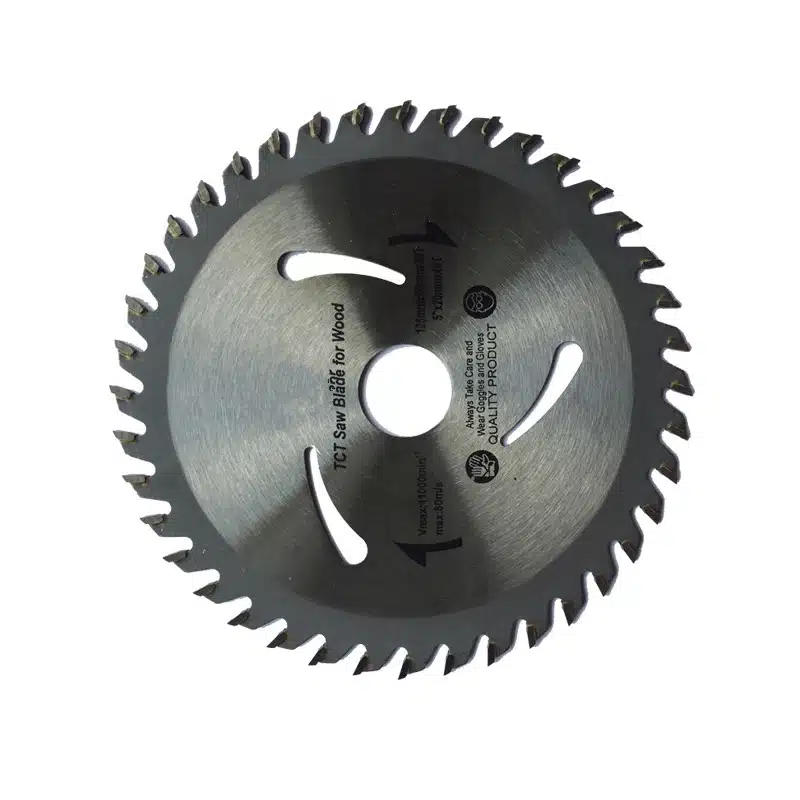
24T blades are designed for speed. They cut aggressively and have larger chip capacity due to their large gullets. Expect this blade to rip through framing lumber effortlessly and throw shavings quickly. This is the ideal choice when making rough cuts for carpentry, deck framing, and long rip cuts that won’t need to look pretty down the road.
40T blades offer a balanced middle ground. They won’t bite as aggressively as a 24T, but they won’t feel as slow as a 60T. This is the reason many woodworkers leave a 40T blade on their saw day in and day out. It’s great for ripping. Good for crosscuts. Versatile enough that you won’t feel pressured to change blades after every cut.
Switching to a 60T will slow you down. However, your cut quality will improve drastically. Get cleaner edges when cutting plywood. Reduce tear-out. Make smoother crosscuts on hardwood and trim pieces. Higher tooth counts on fine-finish TCT blades excel at these types of cuts, particularly on furniture-grade plywood and laminated stock.
How Tooth Count Affects Ripping Cuts
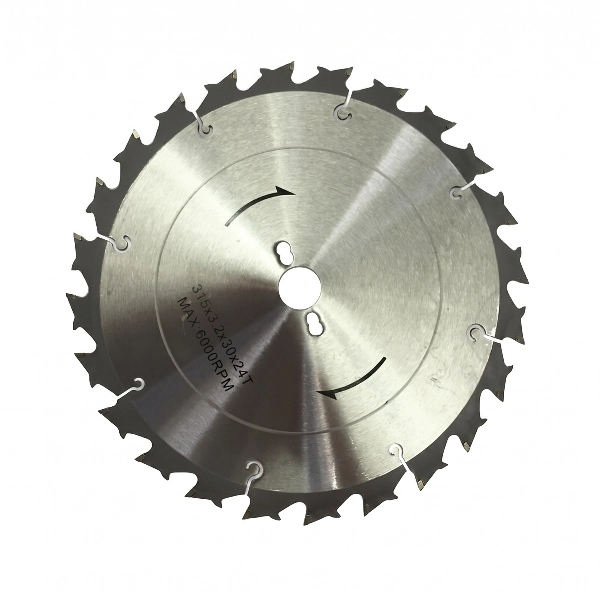
Ripping cuts benefit from lower tooth counts. Cutting with the grain of wood causes big, thick chips. Those chips have to go somewhere. They need room to escape quickly, or heat will build up, and the saw will bind. That’s why rip blades have such an aggressive look compared to finish blades. Notice how there are fewer teeth. Bigger gullets. More space between each tooth. The design of the blade focuses on removing material quickly over producing a perfectly smooth edge.
When you rip with the grain of wood, the teeth cause long strands of wood to separate. They don’t make the fine dust you get when cutting across the grain. Big chips equal wide spaces between teeth. Low tooth count blades are designed to allow those chips to clear quickly. This design helps prevent friction and excess heat buildup. That’s why most ripping blades have 24T–40T teeth. They also feed faster and allow the saw to run cooler on long, boring cuts through thick lumber and boards.
Extremely high tooth counts generally perform worse during long rip cuts. The saw feels like it’s dragging because chips can’t be ejected fast enough. Heat builds up. Your feed rate decreases. You may even notice some burning along the edge of your cut. This is why lower tooth count, thin-kerf blades are preferred for faster ripping on portable saws.
How Tooth Count Affects Finish Quality
A higher tooth count leaves a smoother cut because more teeth are cutting the material simultaneously, rather than ripping chunks out of the wood. The difference is most noticeable on finished surfaces. Cabinet panels, trim work, shelving, and hardwood floors won’t forgive you if you use rough blades.
A low-tooth framing blade will leave fuzzy edges and chipped corners that are tedious to clean up. Using a finer 60T or 80T blade leaves smoother cut edges and smaller tooth marks, so there’s much less sanding required after the cuts.
Thin sheet materials are prone to chipping because their surface layers are quite delicate and brittle. Often, you’ll see plywood veneer splinter around the edges right after cutting. MDF will fray. Melamine and laminate coatings can crack if the blade attacks too quickly. That’s why tooth count is so important for finish work.
More teeth allow smaller amounts of material to be removed with each pass. You’ll have an overall cleaner surface with less potential for messed-up edges. For plywood, MDF, and laminate, 60T–120T finish blades usually produce the cleanest edges.
What Tooth Count Works Best for Plywood and Hardwood?
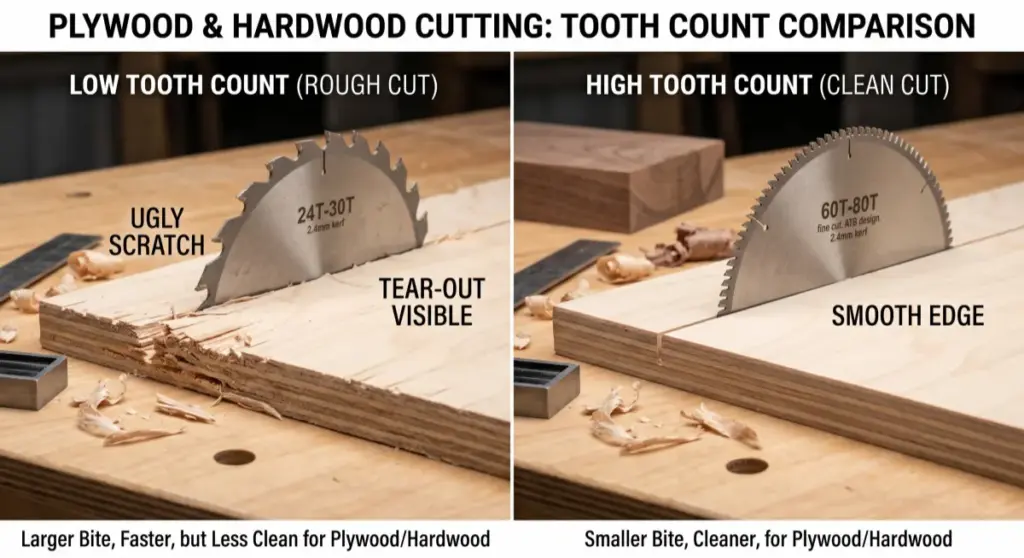
As a general rule, plywood and hardwood cut much cleaner if you use medium- or high-tooth-count blades. Their surfaces splinter much more easily than framing lumber. Cabinet plywood or a walnut tabletop are good examples. A single ugly scratch across the edge can ruin the piece in seconds. More teeth create a smaller, cleaner bite into the wood. That cuts down on tear-out and leaves less sanding work for you in the end. Blade geometry factors into this as well. ATB designs leave much cleaner cuts through wood fibers without tearing them.
Recommended Tooth Counts for Plywood
Blades in the range of 60T–80T work well with plywood, MDF, laminated boards, veneered panels, and other similar materials. The thin outer veneers tend to chip easily when you make a cut. A higher tooth count produces a smoother shearing action that preserves the integrity of the veneer face. It also prevents fuzzy or rough edges on MDF.
Finish blades designed specifically for cutting plywood often use ATB or high-ATB tooth designs. This maximizes clean cuts while minimizing splintering.
Recommended Tooth Counts for Hardwood
Hardwoods like oak, walnut, maple, birch, ash, mahogany, cherry, and similar species typically do best when using blades from 40T to 60T. That range allows you to cut smoothly without feeding the saw so slowly that you dread making long cuts. Dense hardwood species create more resistance as you cut. A cleaner tooth pattern reduces burning on the wood edge.
TCT saw blades featuring laser-cut anti-vibration slots are great for woodworking and fine hardwood cuts. The specially designed slots help dampen vibration, while the ATB tooth pattern delivers clean cuts on prefinished hardwoods and exotic wood.
Common Circular Saw Blade Tooth Count Mistakes
The wrong blade can take your beautiful plywood and create a wall of splinters or cause your framing cut to feel like you’re cutting through wet concrete.
Using Low-Tooth Blades for Finish Materials
Low tooth count is not your friend when cutting melamine, veneered plywood, or laminated materials. Chipping along the top edge happens because large teeth tend to rip apart fibers rather than slice through them cleanly. The result is often extra sanding, edge-trimming, or material waste. That’s why we recommend a TCT saw blade for general wood cutting, with 80T–120T tooth counts. Finer tooth counts dramatically decrease splintering and edge damage on laminate, melamine finishes, or glossy panels.
Using Fine-Tooth Blades for Heavy Ripping Cuts
Just as too few teeth can cause chipping on fine surfaces, too many teeth create massive problems with heavy stock. A high-tooth-count blade will build up excessive friction and heat while making long rip cuts. Instead of kicking chips out of the cut, the blade will begin packing sawdust into the gullets. This plugs up the blade, which slows your feed rate and forces your motor to strain. You’ll feel it in your hands when the saw feels like it’s fighting back against you. Fine-finish blades are great for detail work, but they’re awful for aggressive cutting.
Can One Tooth Count Handle Every Cutting Task?
While one blade can get you through many tasks adequately, you’ll never be perfect at everything. That’s why most woodworkers keep a 40T blade around. They’re great all-around performers because they balance ripping speed with cross-cutting smoothness. You get an adequate feed rate without massively rough boards. However, pros typically swap to different blade types to maintain optimal quality from material to material. Look for a TCT saw blade designed for ripping and cross cutting. It gives you the best of both worlds when changing blades every few minutes isn’t practical.
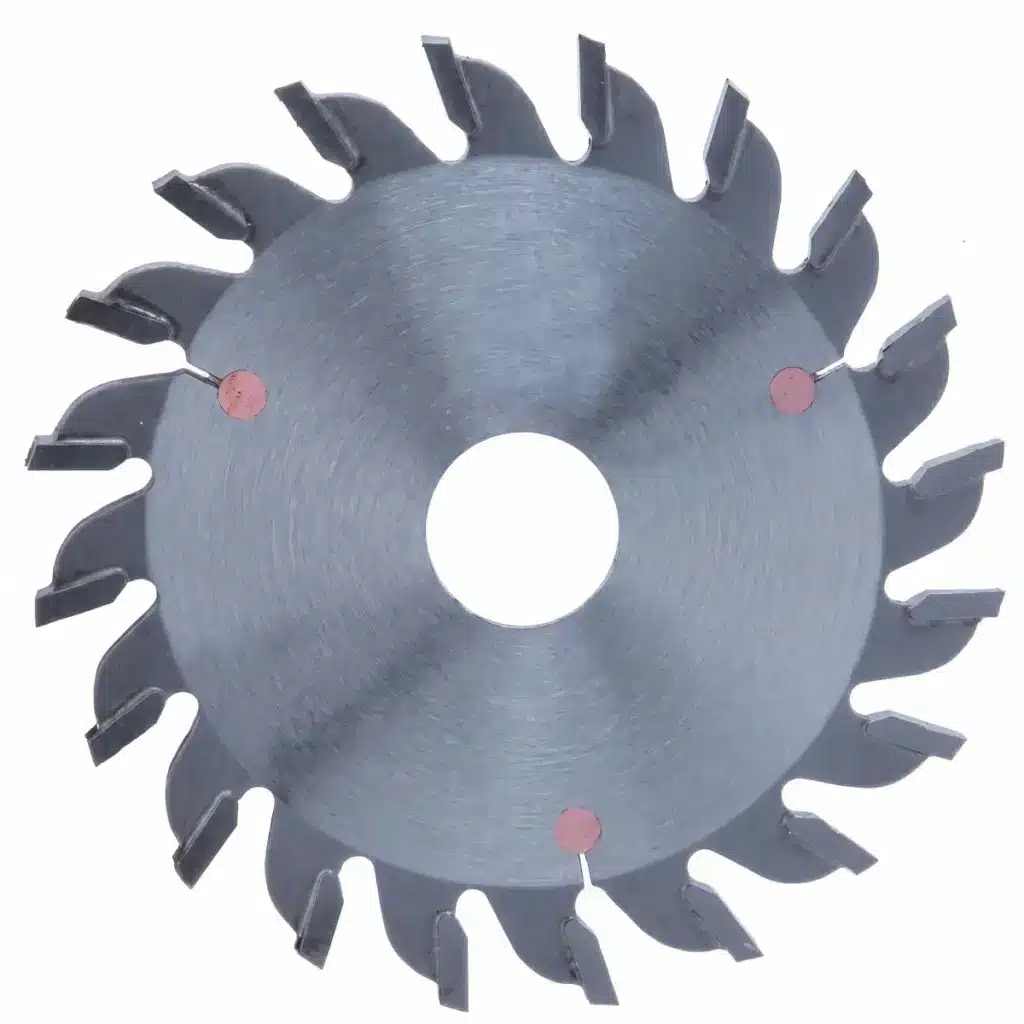
FAQs About Circular Saw Blade Tooth Counts
Not necessarily. More teeth produce cleaner cuts, but they also decrease your blade’s speed and increase heat buildup. High-tooth-count blades cut beautifully through plywood or trim, but that same blade will murder your hands trying to rip framing lumber. The saw might even bog down halfway through the cut as the small gullets struggle to clear chips.
40T is perfectly adequate for the average user. It rips acceptably and produces clean enough crosscuts for day-to-day tasks, all without forcing you to own dozens of specialized blades. The ubiquity of combination blades is a testament to their broad utility in the home workshop.
Technically, yes, but unless you’re attacking really thin boards, you’re likely to run into problems. Expect the cut to feel sluggish, the blade to run hotter than normal, and copious sawdust buildup inside the kerf. Performing long rip cuts in softwood can even begin to burn the wood if you reduce the feed rate too much.
Typically, it’s friction. Whether from a dull blade, wrong tooth count, dirty teeth, or simply moving the saw too slowly, too much heat builds up and begins to scorch the edges of hardwood and plywood. Debris buildup, like resin, only accelerates the issue.
For plywood, 60T–80T blades usually produce the cleanest cuts. Higher tooth counts reduce splintering and leave smoother edges by slicing through veneer layers more cleanly.
There is no single “best” tooth count, as it depends on the type of cut you need. Lower tooth counts (24T–30T) are best for fast rip cuts, while higher tooth counts (60T–80T) are better for smooth crosscuts and finish work. A 40T–50T blade is often used as a general-purpose option.
Conclusion
When you learn to care about tooth count, half of your cutting problems become clearer. That plywood that always burned. The hardwood that melted halfway through cutting. The saw always felt like it was laboring for no good reason. Nine times out of ten, the blade you were using was incorrect for the job.
A 24T blade will fit the exact same saw as a 60T, but they act like entirely different saws. One is designed to go fast. The other is designed to leave a cleaner edge. Learning which blade to use when saves time, material, and frankly, just makes your saw feel better to use.