Step into nearly any shop after making a bad cut, and you’ll know it. Plywood edges are chipped. Hardwood edges are burned. The saw vibrates like crazy during what should be a simple rip cut, and all of a sudden, the job you’re working on feels more difficult than it needs to be. Most people blame the saw. Most of the time, it’s the blade’s fault.
Circular saw blades can make or break how a cut feels, looks, and even sounds. Some spin right through framing lumber but leave rough edges behind. Others might cut slowly but leave plywood finished right off the saw. This guide will help you figure out the best circular saw blade for your specific projects.

Table of Contents
- Quick Guide: Choose the Right Circular Saw Blade
- What Should You Consider Before Choosing a Circular Saw Blade?
- What Circular Saw Blade Works Best for Wood?
- What Circular Saw Blade Should You Use for Common Projects?
- How Does Tooth Count Affect Circular Saw Performance?
- How Do You Choose the Right Circular Saw Blade Size?
- Which Blade Features Actually Matter in Real-World Cutting?
- What Mistakes Should You Avoid When Choosing a Circular Saw Blade?
- FAQs About Choosing the Right Circular Saw Blade
- Conclusion
Quick Guide: Choose the Right Circular Saw Blade
To choose the right circular saw blade, match the blade to the material you’re cutting, the finish quality you need, and your saw’s specifications.
- Use 24T–30T blades for framing lumber and fast rip cuts.
- Use 40T combination blades for general DIY projects.
- Use 60T–100T blades for plywood, veneer, MDF, and finish work.
- Choose ATB teeth for cleaner wood cuts.
- Choose TCG teeth for aluminum and other non-ferrous metals.
- Make sure the blade diameter, arbor size, and RPM rating match your saw.
- For cordless saws, consider a thin-kerf blade to reduce motor strain.
Choosing the best circular saw blade type depends on the material, desired cut quality, and whether speed or finish is the priority.
What Should You Consider Before Choosing a Circular Saw Blade?
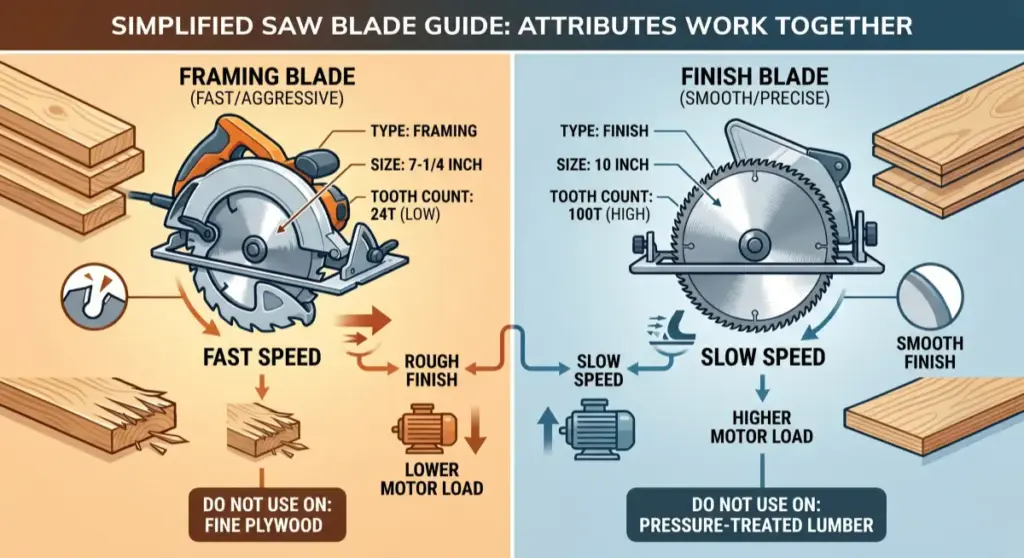
Before you go buying a circular saw blade, ask yourself four questions. What are you cutting? How clean do you want the cuts to be? What size blade will fit my saw? Are you looking for speed or clean cuts? Those questions will guide you through the rest of your decisions when picking out a circular saw blade. A ripping blade will tear through 2×4s, but rough up the edges of your plywood. A finish blade will leave pretty cuts, but stutter along on heavy rip cuts.
What Are You Cutting?
Materials react differently to a saw blade. Chip-out is common when cutting plywood and melamine. Many woodworkers prefer ATB blades when cutting plywood, veneer, and other sheet goods because they reduce tear-out and leave cleaner edges. MDF and laminate dull blades quickly because of their density and abrasiveness. Metals like aluminum generate more heat when cutting. Non-ferrous metal cutting blades often use TCG tooth geometries to deal with excess heat.
Cutting softwood framing lumber is easy. In framing lumber, cutting speed is often more important than achieving furniture-grade cut quality. Framing blades often include anti-kickback shoulders and fewer teeth. The deeper gullets clear sawdust fast and keep the blade from binding.
Do You Need Speed or a Cleaner Finish?
Some cuts need to happen quickly, while others require cleaner edges. Understanding what you want to accomplish changes your blade choice right away. A 24T framing blade is going to cut aggressively. It’s ideal for deck building or rough carpentry work. A higher tooth count will cut slower but leave smoother finished edges on things like cabinet work, laminate floors, and veneered plywood.

Does Size Matter?
Size always matters. Larger blades cut deeper and can have more power behind them. Standard 7-1/4-inch blades are ideal for the average DIYer’s framing or finish work. Smaller blades are lighter and easier to manage in tighter areas. Bigger blades are great for thicker stock and cutting faster for production work. Your saw will also work harder if your blade is too big. Or not deep enough.
Is Your Saw Compatible with the Blade?
The blade diameter, arbor size, and RPM rating must line up with your saw. If you’re buying a circular saw blade for your cordless saw, it’s also ideal to choose a thin-kerf option. Thin kerf blades cut less material from your stock. Leaving less strain on the motor while cutting longer lengths.
What Circular Saw Blade Works Best for Wood?
There is rarely a one-size-fits-all “best” circular saw blade for woodworking. The fastest blade for cutting framing lumber can leave rough, chipped edges in plywood. A finer blade that slices cleanly through veneered panels might feel excruciatingly slow when cutting dimensional lumber. Here’s a look at the best circular saw blade for wood, depending on what you’re cutting.
Here is a quick reference table to get you started:
| Material | Recommended Tooth Count | Blade Type | Key Result |
|---|---|---|---|
| Framing lumber / softwood | 24T–30T | Framing / ripping blade | Fast cuts, efficient material removal |
| Hardwood | 40T–60T | ATB blade | Balanced speed with cleaner edges |
| Plywood / veneer | 60T–100T | Fine finish blade (ATB / Hi-ATB) | Smooth cuts, minimal tear-out |
| MDF / laminate | 60T–80T (up to 120T for cabinet work) | High-tooth finish blade | Cleaner edges, reduced chipping |
| General DIY / mixed use | ~40T | Combination blade | Balanced performance for most tasks |
Best Circular Saw Blade for Cutting Framing Lumber
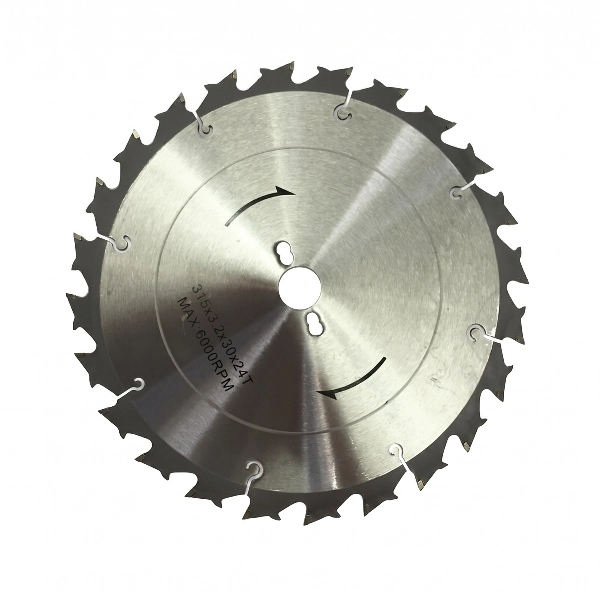
Construction speed is key when cutting framing lumber. Professional carpenters and builders often reach for 24T ripping or framing blades with deep gullets. Their aggressive tooth pattern and ample gullet space clear sawdust faster during long rip cuts. Cutting decking, plywood sheathing, and other heavy carpentry work benefits from those speedy setups. Many construction-style blades also feature anti-kickback shoulder designs for safer cuts.
Best Circular Saw Blade for Cutting Hardwood
Hardwood won’t be as forgiving as softwood if you choose the wrong blade. Dense wood species generate more heat and saw resistance during crosscuts. Carbide-tipped ATB blades remain sharper longer and leave smoother finished edges on hardwood. Cutting exotic hardwoods more slowly also helps prevent burning and reduces vibration.
Best Circular Saw Blade for Cutting Plywood and Veneers
Plywood and veneered surfaces are prone to splintering along the top cut edge. Boards sliced with high-tooth-count ATB blades tend to have less tear-out. Fine-pitch teeth slice through wood fibers instead of ripping through them. This is why many woodworkers use 60T to 100T finish blades when cutting cabinet parts. Shelves, molding, and furniture panels often have visible edges that need to look nice.
Best Circular Saw Blade for Cutting MDF and Laminate
MDF board, HDF, and laminate flooring will dull your saw blade faster. Those materials are abrasive and wear carbide faster than solid wood. They also chip and splinter easily on finished surfaces. To help limit chipping, woodworkers often use 60T-80T with ATB or high-ATB tooth geometry. The higher tooth count lets you make much cleaner cuts through melamine boards. Even though they cut slower, finishing blades leave a nicer edge on laminate and wood panels.
What Circular Saw Blade Should You Use for Common Projects?
Best Saw Blade for Deck Building
Because deck building is often about speed rather than high-quality finishes, 24T framing blades excel at rough cuts through pressure-treated lumber. Their deep gullets efficiently evacuate wet chips while maintaining saw speed during extended rip cuts. Framing and ripping blades are common for joists, decking, and other rough carpentry work outside.
Best Saw Blade for Cabinet Installation
Cabinets require clean cuts with good control over the edge quality. Installers often use 60T to 100T finish blades for plywood, veneer, and melamine because the extra teeth mean less tear-out on finished surfaces. ATB and high-ATB tooth design can also improve the finish straight out of the saw.
Best Saw Blade for Flooring Projects
Laminate flooring and engineered hardwood both chip easily, leaving messy or damaged edges. Higher tooth-count blades with a laminate-friendly tooth design make cleaner seams and less splintering during installation. Trying to use a rough framing blade on laminate will likely cause noticeable edge damage that will be hard or impossible to cover up.
Best Saw Blade for DIY Renovation Work
When working with a variety of materials or making a lot of crosscuts and rip cuts, a 40T combination blade offers versatility. It won’t excel with plywood or leave you with fine finish cuts, but it can handle both reasonably well. Having to change blades constantly can really slow down a project.
Best Saw Blade for Cutting Aluminum
Unlike wood, aluminum requires specialized blade geometry and tooth design to cut efficiently. TCG aluminum blades utilize high tooth counts with specific tooth angles to limit heat build-up. They also help to avoid burrs on the cut edge and prevent softer metals from gumming up the blade during longer cuts.
How Does Tooth Count Affect Circular Saw Performance?
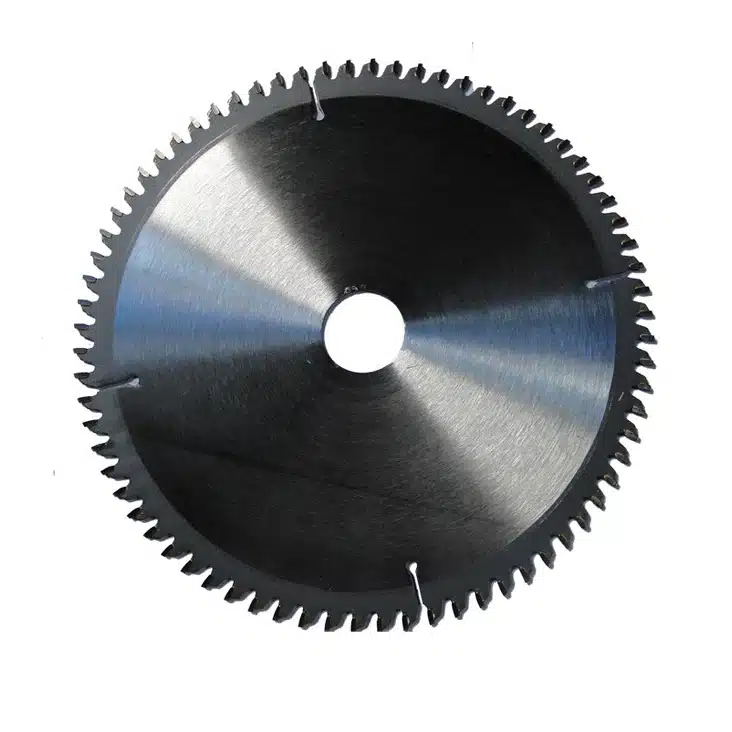
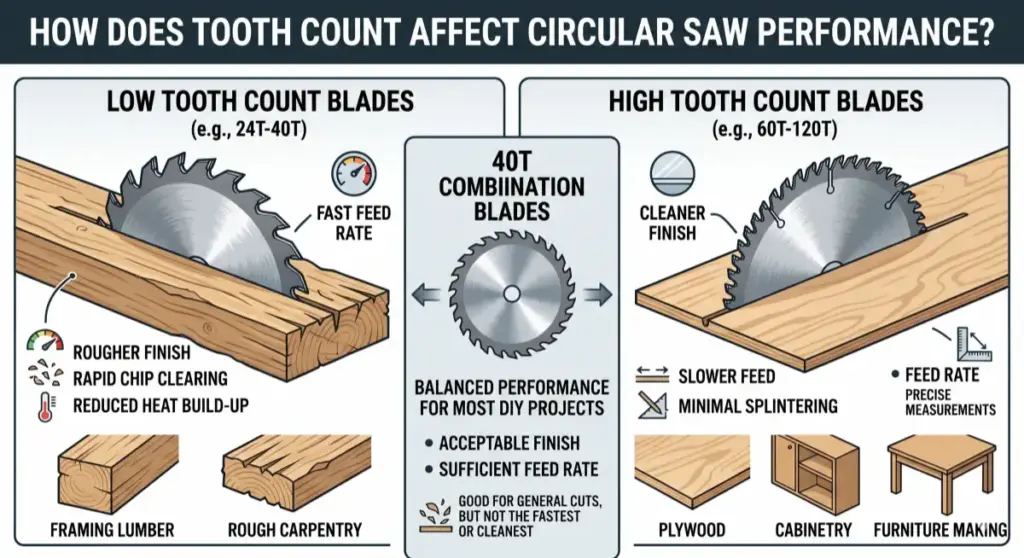
Tooth count affects a blade’s cutting action, feed rate, and appearance of the cut edge. As the tooth count decreases, feed rate typically increases, but the finish quality decreases. Conversely, higher tooth count blades will typically cut slower but provide a cleaner finished edge. Tooth geometry also affects chip gullet size. Larger chip gullets allow for quicker clearing of sawdust, which reduces heat build-up when ripping aggressively.
24T-40T blades focus on fast feed rates enabled by their deep gullets that evacuate chips quickly, preventing the blade from spending excess energy cycling packed-in sawdust during the cut. These blades are ideal for cutting framing lumber, rough carpentry work, decking, and making long rip cuts. Rip and combo multi-rip blades often use aggressive tooth angles as well for increased feed rates when building.
60T-120T blades remove less material per tooth. Less material removal translates to smoother cuts with minimal splintering. Clean-cut edges are important when working with materials like plywood, laminate flooring, melamine, MDF, and decorative molded panels, where chipped edges are difficult or impossible to repair. Because of this, high-tooth-count blades are often used for finish work in cabinetry and furniture.
A 40T combination blade is all you will need for the majority of DIY projects. The reason is that it allows sufficient feed rates while still leaving an acceptable finish behind. However, it will never cut as quickly as a framing blade when ripping lumber. It also won’t produce as clean an edge in plywood as a high-tooth-count finish blade. Keep in mind that extremely high tooth count blades may produce excess friction. This can lead to burn marks or resin buildup during heavy cutting jobs.
How Do You Choose the Right Circular Saw Blade Size?
Choosing a blade size has implications beyond cutting depth. It impacts the feel of how steady the saw is during cuts, places less or more strain on the motor, and limits or expands the types of material you can cut quickly and efficiently. A blade that’s perfect for framing work may feel cumbersome with trim. Meanwhile, using a small blade on thick stock will bog down quickly.
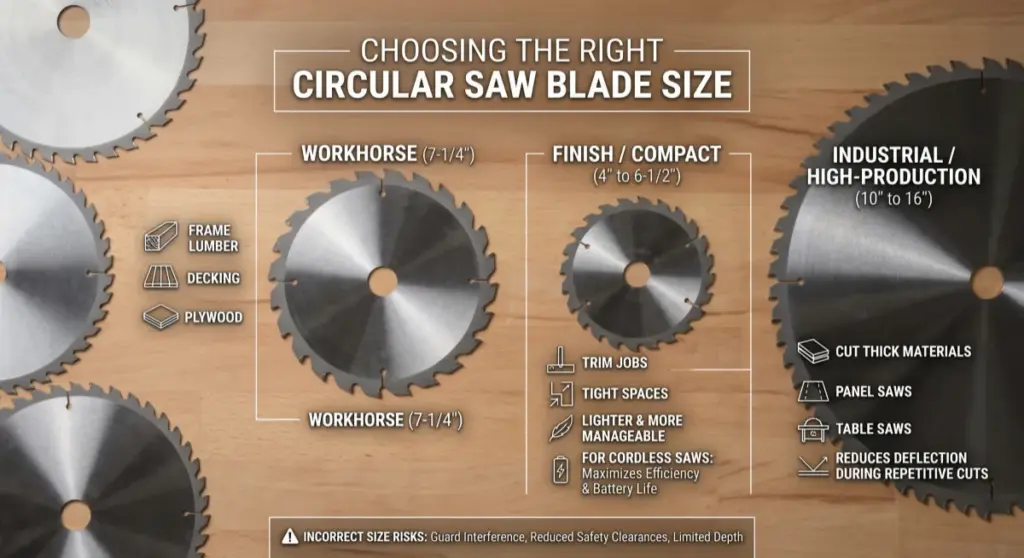
7 1/4” circular saw blades are the workhorse of jobsite construction because they offer the right balance of portability, cutting depth, and versatility. Most handheld circular saws come with 7 1/4” blades because they are ideal for framing lumber, decking, plywood, and construction work in general without feeling bulky.
Blades that measure between 4” and 6 1/2” tend to be preferred in smaller saws and for tight spaces. Smaller blades tend to feel lighter and more manageable during trim jobs. These blades are especially beneficial for cordless saws, as their smaller size places significantly less rotational load on the motor, maximizing both efficiency and battery life.
Bigger blades become more useful when running production jobs. Many industrial blade sizes range from 10” to 16”. These blades are used frequently in panel saws, table saws, and other high-production woodworking applications. This is because they cut through thicker material and help reduce deflection during repetitive cutting.
Incorrect blade sizes can cause immediate issues. While a smaller blade will limit your cutting depth, an oversized blade may interfere with the guard, reduce safety clearances, and create dangerously unstable operating conditions.
Which Blade Features Actually Matter in Real-World Cutting?
Put simply, the features that make a difference are the ones you feel when cutting. A blade may look nice on the package, but if it buckles or buzzes through plywood or kills your cordless saw’s charge after ten minutes, marketing brochures won’t help you. Kerf size, tooth design, hook angle, carbide longevity, and vibration damping all affect how your saw feels when cutting into actual wood.
Thin-kerf blades cut away less wood, so your saw doesn’t labor as hard to make the cut. This is why they’re usually recommended for cordless saws that need every bit of power they can get from the battery. Full-kerf blades feel stiffer and more planted during aggressive ripping or production cutting on cabinet saws and panel saws.
Anti-kickback versions are now available in thin-kerf designs. They are ideal for lightweight portable saws, helping reduce material waste and strain on the tool. Because carbide-cutting tips last longer. Tungsten carbide stands up to heat, wear, and resin better than steel does, especially when cutting MDF, hardwoods, laminates, or other abrasive engineered woods.
Speaking of tooth design, changing the geometry of the teeth can alter the cutting personality of your blade. ATB blades provide smoother cuts on plywood and wood. FTG blades rip faster through lumber, while TCG blades excel at cutting aluminum or other non-ferrous metals. Big hook-angle blades tend to feed faster as well when ripping.
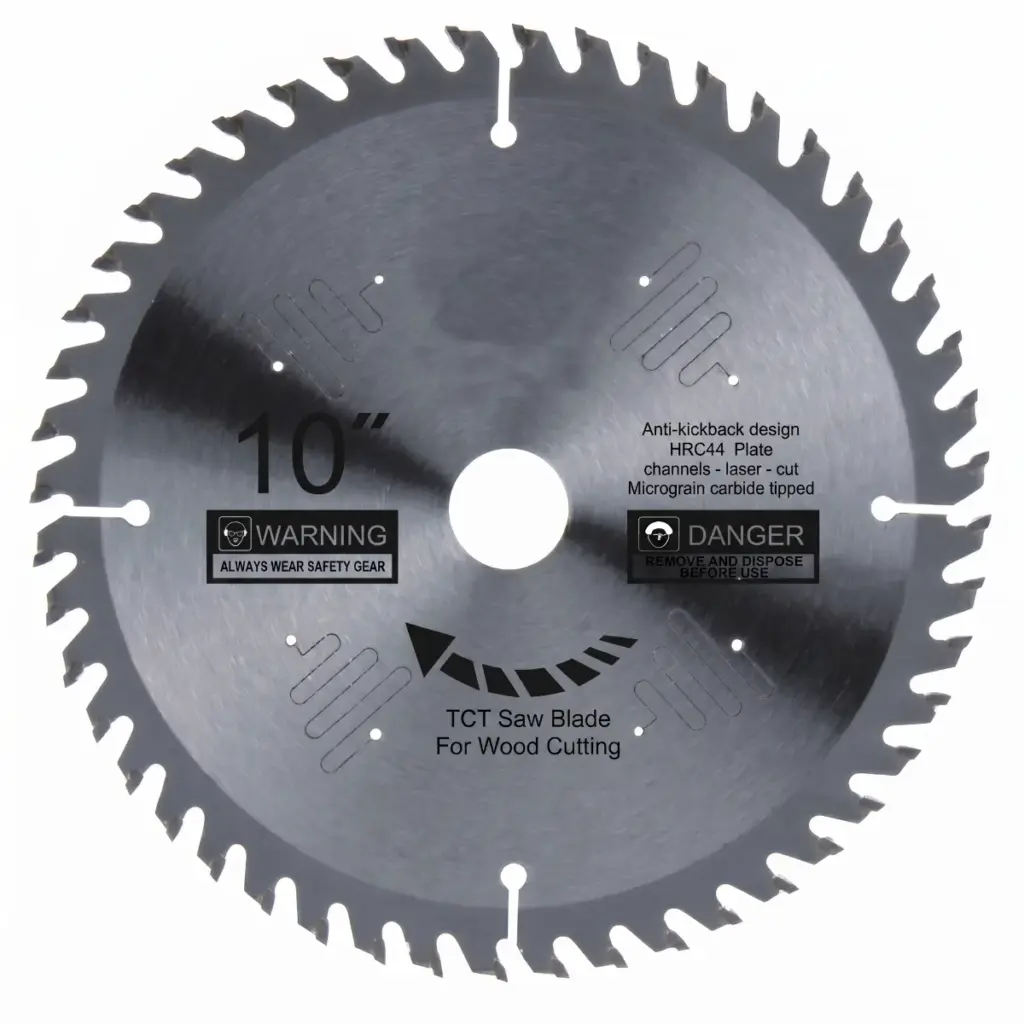
Cutting slots and vibration dampeners aren’t snake oil. Laser-cut expansion slots and vibration-dampening designs keep your blade running much quieter. They also account for heat expansion, ensuring the blade stays cooler and runs true during long production cuts.
What Mistakes Should You Avoid When Choosing a Circular Saw Blade?
Using Finish Blades for Heavy Ripping
Finish blades have up to 80 or more teeth and leave a very smooth edge when cutting plywood sheets or cabinetry. They aren’t designed for heavy ripping, however. When aggressively ripping stock, smaller gullets can’t evacuate chips quickly enough. This slows you down (smaller feed rate), generates excess heat, and dulls your blade.
Using Aggressive Framing Blades on Plywood
Construction lumber is no match for the speed of a 24T framing blade. The aggressive geometry removes a lot of material quickly. Plywood, melamine, and veneer panels don’t respond well to those blades, though. Chipped edges and heavy tear-out are common with “rough” cuts. Framing blades aren’t designed to make finish-quality cuts.
Ignoring Blade RPM Ratings
Way too many people ignore RPM ratings on blades. If a blade is allowed to spin faster than intended, it can vibrate, overheat, and be dangerous to use. Always check blade diameter matches your saw and speed ratings from the manufacturer.
Choosing Cheap Blades for Abrasive Materials
MDF, laminate, and other engineered materials are very abrasive. The cuts will dull your blade quickly because the material is so dense. Inexpensive steel blades will not hold an edge when cutting abrasive materials. Carbide-tipped blades are much better at dealing with heat and wear.
Neglecting Blade Maintenance
A dirty or dull blade will never cut well, even if it is a premium tool. Resin buildup and packed sawdust will quickly clog the gullets. Combined with worn teeth, these issues degrade cut quality long before the blade is visibly damaged.
FAQs About Choosing the Right Circular Saw Blade
High-tooth-count ATB blades leave the cleanest finish on plywood. 60T-100T blades minimize chipping on veneer layers and leave smoother finished edges. Many cabinet installers and furniture makers refuse to use aggressive framing style blades on plywood panels.
Probably not. Standard wood-cutting blades are not recommended for aluminum. Use a blade designed for non-ferrous metals, typically with TCG tooth geometry.
That depends on what you are cutting. Rip cuts typically use lower 24T-30T blades for the fastest cutting speeds. Crosscuts and finish work tend to cut better with 60T-80T blades. Higher tooth counts leave smoother finished edges but cut more slowly.
No. A 6 1/2 circular saw cannot safely run a 7 1/4 blade, since it exceeds the saw’s rated blade size and may affect guard clearance and motor load.
A 60-tooth blade is used for smooth crosscuts and clean finishes, especially in plywood and MDF. It provides cleaner edges with less tear-out, but cuts slower than lower-tooth blades.
Conclusion
Switching circular saw blades can completely alter the cutting experience. A $10 24T framing blade will rip through wet pressure-treated lumber all day long, but one cut through veneered plywood and your edges will be blowing out. Throw on a high-tooth count ATB blade, and you’ll feel like you’re cutting with a new saw. It cuts cleaner, too. There’s less chatter and less tearing. You can tell the difference sometimes before you complete your first cut.
It’s these subtle cues that tell veteran woodworkers not to rely on one blade for every job. Cutting rip cuts in hardwood, trimming laminate flooring, slicing through MDF, or cutting melamine panels are all stressful on the blade in different ways. Once you find a blade that actually matches what you’re cutting, the saw will cooperate and cut like it’s supposed to.