A circular saw is only as good as the blade attached to it. You can have a strong saw in your hands, but if the blade is wrong for the material, the cut usually tells the story straight away. Maybe the plywood starts splintering at the edges. Maybe the saw struggles through hardwood and leaves burn marks behind. Sometimes the cut feels rough, slow, or harder to control than it should.
That is why different types of circular saw blades are designed for different cutting jobs. Understanding how to choose the right circular saw blade can make a big difference in cut quality and overall performance.
In this guide, we’re going to discuss the most common types of blades, what each type cuts, and why some blades are better suited in specific situations.

Table of Contents
- What are the Different Types of Circular Saw Blades?
- FAQs About Circular Saw Blade Types and Their Uses
- Conclusion
What are the Different Types of Circular Saw Blades?
Not all circular saw blades are built the same. Each type is designed for a specific cutting purpose, and using the right one can make a huge difference in cut quality, speed, and finish.
Quick Guide to Circular Saw Blade Types
Below is a quick guide to the most common circular saw blade types and what each one is used for.
| Blade Type | Best Use | Cutting Speed | Finish Quality | Hook Angle |
|---|---|---|---|---|
| Ripping Blade | Framing, long cuts along wood grain | Very Fast | Rough | High Positive |
| Crosscut Blade | Clean cuts across wood grain | Moderate | Smooth | Low Positive |
| Combination Blade | General-purpose woodworking | Moderate | Medium | Medium Positive |
| Plywood / Laminate Blade | Clean sheet material cutting | Slow | Very Smooth | Low to Negative |
| Finishing Blade | Fine woodworking, visible edges | Slow | Very Smooth | Low to Medium Positive |
| Framing Blade | Jobsite construction, fast cuts | Very Fast | Rough | High Positive |
| Thin-Kerf Blade | Portable saws, light carpentry | Fast | Medium | Varies |
| Dado Blade | Grooves, joinery, shelving slots | Moderate | Rough-Smooth (depends on set) | N/A |
| Metal-Cutting Blade | Aluminum and light metal cutting | Moderate | Clean (metal) | 0° to -5° |
| Masonry Blade | Concrete, brick, tile cutting | Variable | Rough-Smooth (depends on rim) | N/A |
Ripping Blades
If you have ever cut a long piece of framing lumber, you probably noticed how some blades move through the wood more easily than others. That is exactly what ripping blades are made for. They are designed to cut along the wood grain quickly and efficiently rather than leave a perfectly smooth finish. Most ripping blades have fewer teeth and larger gullets to remove sawdust quickly during long cuts.
These blades are frequently found on construction sites and lumber yards where a lot of lumber is processed daily. They are ideal for framing lumber, decking boards, hardwood planks, and rough construction projects. For heavy-duty or industrial use, some versions also feature specialized wipers to reduce friction and prevent resin buildup when cutting wet or sap-heavy wood.
| Technical Specs | Key Advantages | Limitations | Ideal Materials |
|---|---|---|---|
| Tooth Count: 14–30T | Cuts quickly through solid wood | Leaves a rougher finish | Framing lumber |
| Tooth Design: FTG (Flat Top Grind) | Clears sawdust efficiently | Can splinter visible edges | Softwood & hardwood planks |
| Hook Angle: High Positive | Good for framing and rough carpentry | Not ideal for fine furniture work | Wet or resin-rich wood |
| Large gullets for fast chip removal | Handles long rip cuts smoothly | Often needs extra sanding | Construction lumber/decking |
Crosscut Blades
Crosscut blades are made for one thing: cleaner cuts across the wood grain. If you have ever cut plywood or hardwood and ended up with chipped edges, you already know why these blades matter. They cut more gently than ripping blades and leave a smoother edge behind. That cleaner finish becomes really noticeable on trim, cabinets, and furniture parts that will stay visible after installation.
Most crosscut blades use what is called an ATB tooth design. The teeth angle slightly from side to side, so they slice through wood fibers instead of tearing them out. It sounds technical, but the result is simple: fewer rough edges and less splintering on plywood, MDF, and hardwood panels.
Woodworkers and finish carpenters use these blades when appearance matters. A cleaner cut usually means less sanding later, which saves time during assembly and finishing work.
| Technical Specs | Key Advantages | Limitations | Ideal Materials |
|---|---|---|---|
| Tooth Count: 40–80T | Cuts more gently than ripping blades | Cuts slower than ripping blades | Plywood |
| Tooth Design: ATB (Alternate Top Bevel) | Leaves cleaner and smoother edges | Can heat up during long, heavy cuts | Hardwood boards |
| Hook Angle: Low Positive | Reduces splintering on plywood | Less efficient for long rip cuts | MDF / veneered panels |
| Small gullets | Helps reduce sanding afterward | Slower material removal | Trim, cabinets, furniture parts |
Combination Blades
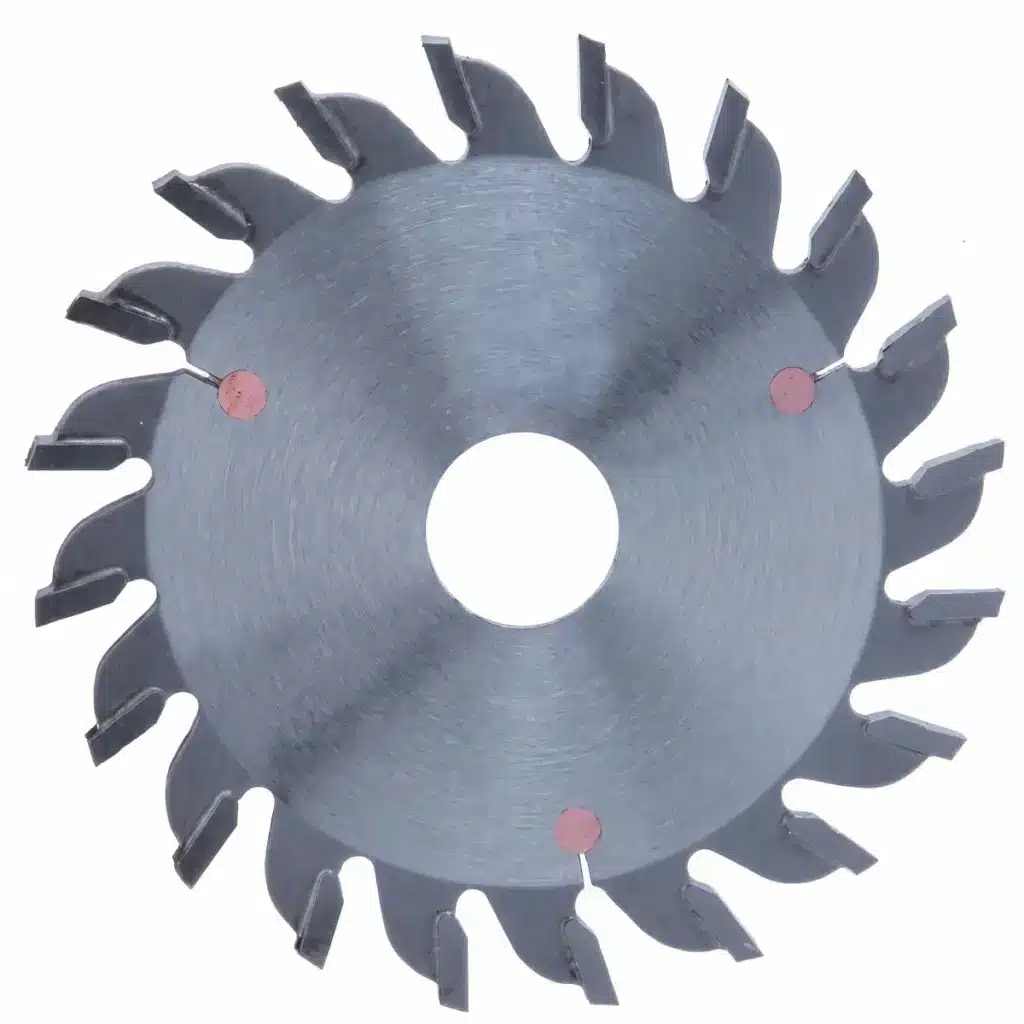
Combination blades are the blades that many people leave on their saw most of the time. They are made to handle both ripping and crosscuts, so you do not have to stop working just to swap blades after every few cuts. If you are building shelves one minute and trimming plywood the next, a combination blade usually handles the job well enough without feeling slow or awkward.
These blades are common in home workshops and renovation jobs because they can work on different wood materials in the same project. Many TCT combination blades are designed for plywood, MDF, hardwood, fiberboard, and chipboard, which makes them useful for general carpentry and workshop cutting. Some also mix ATB and flat-top teeth to balance cleaner cuts with decent cutting speed.
The main reason people like combination blades is simple. Convenience. You can do a little bit of everything with one blade. Still, they are not perfect. A ripping blade cuts faster, and a finishing blade usually leaves a cleaner edge.
| Technical Specs | Key Advantages | Limitations | Ideal Materials |
|---|---|---|---|
| Tooth Count: 40–60T | Handles different cuts with one blade | Not as fast as a ripping blade | Softwood & hardwood lumber |
| Tooth Design: ATB + FTG (Combination tooth pattern) | Good for everyday workshop use | Finish cuts are not ultra-smooth | Plywood panels |
| Hook Angle: Medium Positive | Reduces constant blade changes | Less specialized for precision work | MDF / chipboard |
| General-purpose cutting geometry | Works on many wood materials | Can struggle with heavy-duty production cutting | Furniture, shelving, renovation work |
Plywood and Laminate Blades
Plywood and laminate blades are made for materials that chip easily during cutting. If you have ever cut melamine or veneered plywood and seen the edges break apart, the blade was probably too rough for the surface. Sheet materials are different from solid wood. Thin veneer layers, brittle laminate coatings, and dense MDF fibers can splinter quickly if the teeth hit too aggressively.
That is why these blades usually have more teeth packed closely together. The higher tooth count helps produce cleaner edges on sheet materials. The cut feels smoother, and the surface stays cleaner as the blade moves through the panel. High-tooth-count TCT blades are common in cabinet shops because they work well on plywood, MDF, HDF, particle board, melamine, and veneered panels.
Clean cuts matter a lot in cabinetmaking and furniture work. Rough edges mean more sanding, patching, or sometimes throwing the panel away completely. A cleaner blade saves time before the finishing stage even starts.
| Technical Specs | Key Advantages | Limitations | Ideal Materials |
|---|---|---|---|
| Tooth Count: 60–100T | Reduces splintering on sheet materials | Cuts slower than rough cutting blades | Plywood panels |
| Tooth Design: High-ATB or Triple-Chip Grind (TCG) | Leaves cleaner edges on plywood and MDF | Not ideal for heavy ripping cuts | Melamine boards |
| Hook Angle: Low to Negative | Good for cabinets and furniture panels | Higher tooth count can create more heat | MDF / HDF |
| Fine-cutting geometry for sheet materials | Reduces sanding and edge cleanup | Can dull faster on abrasive materials | Veneered panels/particle board |
Finishing Blades
Finishing blades are used when the final cut actually matters to the look of the project. If you are cutting cabinet panels, hardwood trim, or furniture parts, rough edges become hard to hide later. These blades are made to leave a smoother edge behind, so the wood looks cleaner straight off the saw.
You will usually notice that finishing blades have a lot more teeth packed closely together. The blade cuts slower, but the surface comes out cleaner because each tooth removes less material at a time. That softer cutting action helps reduce splintering on plywood, hardwood, laminates, and veneered panels. Many TCT finishing blades are also designed for cleaner cuts during detailed woodworking jobs.
This is the type of blade people use for trim work, cabinetry, shelving, and furniture projects where messy edges stand out immediately. A cleaner cut also means less sanding later, which saves time during assembly and finishing.
| Technical Specs | Key Advantages | Limitations | Ideal Materials |
|---|---|---|---|
| Tooth Count: 60–100T | Leaves smooth, visible edges | Cuts slower than rough-cutting blades | Hardwood trim |
| Tooth Design: High-ATB (High Alternate Top Bevel) | Reduces splintering on plywood and hardwood | Not good for heavy ripping cuts | Plywood panels |
| Hook Angle: Low to Medium Positive | Works well for trim and furniture projects | Higher tooth count creates more heat | Veneered boards |
| Fine-finish cutting geometry | Helps reduce sanding afterward | Usually dulls faster during heavy use | Cabinets, shelving, furniture parts |
Framing Blades
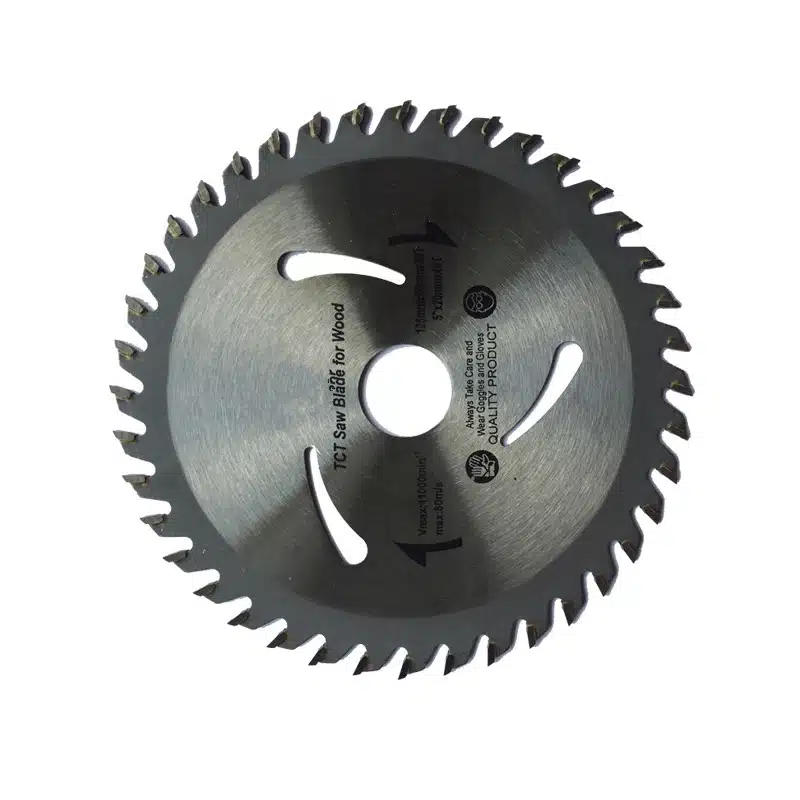
Framing blades are the blades builders reach for when the job is all about speed. Think roof framing, wall studs, decking, or cutting stacks of lumber all day on site. In those situations, the goal is usually to get clean enough cuts fast, not perfect furniture-level edges. That is why framing blades are built to cut aggressively and keep moving without bogging the saw down.
These blades have fewer teeth, which means they tend to remove more material quickly and throw sawdust out of the cut. They work well on framing lumber, plywood, sheathing, and rough carpentry materials that do not need a polished finish afterward. Some portable framing blades also include anti-kickback shoulder designs, which help keep the blade more stable during long ripping cuts on construction lumber.
A framing blade and a finishing blade feel very different once you start cutting. A finishing blade cuts slower but leaves a cleaner edge. A framing blade is rougher, louder, and faster, but that is exactly what many contractors want on a busy jobsite.
| Technical Specs | Key Advantages | Limitations | Ideal Materials |
|---|---|---|---|
| Tooth Count: 16–24T | Cuts lumber quickly | Leaves rougher edges | Framing lumber |
| Tooth Design: ATB (Alternate Top Bevel) | Good for repetitive cutting | More splintering | Decking boards |
| Hook Angle: High Positive | Works well for framing and decking | Not ideal for visible finish work | Plywood sheathing |
| Large gullets for fast chip removal | Clears sawdust easily | Often needs extra cleanup afterward | Construction lumber / jobsite materials |
Thin-Kerf Blades
Thin-kerf blades take out less material as they cut. The “kerf” is simply the width of the cut left behind by the blade. Since these blades are thinner, they remove a smaller strip of wood, which makes the saw feel lighter and easier to push through the cut.
You notice the difference most on cordless and smaller circular saws. The motor does not have to fight as hard, so the saw runs more smoothly during long cuts. That is one reason thin-kerf blades are popular for portable tools and everyday carpentry work. Some electric hand saw blades also include anti-kickback shoulders to help keep the blade steady while cutting framing lumber or plywood.
These blades work well for portable circular saws, jobsite carpentry, light woodworking, and home projects where easy handling matters. They are not really made for heavy industrial cutting, but for general use, many people find them easier to work with.
| Technical Specs | Key Advantages | Limitations | Ideal Materials |
|---|---|---|---|
| Kerf Width: Typically 0.090”–0.100” | Easier on smaller saw motors | Prone to blade deflection during heavy cuts | Softwood lumber |
| Thin blade plate design | Makes cutting feel smoother | Not ideal for thick industrial work | Plywood panels |
| Reduced cutting resistance | Wastes less material | Builds heat faster on long cuts | General carpentry materials |
| Lightweight cutting geometry | Good for cordless saws | Less stable than full-kerf blades | Portable and cordless saw applications |
Dado Blades
Dado blades are made for cutting grooves that regular saw blades cannot handle properly. Instead of leaving a thin cut line, this blade removes a much wider section of wood. This action allows pieces to fit together more securely. You will see these cuts a lot in cabinets, shelves, drawers, and furniture frames where the wood needs to slot together cleanly.
There are two common dado setups. Wobble dado blades use one adjustable blade that swings slightly as it spins, which changes the groove width. They are simpler to set up, but the cut is usually rougher. Stacked dado blades use several blades placed together, so the groove comes out flatter and cleaner. That is why woodworkers usually prefer stacked sets for cabinetry and furniture projects.
A good dado cut makes assembly easier later on. Shelves sit tighter, joints feel stronger, and the finished project usually looks cleaner once everything is fitted together.
| Technical Specs | Key Advantages | Limitations | Ideal Materials |
|---|---|---|---|
| Blade Type: Wobble or Stacked Dado Set | Makes strong wood joints | Not useful for normal straight cuts | Hardwood boards |
| Adjustable cutting width | Cuts clean grooves for shelves and cabinets | Takes more setup time | Plywood shelving |
| Wide groove cutting design | Helps parts fit together more neatly | Requires a table saw or radial arm saw | Cabinets and drawers |
| Multi-blade cutting configuration (stacked sets) | Good for furniture and cabinetry work | Can cost more than standard blades | Furniture frames and joinery project |
Metal-Cutting Circular Saw Blades
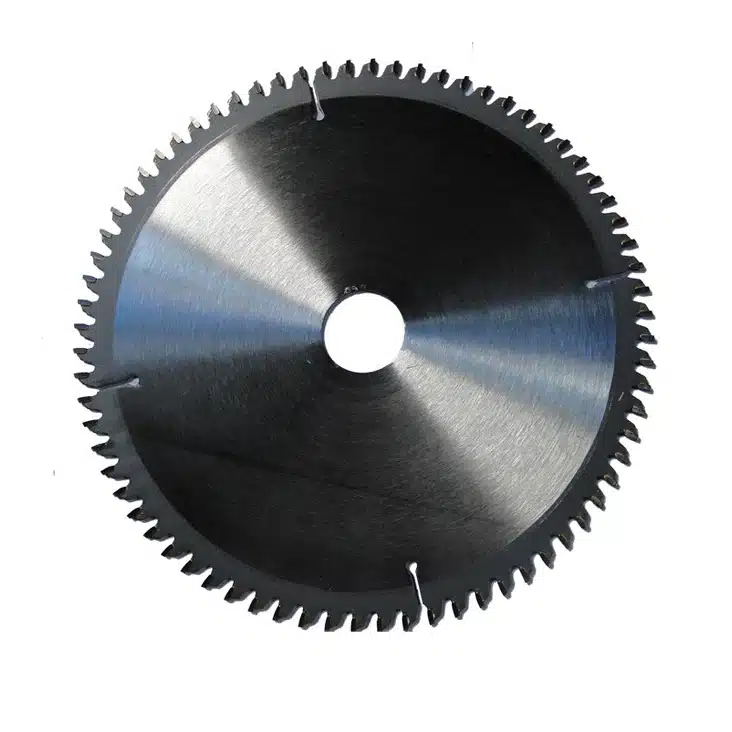
Metal-cutting circular saw blades are built for jobs that regular wood blades cannot handle safely. People use them for aluminum profiles, steel tubing, metal studs, pipes, and other tough materials. If you have ever tried using the wrong blade on metal, you probably noticed the cut getting rough, noisy, and full of burrs almost immediately.
These blades cut differently from wood blades. Many aluminum-cutting blades use a TCG (triple-chip grind) tooth pattern. The teeth are designed to cut metal with ease. Additionally, they also help reduce heat buildup during cutting and improve chip evacuation, which matters a lot when cutting aluminum materials. You will usually find these blades in metalworking shops, HVAC jobs, aluminum fabrication work, and steel framing projects. They are useful when the cut needs to stay cleaner and more controlled without creating too much extra cleanup afterward.
| Technical Specs | Key Advantages | Limitations | Ideal Materials |
|---|---|---|---|
| Tooth Count: 60–100T | Makes cleaner cuts on metal | Not meant for wood cutting | Aluminum profiles |
|
Tooth Type: TCG (Triple Chip Grind) |
Reduces burrs on aluminum | More expensive than standard blades | Aluminum tubing |
|
Hook Angle: 0° to -5° (Neutral / Negative Rake) |
Handles heat better during cutting | Needs the correct saw speed (RPM control required) | Metal studs |
|
Blade Material: Carbide-tipped |
Good for fabrication work | Dulls faster on harder metals | HVAC ducting / light fabrication metals |
Masonry Circular Saw Blades
Masonry blades are built for materials that are much harder than wood. Things like concrete, brick, tile, stone, and pavers put a lot of stress on a blade during cutting. A normal wood blade would wear out very quickly on those surfaces, which is why masonry blades use a completely different cutting edge.
You will usually come across three main types. Segmented rim blades cut fast and work well for rough concrete or brick jobs. Continuous rim blades cut more smoothly, so people often use them for tile where chipped edges look bad. Turbo rim blades sit somewhere between the two and give a mix of decent speed and cleaner cuts.
Some people cut masonry dry, while others use water during the cut. Wet cutting helps control dust and keeps the blade cooler, especially during longer jobs. Dry cutting is easier to move around on site, but it creates more heat and a lot more dust in the air.
| Technical Specs | Key Advantages | Limitations | Ideal Materials |
|---|---|---|---|
| Blade Material: Diamond or abrasive grit | Cuts concrete, brick, and tile effectively | Creates a lot of dust during dry cutting | Concrete blocks |
| Rim Design: Segmented / Continuous / Turbo | Handles hard materials better than wood blades | Blades wear down on dense masonry | Brick walls |
| Cutting Mode: Wet or Dry cutting compatible | Wet cutting helps keep the blade cooler | Not useful for wood cutting | Stone/masonry slabs |
| Edge Construction: Bonded abrasive / diamond matrix | Good for paving and renovation work | Can be loud during operation | Pavers and tiles |
FAQs About Circular Saw Blade Types and Their Uses
Ripping blades generally stay sharper longer because they use a more durable flat-top grind (FTG) tooth design. Their teeth are built for strength and fast cutting, while finishing blades have finer, sharper points that tend to dull more quickly.
The five main types of circular saw blades are ripping blades, crosscut blades, combination blades, plywood or finishing blades, and specialty blades for materials like metal or masonry. Each type is designed for a specific cutting task and material.
Rip blades are designed to cut along the grain with incredible speed. They possess fewer teeth and remove material at a fast rate. Crosscut blades, on the other hand, are designed to make a smoother cut across the wood fibers, giving a much more refined edge.
Yes, but not with a standard wood-cutting blade. Metal-cutting blades have different designs to accommodate cutting aluminum, tubing, and steel without harming the blade or the material.
Generally, a high-tooth-count plywood or finishing blade will provide the cleanest cut. (Optional: Blades with an ATB or Hi-ATB tooth design are especially effective at reducing splintering.)
Conclusion
Circular saw blades are not all built for the same kind of work. A blade that cuts framing lumber quickly will not give the same result on plywood, trim, or metal. That is why the right blade makes such a big difference once the saw touches the material.
Some blades cut faster. Some leave cleaner edges. Others are made for hard materials like concrete or aluminum that regular wood blades cannot handle properly. Even simple things like tooth count and blade shape change how the cut feels. Once you understand what each blade is meant to do, choosing the right one becomes much easier.