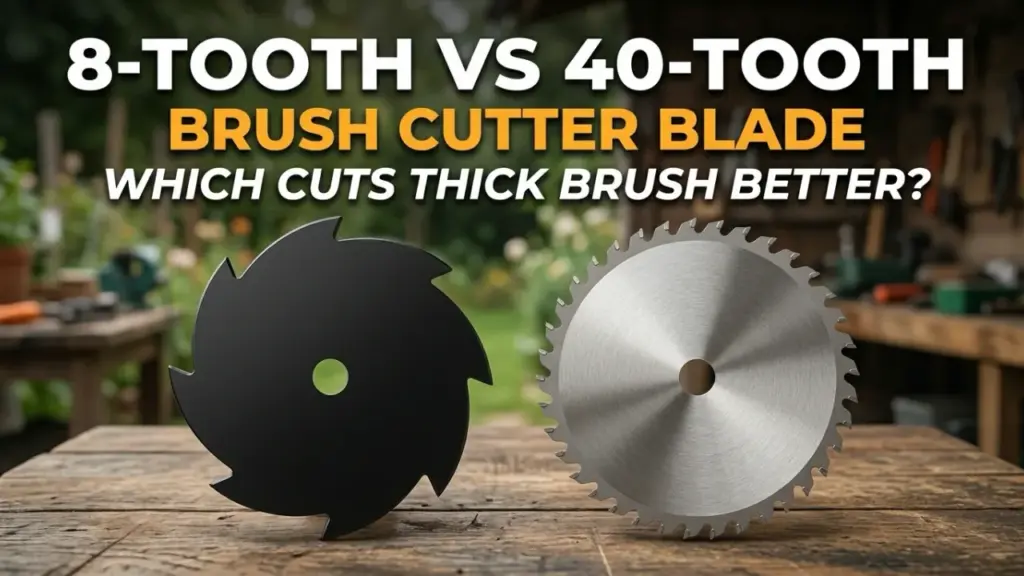
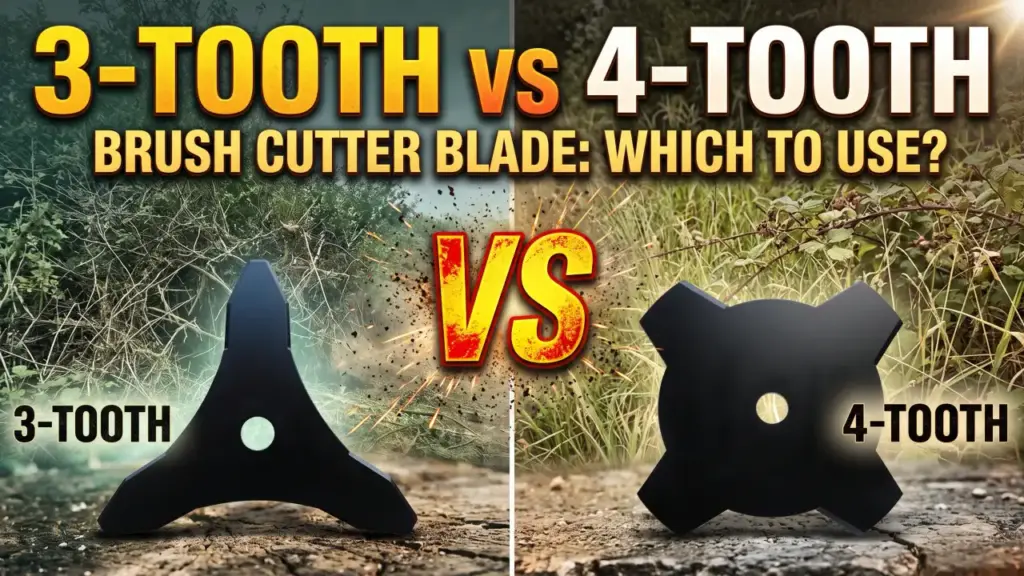
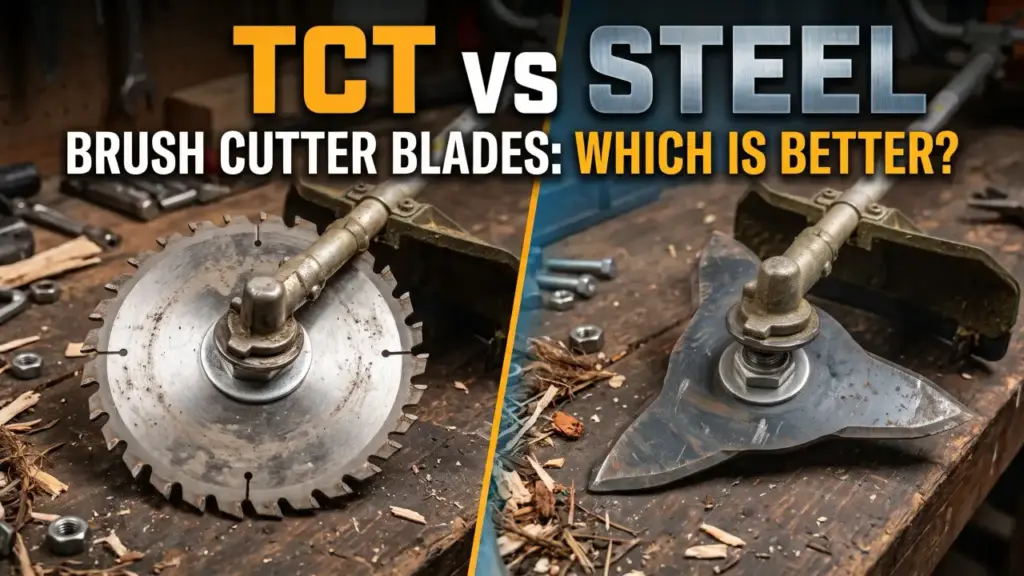
Choosing between a 3-tooth and 40-tooth brush cutter blade depends on more than the number of teeth. The two blade designs handle vegetation differently, and factors such as the type and condition of the material, the size of the stems, and your brush cutter’s specifications can affect which option makes sense for the job.
In this guide, we’ll compare 3-tooth and 40-tooth brush cutter blades, explain how each one handles different types of vegetation, and cover what to consider when choosing, maintaining, and fitting a blade.
Table of Contents
- What Is the Difference Between a 3-Tooth and 40-Tooth Brush Cutter Blade?
- Which Blade Should You Use for Different Vegetation?
- Which Blade Is Easier to Maintain?
- What Should You Check Before Buying a Brush Cutter Blade?
- Conclusion
- FAQs About 3-Tooth and 40-Tooth Brush Cutter Blades
What Is the Difference Between a 3-Tooth and 40-Tooth Brush Cutter Blade?
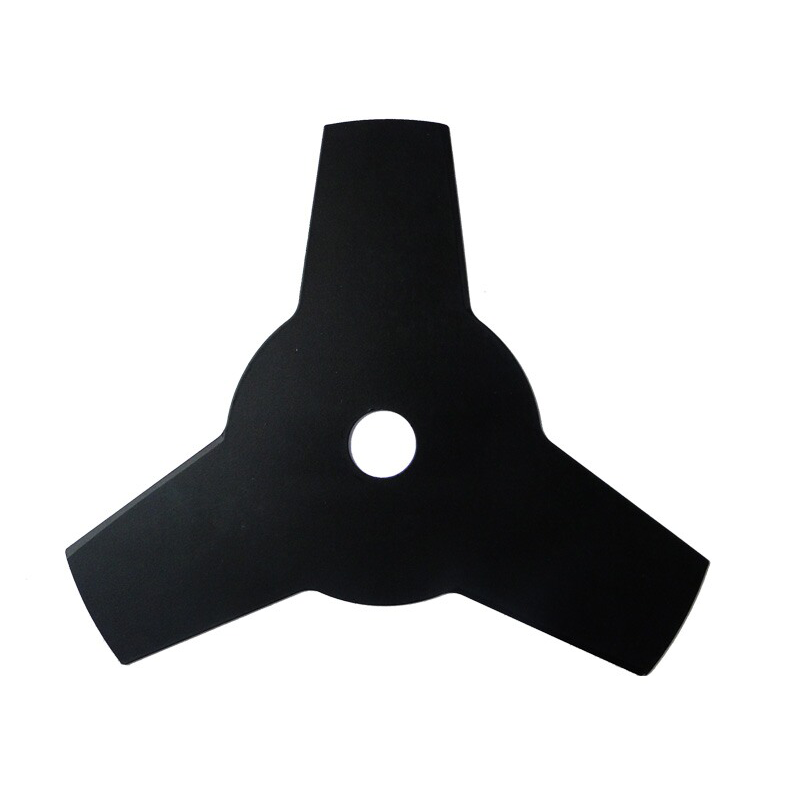
A 3-tooth brush cutter blade has three wide cutting edges with plenty of open space between them. This design works well in grass and other soft vegetation because cut material can move away from the blade instead of collecting around the cutting head.
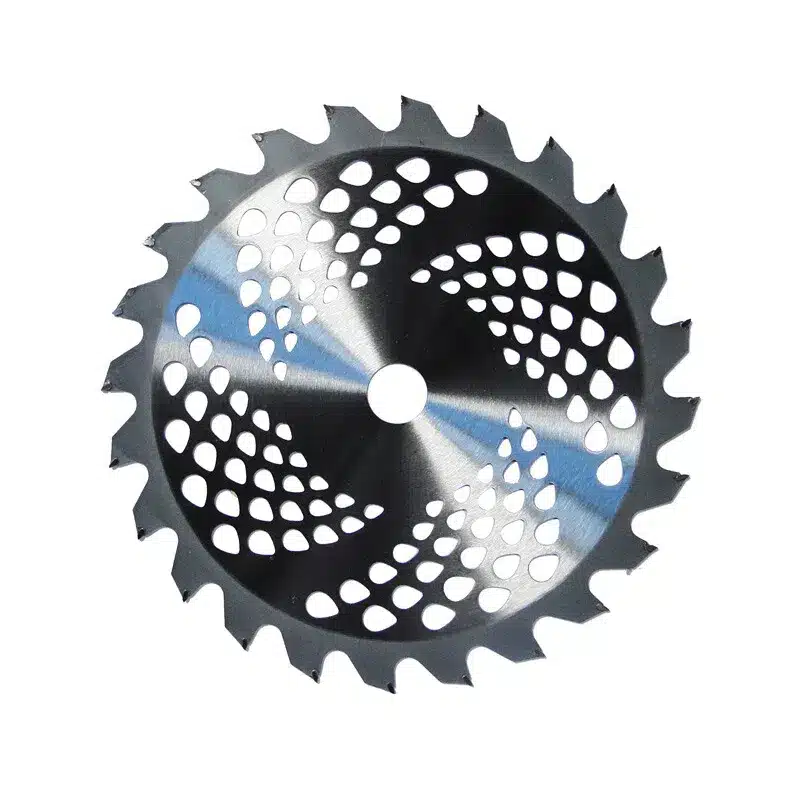
A 40-tooth blade uses a saw-like cutting action. Its smaller, closely spaced teeth remove material a little at a time, which makes the blade better suited to woody stems and small branches.
A higher tooth count does not make a 40-tooth blade more powerful than a 3-tooth blade. Instead, the two designs use different cutting actions for different types of vegetation.
Table 1. Key Differences Between 3-Tooth and 40-Tooth Brush Cutter Blades
| Feature | 3-Tooth Blade | 40-Tooth Blade |
|---|---|---|
| Best use | Grass and soft vegetation | Woody vegetation |
| Common jobs | Thick grass, weeds, reeds, and light brush | Shrubs, woody suckers, and small saplings |
| Cutting action | Slices with three wide edges | Cuts progressively with closely spaced teeth |
| Performance in long grass | Clears grass efficiently | More likely to drag or collect grass |
| Performance on woody stems | Limited | More effective and controlled |
| Cut finish on wood | Rougher on harder stems | Generally cleaner |
| Sharpening | Usually easier | Requires more care to keep teeth even |
| Main concern | Can slow down or deflect on hard wood | May clog in long grass and requires machine approval |
The easiest way to remember the difference is simple: use a 3-tooth blade for grass and soft vegetation, and a 40-tooth blade for woody growth.
Which Blade Should You Use for Different Vegetation?
Choose the blade based on what you are actually cutting. A 3-tooth blade works well when most of the area contains grass, weeds, reeds, or soft green growth. A 40-tooth blade becomes more useful when the job involves established woody stems.
3-Tooth Blade for Grass, Weeds, and Soft Brush
A 3-tooth blade is a good fit for:
- Tall grass that is too heavy for trimmer line
- Thick weeds and nettles
- Reeds and similar fibrous plants
- Young, soft growth
- Light brush with flexible stems
The open design gives cut vegetation room to move away from the blade. That makes the blade particularly useful in dense or tall grass, where closely spaced teeth can allow material to drag or collect around the cutting head.
40-Tooth Blade for Woody Shrubs and Small Saplings
A 40-tooth blade is better suited to:
- Established woody shrubs
- Tree suckers
- Hard or dry brush
- Small saplings
- Stems that bend or bounce away from a knife-style blade
The smaller teeth take repeated cuts through the material, giving the blade a saw-like action that works more effectively on wood.
If a property contains both tall grass and woody growth, using both blade types may make the job easier. Clear the grass with the 3-tooth blade, then switch to the 40-tooth blade for woody sections, as long as the manufacturer approves both attachments for your brush cutter.
Does Stem Thickness Affect Which Blade You Need?
Stem thickness can help you choose a blade, but it should not serve as a universal cutoff. The condition of the material matters too. A fresh green shoot can be easier to cut than a dry hardwood stem of the same diameter.
Blade sharpness, engine output, gearbox strength, and the blade size the manufacturer approves also affect the actual working limit.
Instead of treating a specific stem diameter as a universal rule, use the following as practical starting points:
Table 2. Brush Cutter Blade Selection by Vegetation Type and Stem Condition
| Vegetation | Better Starting Choice | What to Know |
|---|---|---|
| Grass and soft weeds | 3-tooth blade | A 40-tooth blade offers little advantage for this type of vegetation |
| Flexible green brush | 3-tooth blade | A 3-tooth blade can work well on lighter stems when the machine allows it |
| Woody brush and suckers | 40-tooth blade | The saw-like tooth pattern is better suited to harder, established stems |
| Larger saplings | Check the machine limit first | A clearing saw or chainsaw may be a more suitable tool |
Do not treat these categories as universal machine limits. Wood hardness, blade sharpness, machine power, gearbox strength, and the blade specifications the manufacturer approves all affect what a particular brush cutter can handle.
Likewise, a video showing one blade cutting through a large stem does not prove that every brush cutter can handle the same material continuously. The machine and blade combination matters just as much as the material you are cutting.
Which Blade Is Easier to Maintain?
A 3-tooth blade is generally easier to sharpen because it has only three broad cutting edges. A 40-tooth blade takes more time and care because you need to keep all of its teeth reasonably consistent in height and angle.
You can often touch up a steel 3-tooth blade with the file recommended by the blade manufacturer. Remove a similar amount of metal from each cutting edge to help keep the blade balanced.
You can also sharpen a steel 40-tooth blade, but uneven teeth can affect cutting performance and contribute to vibration. Carbide-tipped versions can hold an edge longer when you use them correctly, but the carbide tips may chip if they strike rocks, metal posts, fencing, or other hard objects.
Sharpening cannot repair structural damage. Replace the blade if you find:
- Cracks in the blade body
- A bent or warped disc
- Missing carbide tips
- A damaged or enlarged mounting hole
- Teeth that you cannot restore evenly
- Vibration that continues after correct installation
Do not keep using a structurally damaged blade simply because it still cuts.
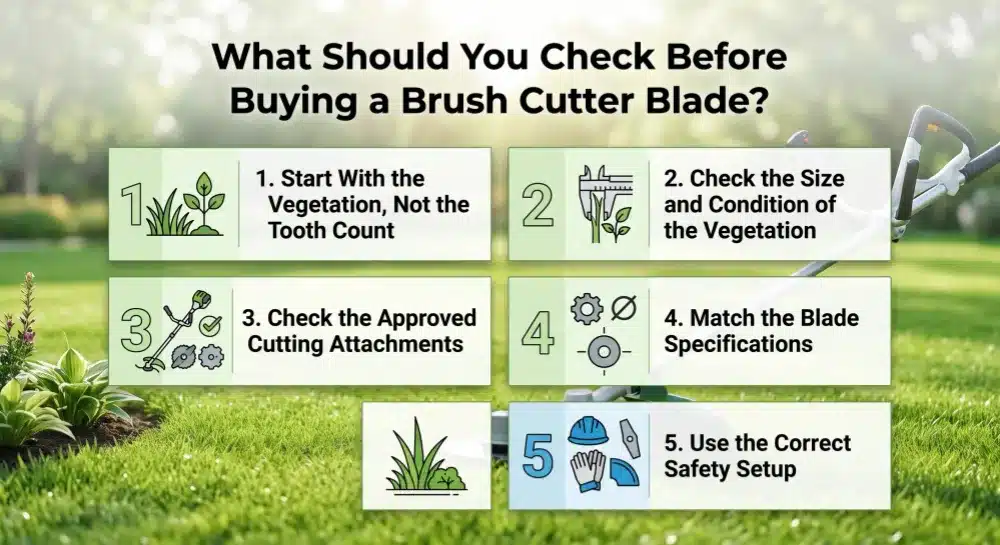
What Should You Check Before Buying a Brush Cutter Blade?
Before ordering a 3-tooth blade or 40-tooth blade, check the job first and the machine second. A blade that matches the vegetation is still the wrong choice if your brush cutter does not approve it.
1. Start With the Vegetation, Not the Tooth Count
Choose a 3-tooth blade for grass, weeds, reeds, and soft growth. Choose a 40-tooth blade for woody stems and small saplings.
2. Check the Size and Condition of the Vegetation
“Heavy brush” is too vague to guide a blade purchase. Look at the thicker stems you expect to cut and consider whether they are green and flexible or hard and dry.
3. Check the Approved Cutting Attachments
Read the brush cutter manual to see whether it allows metal knife blades, saw-style blades, or both. Do not assume that a blade will work just because it physically fits the machine.
4. Match the Blade Specifications
Check the:
- Arbor or mounting-hole size
- Blade diameter
- Direction of rotation
- Maximum RPM
- Approved blade type
Do not rely on a “universal fit” label alone. A blade may have the correct 20 mm or 25.4 mm center hole but still be too large, too heavy, or the wrong attachment type for the machine.
5. Use the Correct Safety Setup
Fit the guard, handle, harness, washers, cup, retaining nut, and other components that the manufacturer specifies for the machine and cutting attachment.
Engine size alone cannot confirm compatibility. The gearbox, clutch, shaft, guard, and handle setup also matter.
Conclusion
A 3-tooth brush cutter blade generally works well on thick grass, weeds, reeds, and soft brush. A 40-tooth brush cutter blade works better on woody shrubs, suckers, hard brush, and small saplings.
Neither blade is universally better. Choose the one that matches what you are cutting, the condition of the vegetation, and what your brush cutter manufacturer allows.
Before fitting either blade, check the blade type, diameter, mounting hole, and RPM rating against the manufacturer’s requirements.
FAQs About 3-Tooth and 40-Tooth Brush Cutter Blades
Some brush cutters can use both a 3-tooth and 40-tooth blade, but the manufacturer must approve both attachments. You may also need a different guard, mounting hardware, handle, or harness when you switch between blade types.
They may. Grass blades and saw-style blades can throw debris in different ways and may require different guards or deflectors. Follow the cutting-attachment recommendations for your specific brush cutter model.
No. Some 40-tooth blades are made entirely from steel, while others use brazed carbide tips. Steel teeth are generally easier to sharpen, while carbide tips can retain an edge longer but may chip after hitting a hard object.
Clean and dry the blade after use, protect bare steel from corrosion, and store it where the teeth cannot get knocked or bent. Use a blade cover if one is available.
A new blade should have the correct balance, but inspect it before installation for shipping damage, bent teeth, cracks, or distortion. Check the balance again after sharpening because uneven material removal can affect the blade.