A brush cutter is designed to tackle tough vegetation. Thick grass, weeds, brambles, and brush all come to mind. But what happens when the undergrowth grows around a young tree or sapling? The job becomes more complex, as cutting into woody material can tax the machine in different ways.
So, can a brush cutter cut down a tree sapling? It can cut some young saplings and small trees, but the answer is not always as simple as how small the tree appears. Stem thickness, wood hardness, available cutting power, the attachment in use, and machine limits all play a role. This article looks at what makes a sapling or small tree cuttable, what can make the job too difficult, and when you might be better off with another tool.
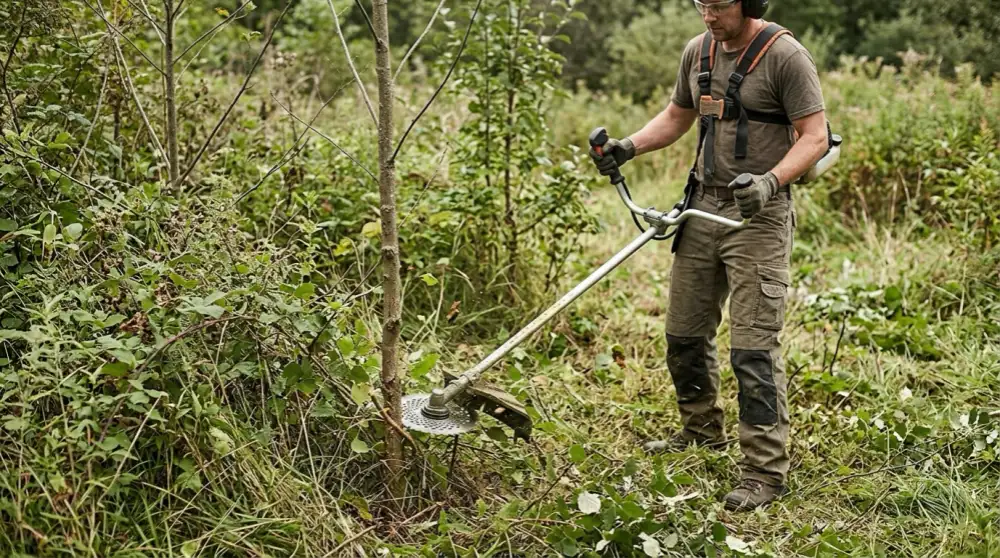
Table of Contents
- What Determines Whether a Brush Cutter Can Cut a Small Tree or Sapling?
- Can a Brush Cutter Clear Multiple Small Trees and Saplings?
- What Are the Risks of Cutting Saplings and Small Trees with a Brush Cutter?
- Conclusion
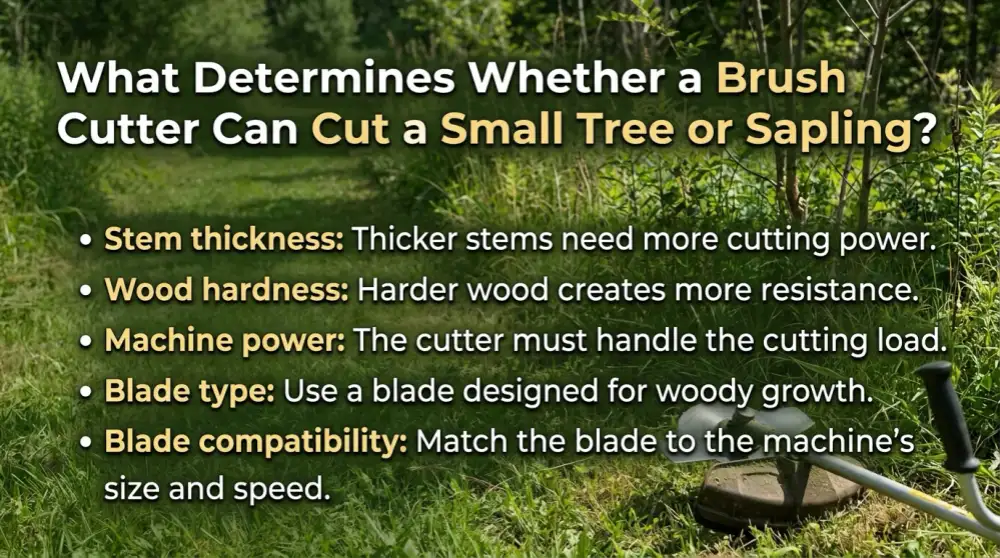
What Determines Whether a Brush Cutter Can Cut a Small Tree or Sapling?
A brush cutter can cut some young saplings and small trees when the stem is within the machine’s capability and the attachment is approved for woody growth. As the stem gets thicker or the wood gets harder, the job puts more resistance on the blade and demands more from the machine.
Brush cutters excel at thick grass, weeds, brambles, and brush, but wood is something else entirely. A young sapling may have a thin, softer stem. Even a small tree can have a thicker trunk that is harder and more established.
That resistance is where your machine’s power begins to matter. A brush cutter that handles heavy vegetation with ease may cut through some young woody growth. A lighter-duty model may start to struggle as the stem gets thicker or the wood gets harder. For a closer look at that question, see How Thick Can a Brush Cutter Blade Cut?.
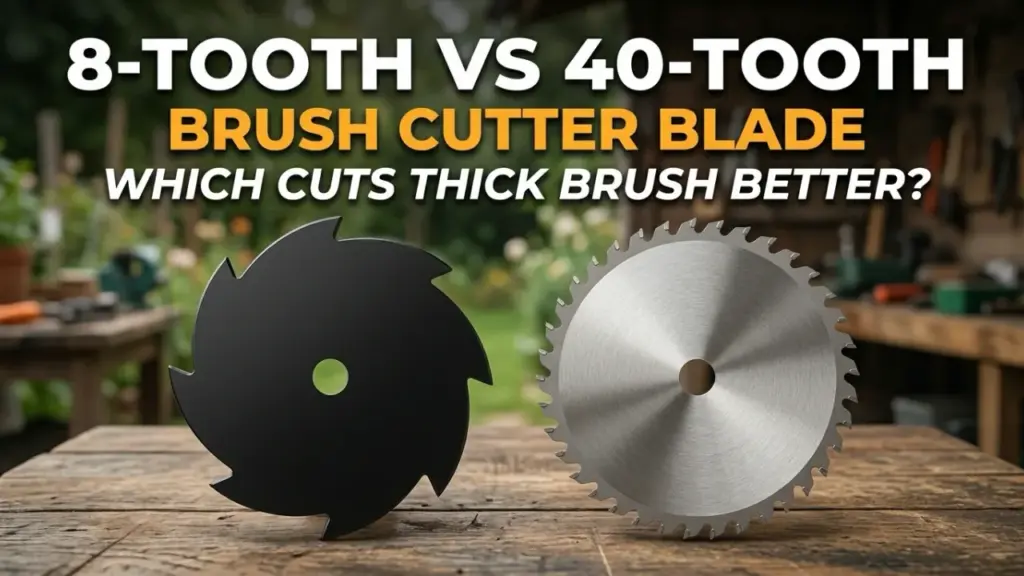
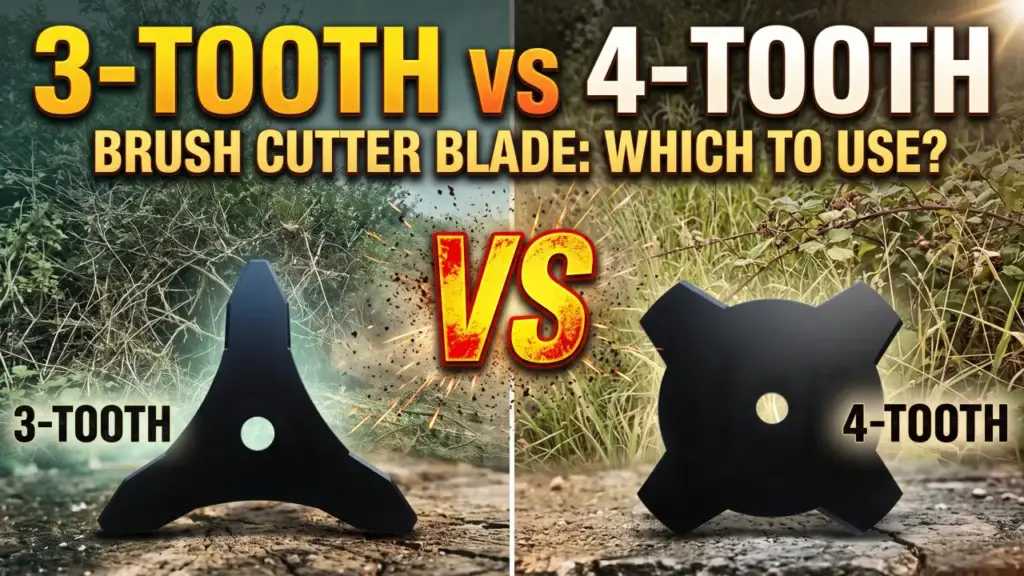
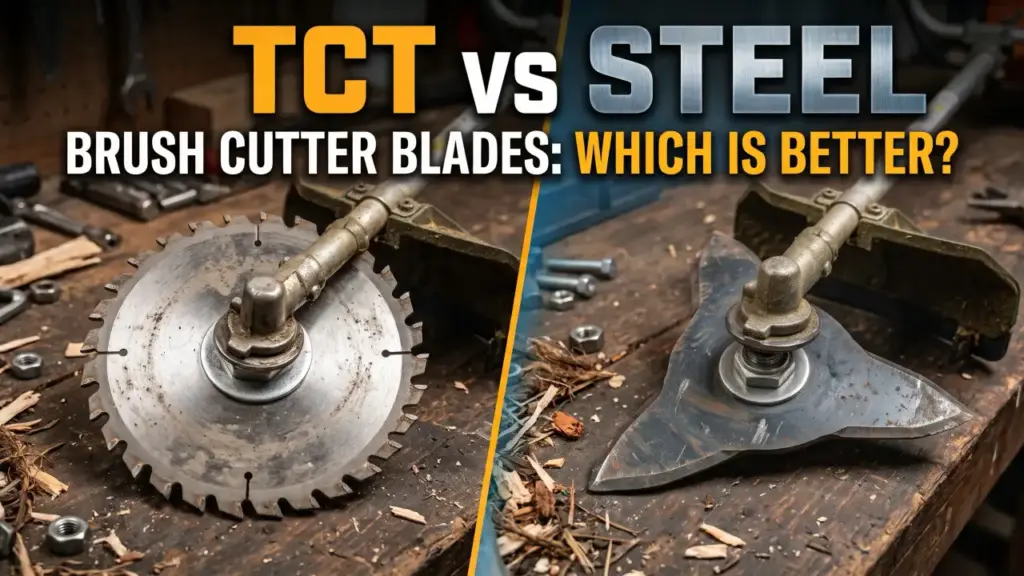
Attachments help as well. A blade designed for and approved to cut woody growth will work differently from a line head, but it will not make an underpowered machine capable of more than it is designed to handle. The blade must also be compatible with the machine itself. Size, mounting style, and operating speed all matter. If you are choosing an attachment, see Best Brush Cutter Blade for Small Trees. For a specific size question, see Can a Brush Cutter Cut 1-Inch Saplings?.
Can a Brush Cutter Clear Multiple Small Trees and Saplings?
A brush cutter may handle a few suitable saplings, but clearing an area with many small trees and saplings can be much more difficult. Dense vegetation, hidden obstacles, and longer cutting time all change the job.
If a patch of land has several small trees and saplings growing together, you have more vegetation to cut through. A couple of small stems may not take long. However, a larger area of thick weeds and brush can be more time-consuming and difficult to clear.
You also run into more obstacles in thicker growth. Rocks, wire, fences, tree branches, and other debris can be hidden in the vegetation. An area that looks easy to cut may not be the reality once you get started.
Do not judge the whole project by one easy tree. Your brush cutter may get through a few saplings without much trouble, but that does not mean it is suited to a dense patch of woody brush. Different stems can vary in thickness and hardness, and the machine has to deal with all of them over the course of the job.
If the vegetation is becoming too dense, too woody, or too difficult to inspect safely, it may be time to use equipment better suited to the work.
What Are the Risks of Cutting Saplings and Small Trees with a Brush Cutter?
Cutting saplings and small trees with a brush cutter can create kickback, sudden movement, flying debris, and attachment damage. Wood does not react like grass, weeds, or brambles, so the machine can behave differently when the blade meets a solid stem.
A kickback or sudden shift in movement can occur when the cutting attachment strikes woody material. The stem itself can also move as it is cut. Pieces of wood and other debris may fly away from the cutting area.
Some dangers may not be visible until you begin cutting. Saplings can grow around rocks, old wire, fencing, or other debris hidden by the surrounding plants. Running over something like that could damage the blade or cause sudden movement of the machine.
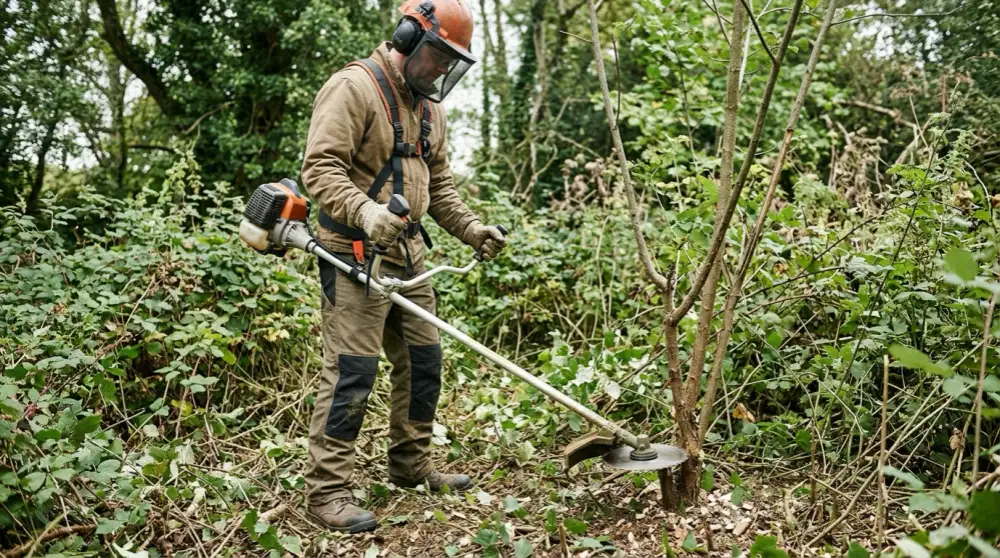
Notice how the machine behaves while you are using it. If you feel unusual vibration, do not ignore it. Your cutting attachment may be damaged, loose, or out of balance. Eye protection, face protection, hearing protection, gloves, sturdy footwear, and any other safety equipment recommended by the manufacturer can help reduce the chance of injury if something goes wrong.
Keep others away from the cutting area, and follow all relevant safety recommendations for your brush cutter and cutting attachment. Just because you can cut through a sapling or small tree does not mean you should ignore the other risks involved.
Conclusion
So, can a brush cutter cut small trees and saplings? Yes, it can handle some young, manageable woody growth. However, not all brush cutters can cut all types of trees.
Take a look at the whole situation before you begin. Consider the thickness and hardness of the stem, the cutting capability of the machine, and the attachment you are using. Most importantly, check the manufacturer’s guidelines. If those things line up, a brush cutter may be a practical option. If they do not, it is best to use equipment meant for the material in question.