Cutting small trees is a different job from clearing grass or weeds. Young trees and saplings have woody stems that create more resistance, so a blade designed mainly for lighter vegetation may not be the right choice.
The good news is that you do not necessarily need the most aggressive blade available. The best brush cutter blade for small trees is one that is designed for woody cutting and properly matched to the size of the saplings and the specifications of your brush cutter.
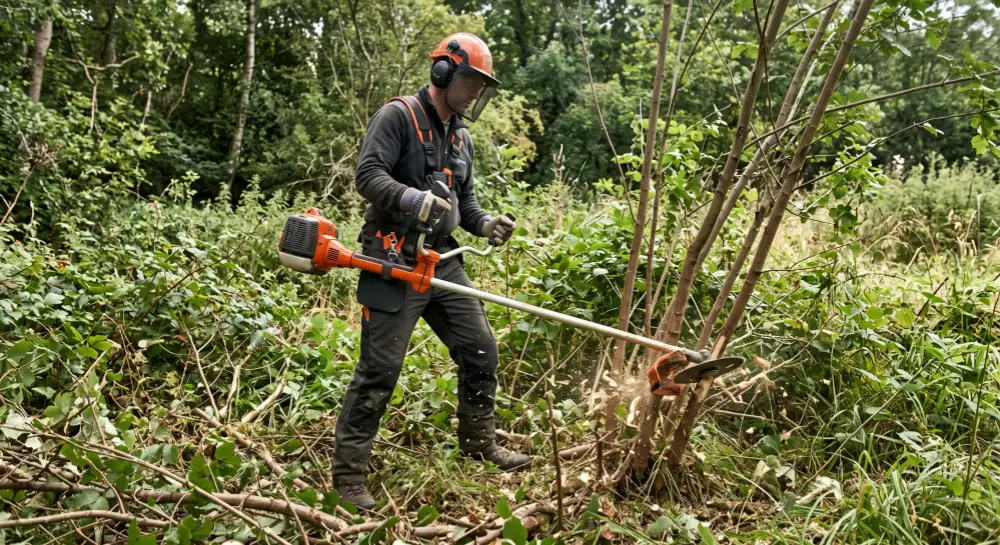
Table of Contents
- What Is a Small Tree for Brush Cutter Use?
- What Is the Best Brush Cutter Blade for Small Trees?
- How Do You Choose a Brush Cutter Blade for Small Trees?
- Conclusion
- FAQs About Brush Cutter Blades for Small Trees
What Is a Small Tree for Brush Cutter Use?
For brush cutter applications, a small tree generally means a young tree or sapling with a woody stem that remains within the rated cutting capacity of the blade and brush cutter. There is no universal stem diameter that defines a small tree because cutting capacity varies with the blade, wood hardness, machine power, and manufacturer specifications.
This distinction matters because small trees are not simply another form of grass or weeds. Grass has soft, flexible stems, while most weeds are herbaceous plants without a substantial woody stem. Brambles can have woody growth, but they are usually thorny vines or shrubs rather than young trees. A sapling, on the other hand, has a woody stem that becomes increasingly resistant to cutting as it grows.
So for this article, small trees means young woody trees and saplings that are still suitable for the cutting capacity of a brush cutter, rather than grass, weeds, or ordinary brush.
What Is the Best Brush Cutter Blade for Small Trees?
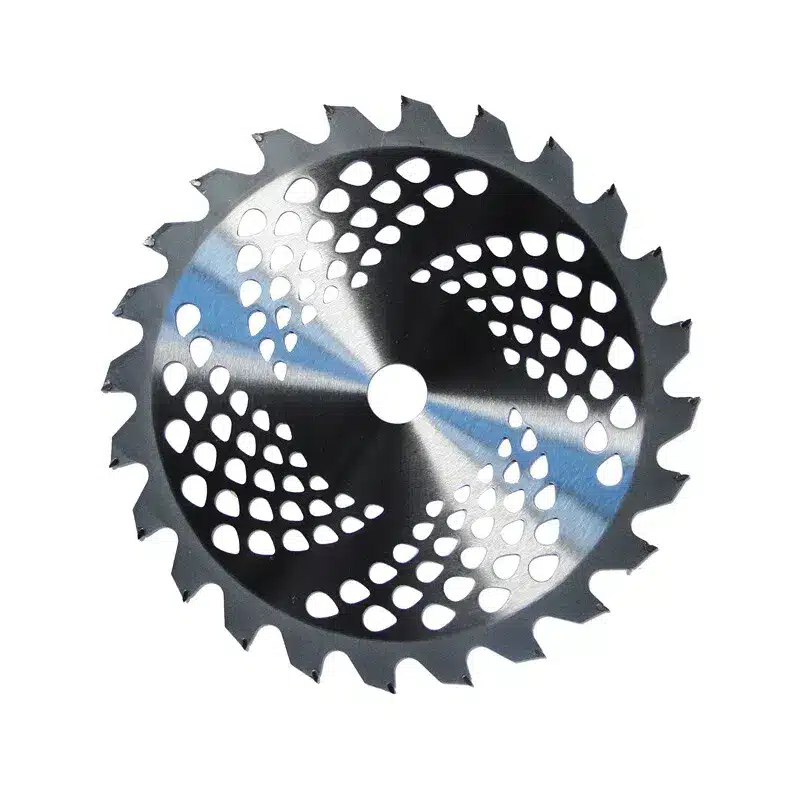
For most small trees and woody saplings, a multi-tooth metal brush cutter blade designed for woody cutting is the best starting point. The ideal blade depends on the stem size and hardness, how frequently you need to clear small trees, and the specifications of your brush cutter.
If you want the quick version, use the table below to find the situation closest to yours.
| Cutting Situation | Recommended Blade | Material | What to Check |
|---|---|---|---|
| Thin, young saplings | Multi-tooth blade designed for woody cutting | Steel | Blade diameter, thickness, and machine compatibility |
| Thicker or harder saplings | Heavy-duty multi-tooth blade | Steel or carbide-tipped | Blade strength and brush cutter power |
| Frequent or demanding small-tree clearing | Durable multi-tooth blade | Carbide-tipped can offer greater wear resistance | Durability, RPM rating, and compatibility |
| Small trees mixed with other vegetation | Multi-tooth blade suited to woody cutting | Steel or carbide-tipped | Dominant cutting task and machine specifications |
The table gives you the direction, but the details matter. A blade that works well on a few thin saplings is not necessarily the best choice for clearing a dense area of tougher woody growth. Here is what to look for in each situation.
For Thin, Young Saplings
Thin, young saplings generally do not require the most heavy-duty blade available. A multi-tooth metal blade designed for woody vegetation can provide an efficient way to cut relatively small stems without putting unnecessary demands on the equipment.
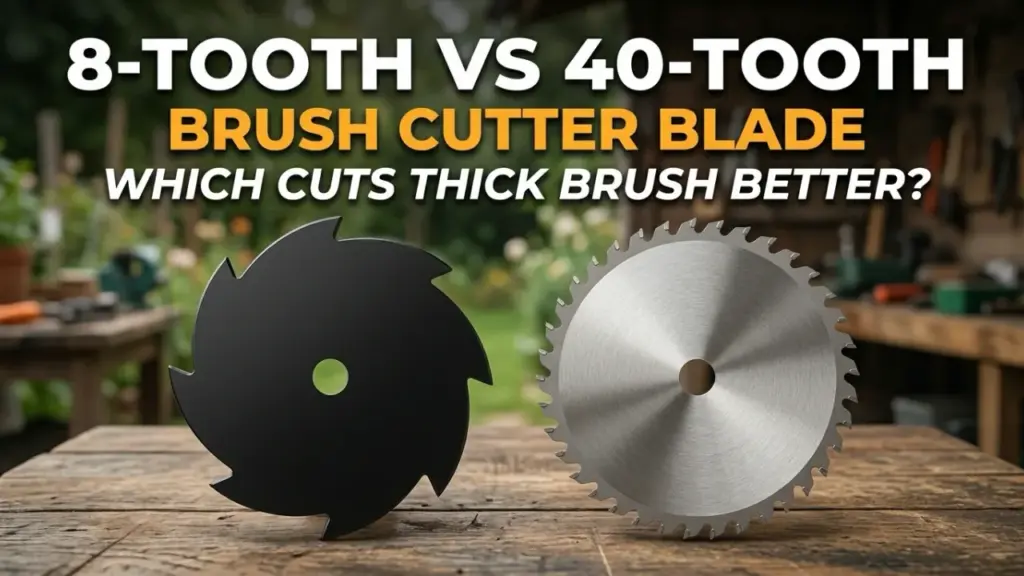
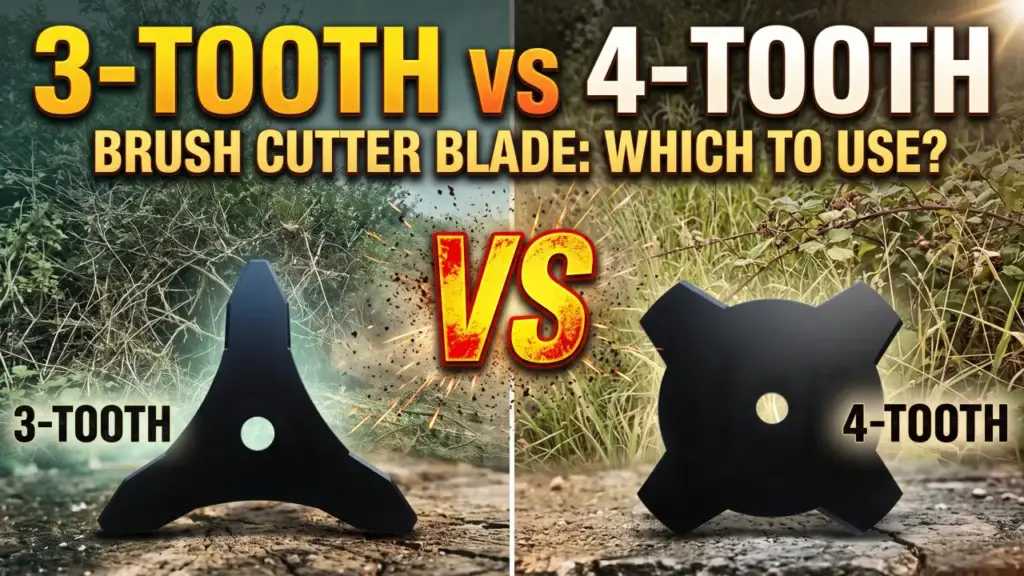
This is also where it is easy to focus too much on tooth count. A higher tooth count does not automatically make a blade better for small trees. Tooth shape, spacing, blade diameter, thickness, and overall cutting design all affect how the blade performs.
For occasional cutting of young saplings, a suitable steel blade may be all you need. Before using it, however, check that the blade’s dimensions, mounting system, and RPM rating are compatible with the brush cutter.
For Thicker or Harder Saplings
As saplings become thicker or the wood becomes harder, the blade faces greater cutting resistance. At this point, a more robust multi-tooth blade can be a better choice.
The brush cutter itself matters just as much. A strong blade cannot make up for a machine that does not have enough power for the job. If the machine struggles when cutting a stem, forcing the blade through it is not a good solution.
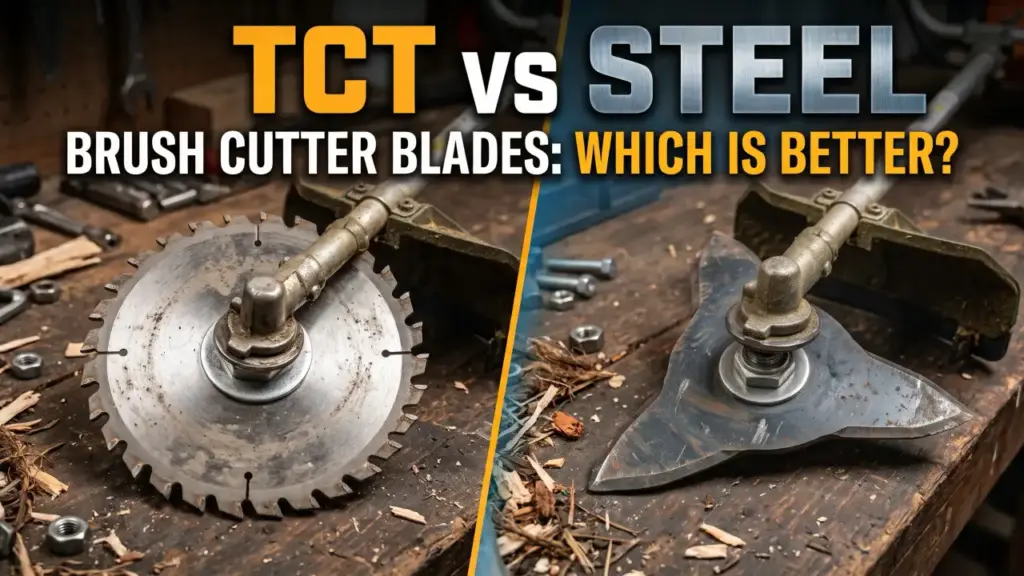
Blade construction also becomes more important as the workload increases. A quality steel blade can handle many woody-cutting applications, while a carbide-tipped blade may provide greater wear resistance when you regularly cut tougher woody growth.
For Frequent or Demanding Small-Tree Clearing
There is a big difference between removing a couple of unwanted saplings and clearing dozens of them from an overgrown property.
If small-tree clearing is something you do regularly, durability deserves more attention. A carbide-tipped blade can be worth considering when repeated contact with woody material would otherwise cause the cutting edges to wear more quickly.
That does not mean carbide-tipped is automatically the best option. The blade still needs to be appropriate for the brush cutter, and the machine needs enough power for the intended cutting work. Think of carbide as a potential durability advantage, not a substitute for choosing the right blade design.
For Small Trees Mixed With Other Vegetation
Real-world clearing is rarely as tidy as a product category suggests. You might find young saplings growing through grass, weeds, and brush in the same area.
In that situation, choose the blade based on the dominant cutting task. If woody stems are the main problem, a blade designed for woody cutting should remain the priority. If you are mostly clearing grass and weeds and only occasionally encounter a small sapling, a blade intended for lighter vegetation may make more sense for the overall job.
The important thing is to choose for the work you actually expect the blade to perform rather than assuming that every type of vegetation requires the same blade.
How Do You Choose a Brush Cutter Blade for Small Trees?
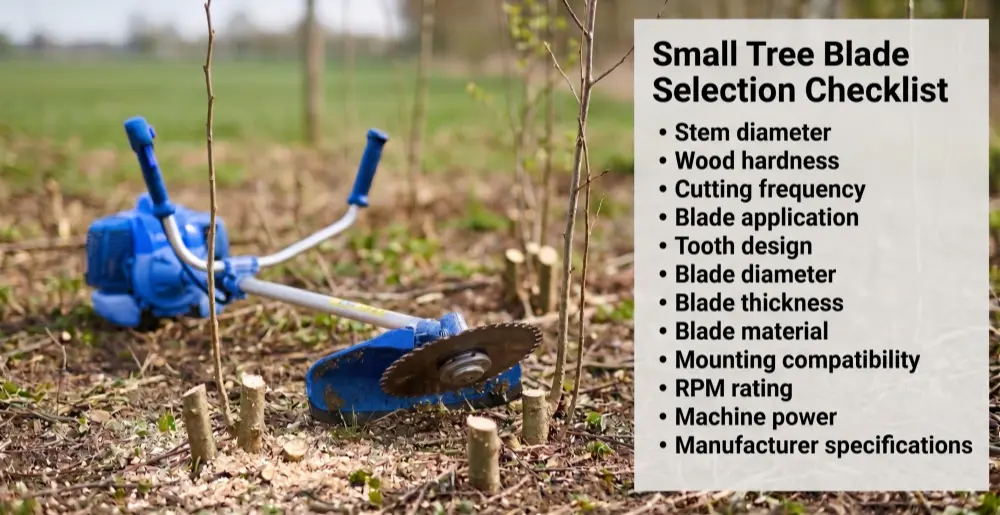
Once you know what you are cutting, the choice becomes much more straightforward. Instead of comparing every blade specification at once, start with the actual cutting conditions and work through the key checks below.
Small Tree Blade Selection Checklist
- Stem diameter: How thick are the saplings you normally need to cut?
- Wood hardness: Are you cutting young, relatively soft growth or tougher, more mature wood?
- Cutting frequency: Are you removing a few saplings occasionally or clearing woody growth regularly?
- Blade application: Is the blade specifically designed for wood, brush, or similar woody vegetation?
- Tooth design: Does the tooth configuration suit the intended cutting application?
- Blade diameter: Is the blade size permitted for your brush cutter?
- Blade thickness: Does the thickness meet the manufacturer’s specifications?
- Blade material: Is standard steel sufficient, or would carbide-tipped construction provide useful additional wear resistance?
- Mounting compatibility: Does the blade’s mounting hole or arbor fit your brush cutter?
- RPM rating: Is the blade rated for the operating speed of your machine?
- Machine power: Does the brush cutter have enough power for the expected cutting load?
- Manufacturer specifications: Does the complete blade and machine combination meet the manufacturer’s requirements?
You do not need every box to point toward the most heavy-duty option. The goal is to find a blade that is appropriate for your actual cutting conditions, not simply the strongest blade you can buy.
Conclusion
The best brush cutter blade for small trees is generally a multi-tooth metal blade designed for woody cutting. Thin, young saplings may only require a suitable steel blade, while thicker, harder, or frequently cut woody growth can call for a more durable heavy-duty or carbide-tipped option.
The key is to look beyond a single specification. Stem size, wood hardness, cutting frequency, blade design, blade dimensions, material, and brush cutter compatibility all matter. Choose the blade around the work you actually need to do, and use the manufacturer’s specifications to confirm that the blade and machine are a proper match.
FAQs About Brush Cutter Blades for Small Trees
Yes, a brush cutter can cut some small trees and woody saplings when the stem size and cutting conditions fall within the rated capacity of the blade and machine. “Small tree” is not a universal size category, so the manufacturer’s specifications still determine whether a particular job is appropriate.
A fallen tree is different from a standing sapling because the wood may be supported unevenly or placed under tension. Larger fallen branches or trunks are generally better handled with a tool designed specifically for cutting larger woody material.
A brush cutter blade is not designed to be a general-purpose root-cutting tool. Roots may contain soil, rocks, or other debris that can damage the blade and create unpredictable cutting conditions. Treat exposed roots differently from an ordinary woody stem.
A stump is generally a more demanding cutting job than a young sapling because it is thicker, denser, and firmly anchored. If the stump falls outside the blade or machine’s intended application, use a more suitable tool or removal method instead of forcing the brush cutter to handle it.
Do not force the brush cutter to cut a stem beyond the blade or machine’s rated capacity. When a sapling is too large or demanding for the equipment, switch to a tool designed for larger woody material, following the appropriate operating and safety instructions.