If you have ever cleared an overgrown yard or piece of land, you have probably come across those annoying young trees that seem too big for a string trimmer but not quite big enough to bring out a chainsaw.
That is where a brush cutter can be useful. But can it really handle a 1-inch sapling? And if it can, what kind of blade should you put on it?
This guide breaks down what you can realistically expect from a brush cutter when dealing with 1-inch saplings, which blade types are worth considering, and a few simple tips for getting the job done.
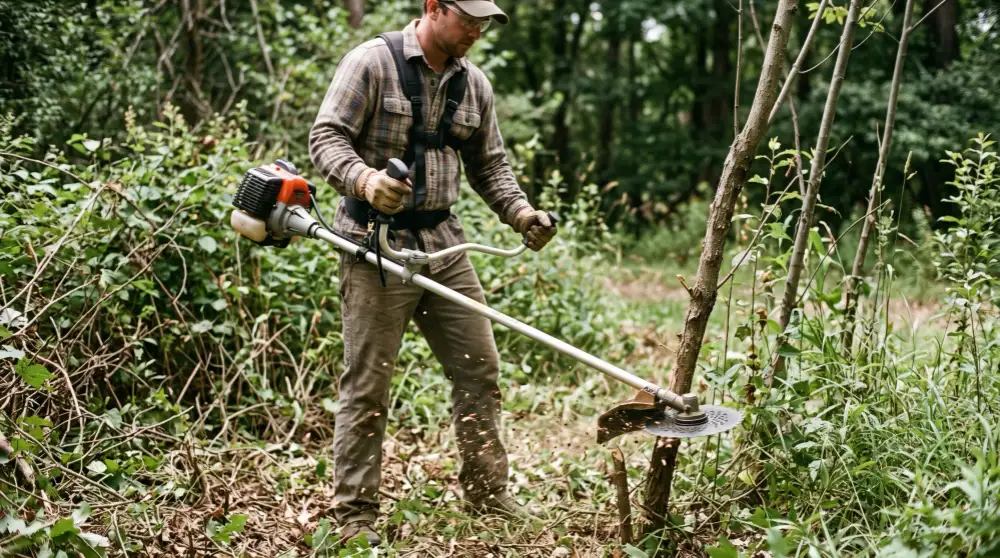
Table of Contents
- Can a Brush Cutter Cut a 1-Inch Sapling?
- What Blade Is Best for Cutting 1-Inch Saplings?
- How Do You Cut 1-Inch Saplings With a Brush Cutter?
- Conclusion
- FAQs About Cutting 1-Inch Saplings
- You May Also Like:
Can a Brush Cutter Cut a 1-Inch Sapling?
Yes, a suitable brush cutter can cut a 1-inch sapling when it has enough power and is fitted with a blade designed for woody growth. A 1-inch sapling is still relatively small, but its woody stem creates much more resistance than grass or soft weeds.
The material makes the difference. Grass and weeds have flexible stems that a blade can cut through relatively easily. A sapling has a solid, woody stem, so the blade needs to do more work to get through it. That extra resistance is why a brush cutter that breezes through grass may struggle when it meets a 1-inch sapling.
The machine matters, too. Cutting through wood puts more load on the brush cutter. A machine with enough power can keep the blade moving effectively as it cuts. If the engine bogs down as soon as the blade hits the stem, forcing the cut is unlikely to make things better.
Not every 1-inch sapling is equally easy to cut. A young, green stem can be much easier to cut than a dry or dense hardwood stem of the same diameter. The species, age, and condition of the wood can all affect how much resistance the blade encounters.
For that reason, think of 1 inch as a useful reference point, not a hard limit. If you have a few young saplings scattered through grass, weeds, or light brush, a properly equipped brush cutter can be a convenient way to clear them. If the growth is unusually hard or dense, however, it may be better to use a tool specifically intended for cutting wood.
What Blade Is Best for Cutting 1-Inch Saplings?
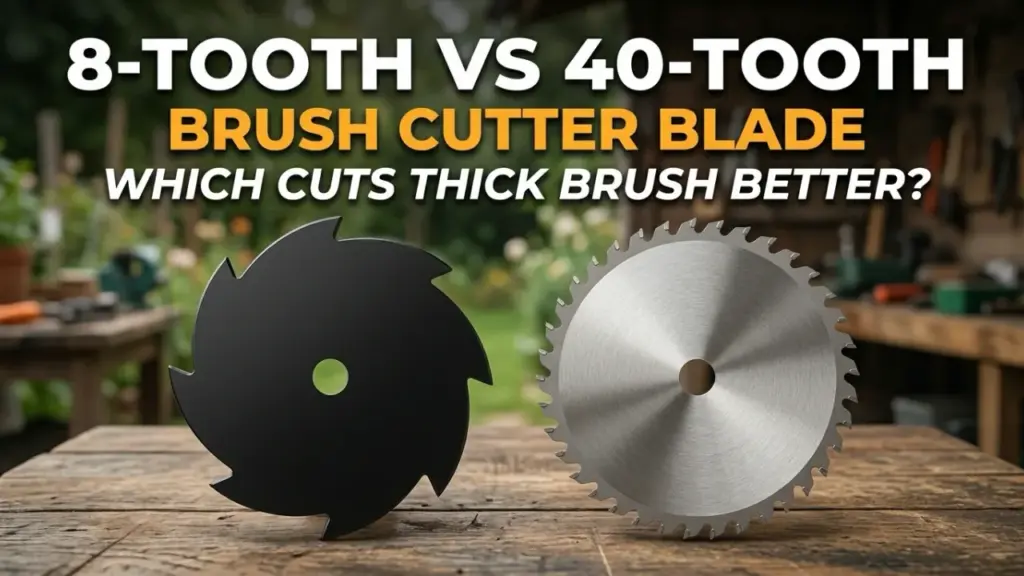
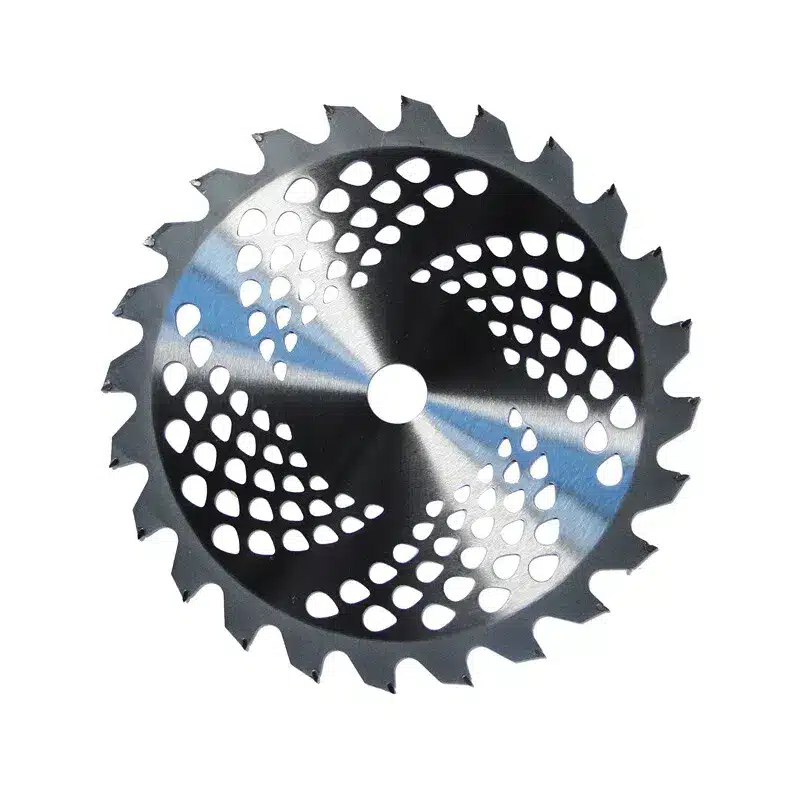
For 1-inch saplings, a multi-tooth or saw-style brush cutter blade designed for woody growth is generally a better choice than a blade made primarily for grass.
A few things are worth checking before choosing one:
- Look for a woody-growth blade. Choose a blade intended for brush, saplings, or similar tough vegetation.
- Consider a multi-tooth or saw-style design. The teeth are better suited to engaging and cutting through woody stems.
- Match the blade to your machine. Check the blade diameter, mounting specifications, and other compatibility requirements.
- Check the RPM rating. Make sure the blade’s maximum rated RPM is appropriate for your brush cutter, and never exceed it.
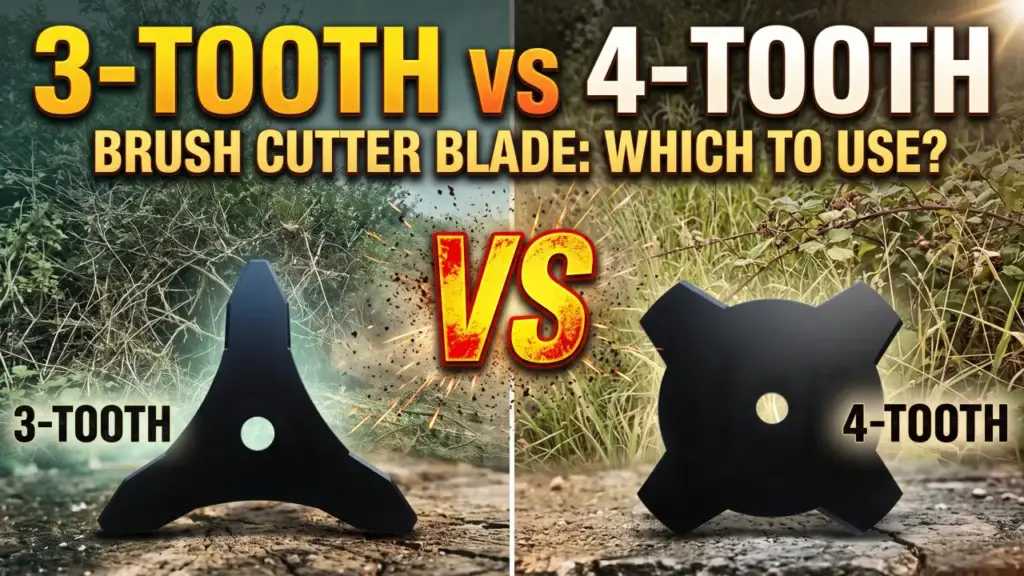
- Don’t rely on tooth count alone. A 3-tooth blade can handle some woody growth, but its suitability for a 1-inch sapling depends on the specific blade design and manufacturer recommendations.
There is no single blade that is perfect for every 1-inch sapling. Wood type, vegetation density, and the brush cutter itself can all change which blade makes the most sense. When in doubt, follow the blade and machine manufacturer’s recommendations for the material you plan to cut.
How Do You Cut 1-Inch Saplings With a Brush Cutter?
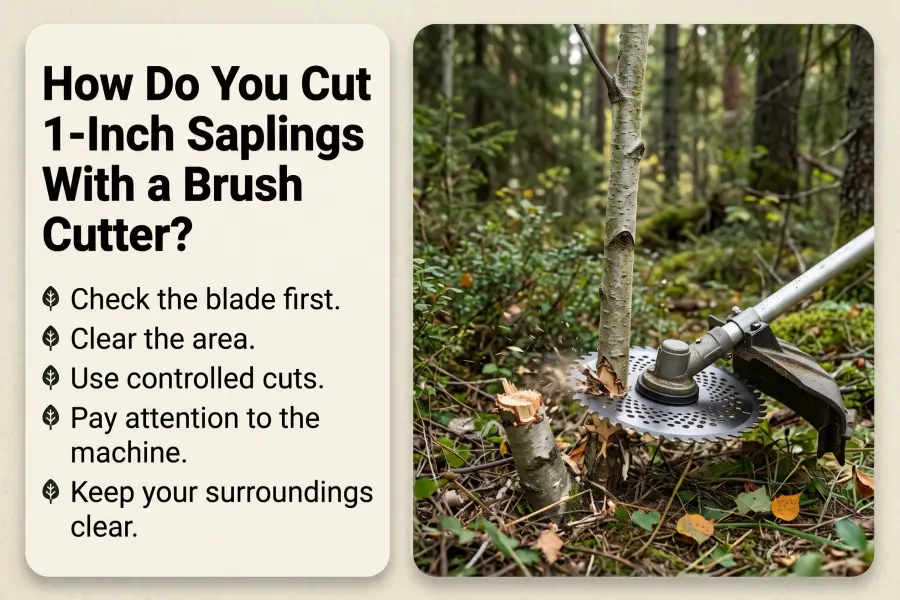
Once you have the right blade and machine, there is no need to overcomplicate the job. A few basic practices can make cutting easier and more controlled:
- Check the blade first. Make sure it is sharp, properly installed, and suitable for woody growth.
- Clear the area. Remove or avoid rocks, wire, and other objects that could contact the blade.
- Use controlled cuts. Let the blade do the work instead of forcing it into the stem.
- Pay attention to the machine. If the engine bogs down or the blade struggles, stop and reassess rather than forcing the cut.
- Keep your surroundings clear. Make sure people and pets stay away from the cutting area.
For a few scattered 1-inch saplings, this can be much quicker than switching between a string trimmer, brush cutter, and other tools as the vegetation changes.
Conclusion
So, can a brush cutter cut a 1-inch sapling? Yes, in many cases. If you have the right machine and a blade made for woody growth, a 1-inch sapling is a manageable job for many brush cutters.
The real trick is not simply finding the most aggressive blade you can. It is matching the blade, brush cutter, and type of wood to the job. Do that, and clearing those small saplings can be a lot less of a hassle.
FAQs About Cutting 1-Inch Saplings
Some 3-tooth blades can cut 1-inch saplings, but it depends on the blade’s design and intended use. Check the manufacturer’s specifications before using one for woody growth.
A suitable multi-tooth or saw-style blade designed for woody growth is generally a better choice than a grass-focused blade.
A grass-focused blade is generally not the best choice for a 1-inch sapling. A blade designed for brush or woody growth is more suitable.
A brush cutter can cut some small woody stems, but the right tool depends on the material, blade, and machine. Harder or larger wood may require a different cutting tool.