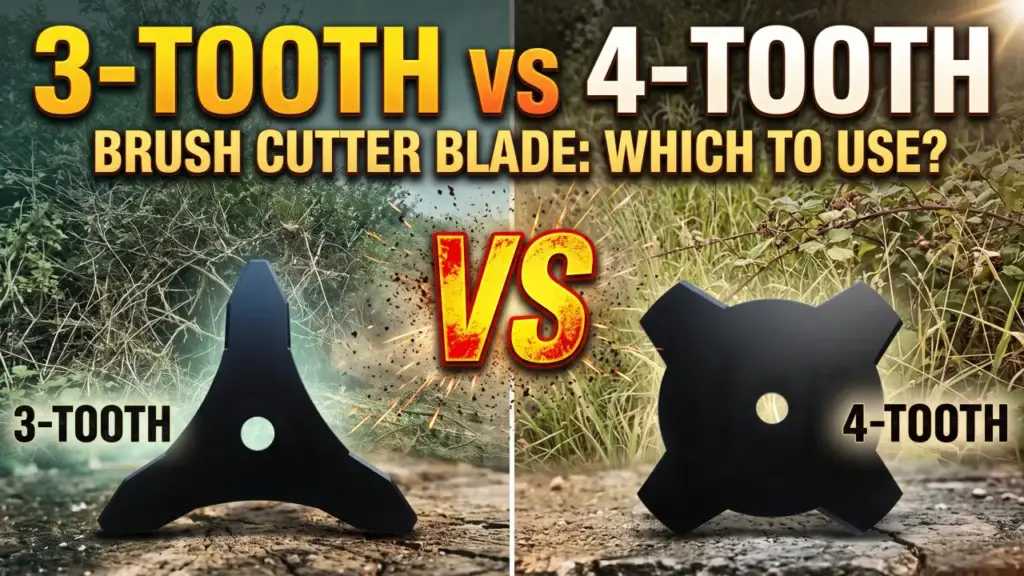
You’re clearing an overgrown patch, and your current blade isn’t quite doing the job. You start looking at replacements and find two similar options: a 3-tooth brush cutter blade and a 4-tooth blade. Both look capable, so is there any real reason to choose one over the other?
The answer depends on what’s growing in front of you. Sparse grass, dense weeds, tough reeds, and young brambles can put very different demands on a blade. This guide compares the two options for different cutting jobs and explains when a different blade design may be a better choice.
Table of Contents
- What’s the Difference Between 3-Tooth and 4-Tooth Brush Cutter Blades?
- Which Blade Is Better for Different Types of Vegetation?
- Does a 4-Tooth Brush Cutter Blade Cut Faster or Run Smoother?
- When Is It Worth Switching from a 3-Tooth to a 4-Tooth Blade?
- What Should You Check Before Choosing a Brush Cutter Blade?
- FAQs About 3-Tooth and 4-Tooth Brush Cutter Blades
What’s the Difference Between 3-Tooth and 4-Tooth Brush Cutter Blades?
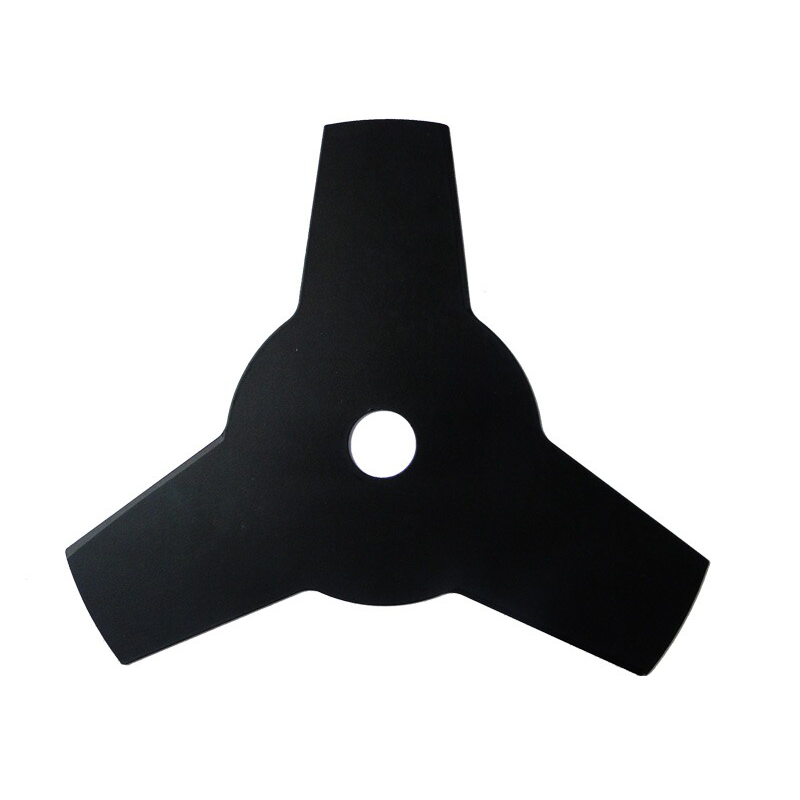
A 3-tooth brush cutter blade has three main cutting sections, while a 4-tooth blade has four. Both can be designed for grass and weeds, and their intended uses often overlap. The extra tooth alone does not tell you which blade will cut better.
Tooth count is only one part of a blade’s design. Cutting-edge shape, blade diameter, thickness, material, and spacing can also affect how it handles vegetation. Two blades with different tooth counts may perform similarly, while differences in their construction can make one more suitable for a particular job.
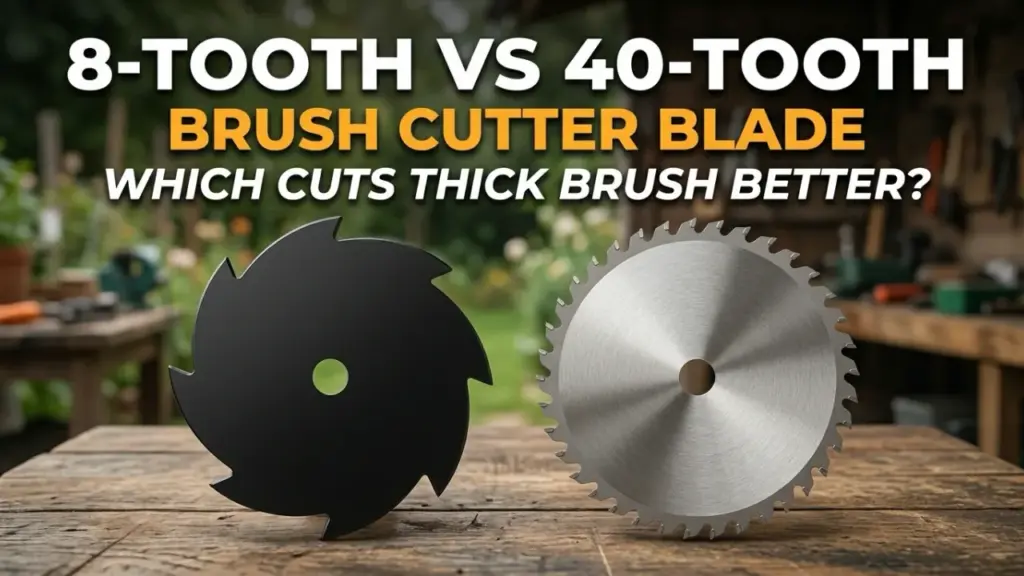
Before choosing between them, check what each blade is designed to cut. If you want to compare a different tooth configuration, see our guide to 3-tooth vs 40-tooth brush cutter blades.
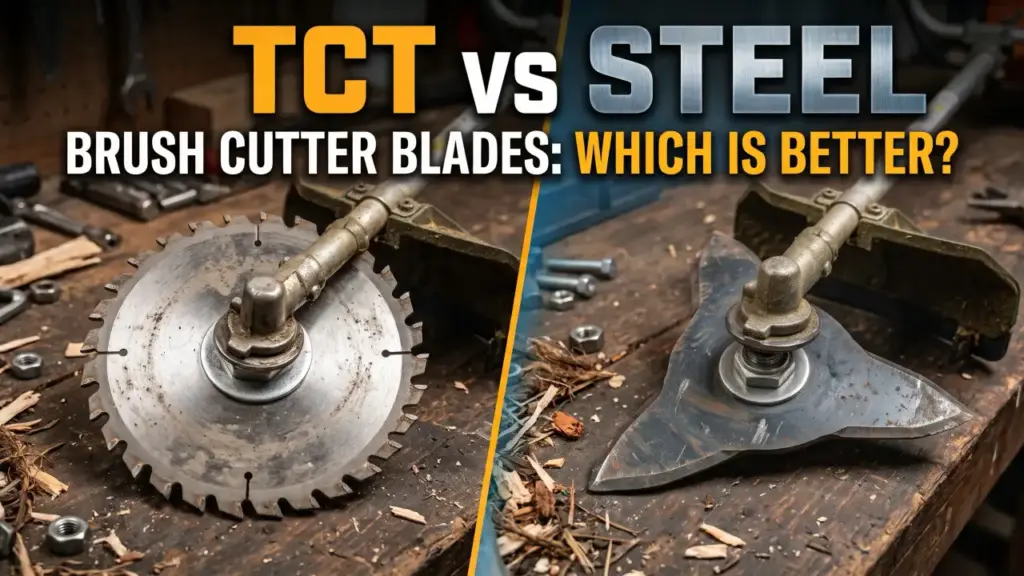
This article focuses on conventional flat metal blades for grass and weeds. Saw-style attachments intended for woody growth are a separate option, which we’ll cover where relevant.
Which Blade Is Better for Different Types of Vegetation?
For ordinary grass and weeds, both 3-tooth and 4-tooth brush cutter blades may be suitable. The best choice depends on the density of the growth, the toughness of the stems, and whether woody plants are mixed in.
Sparse Grass and Soft, Young Weeds
For sparse grass and soft, young weeds, either a 3-tooth or a 4-tooth blade rated for grass and weeds can do the job. If your current blade cuts cleanly, there may be little reason to switch just to gain another tooth.
Imagine trimming a lightly overgrown lawn or clearing young weeds along a garden boundary. The stems are thin, and the vegetation is spread out, so the blade does not have to cut through a large mass of growth at once. Both suitable blade designs may perform well under these conditions.
If you’re buying a replacement, compare the specific products for compatibility, maintenance requirements, and price. If you already own a suitable blade, there’s no need to assume the other tooth count will deliver a noticeable improvement.

Tall Grass with Long, Flexible Stems
For tall grass with long, flexible stems, choose a blade designed for grass clearing. If stems tend to bend, overlap, or collect around the cutting head, pay attention to the blade’s layout and clearance. A 3-tooth blade with a relatively open design may be worth considering, but a suitably designed 4-tooth blade can also work.
Tall grass can be difficult to cut when long stems bend away from the cutting edge instead of being cut cleanly. Dense growth can also make it harder for cut material to clear the cutting area.
When comparing two blades, look at their edge geometry, spacing, and stated applications rather than assuming that fewer teeth always handle long grass better.
If the growth is particularly dense, try cutting smaller amounts in each pass. Changing tooth count alone may not solve the problem if too much vegetation reaches the blade at once.
Dense Grass and Coarse Weeds
For dense grass and coarse weeds, choose a blade explicitly intended for heavy grass or weed clearing. Both tooth counts can be suitable, so focus on the specific blade’s construction and approved application rather than automatically favoring four teeth.
Mature weeds often have tougher stems, and dense growth puts more material into the cutting area at once. If you try to cut too much in one sweep, the machine may struggle to maintain its working speed.
If your 3-tooth blade is approved for heavy weeds and performs well, switching to four teeth may not improve the result. When comparing new blades, look for a clear recommendation for dense or coarse growth instead of relying on a general grass-cutting label.
Also consider the blade’s condition. If the same patch was easier to cut earlier in the season, inspect the cutting edges before buying a replacement. If a particular type of weed has always been difficult to cut, check whether your blade is suitable for it.
Tough, Fibrous Weeds and Reeds
For mature reeds and tough, fibrous weeds, choose a blade whose stated application covers that type of vegetation. Either tooth count may be appropriate, but a general-purpose grass blade should not automatically be assumed suitable for every fibrous plant.
Some weeds are difficult to cut despite having relatively thin stems. Their fibers can resist the cutting edge, while flexible stems may bend away rather than present themselves cleanly to the blade. Dense growth can make the job harder still.
For example, when clearing mature reeds in a wet area, a blade intended only for light grass trimming may not be the best match. Look for a blade specifically rated for heavy weeds or similar growth, then compare its design with the alternatives.
If both a 3-tooth and a 4-tooth blade are explicitly intended for the job, there may be no clear universal winner. Compare their actual construction, compatibility, and maintenance requirements instead of treating four teeth as an upgrade.
Young Brambles and Light Brush
For young brambles mixed with grass and soft weeds, a suitable 3-tooth or 4-tooth steel brush blade can work. As canes grow thicker and more woody, check whether your current blade is still suitable. The important distinction is how developed and woody the stems have become, not simply whether the plant is a bramble.
Young shoots often grow among grass and other weeds. When the stems remain relatively soft, a suitable grass and brush blade may handle the mixed growth without requiring a specialized woody-growth attachment.
As canes grow thicker, harden, and become tangled, the job changes. The blade faces more resistance, and flexible stems can catch or wrap around the cutting area.
For mature blackberry canes, consider a blade specifically rated for woody growth. Check the blade manufacturer’s intended applications and confirm that your brush cutter approves the attachment before choosing a replacement.
For more guidance, see our guide to the best brush cutter blade for brambles.

Dense Brush with Woody Stems
If established woody stems make up most of the work, don’t choose between a 3-tooth and a 4-tooth grass blade until you’ve confirmed that either is suitable. A saw-style attachment designed for woody growth may be a better option.
A mixed patch can be misleading because grass, vines, and woody stems may grow together. A conventional grass blade might handle the softer growth but struggle with the woody sections. Switching from three teeth to four does not automatically solve that mismatch.
Look at the main task rather than the easiest part of the patch. If you’re mainly clearing grass with occasional young shoots, a suitable grass blade may still be appropriate. If you regularly cut established woody stems or saplings, look for an attachment specifically intended for that work.
Machine approval is essential. Not every brush cutter supports saw-style blades, and the allowable attachment, diameter, and operating setup vary by model.
Does a 4-Tooth Brush Cutter Blade Cut Faster or Run Smoother?
No, a 4-tooth brush cutter blade is not inherently faster or smoother than a 3-tooth blade. Actual performance depends on the blade’s design, the vegetation, the machine, and the blade’s condition and installation.
At the same rotational speed, a blade with four cutting sections passes a fixed point more frequently than one with three. But more frequent passes do not automatically mean faster clearing. Stems can bend, dense material can obstruct the cutting area, and heavy cutting can reduce the machine’s working speed.
Blade condition matters too. A sharp 4-tooth blade may outperform a worn 3-tooth blade, but the improvement may come from the sharper edges rather than the extra tooth.
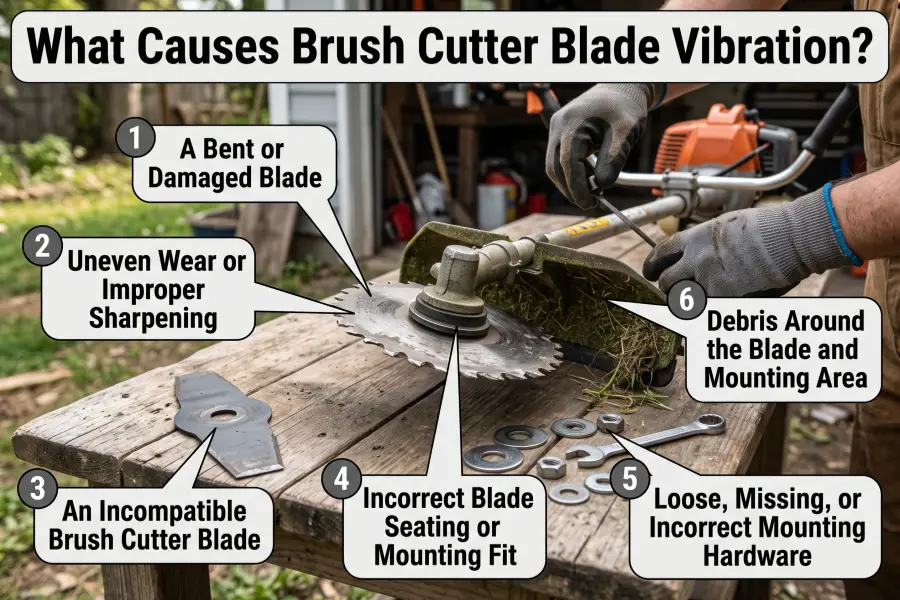
Neither tooth count guarantees low vibration. Blade damage, incorrect mounting, imbalance, or a machine fault can all contribute to vibration.
If your goal is to improve cutting speed or reduce vibration, identify the problem first. Compare blades with similar intended uses and specifications, and don’t treat tooth count alone as evidence of better performance.
When Is It Worth Switching from a 3-Tooth to a 4-Tooth Blade?
Switch from a 3-tooth to a 4-tooth blade when the specific replacement better suits your work or offers a practical advantage, not simply because it has another tooth. If your current blade handles the vegetation well and remains serviceable, keeping it may be the better decision.
Your vegetation has changed. If you’ve moved from light grass to dense weeds or mixed brush, check whether your current blade is still appropriate. A different product may help, but the right choice could still be a 3-tooth blade or another type of attachment.
Your blade no longer cuts cleanly. Inspect the cutting edges and overall condition before buying another blade. If sharpening is permitted and the blade remains serviceable, maintenance may restore its performance. If it is damaged or excessively worn, choose a compatible replacement suited to the same job.
You’re buying a replacement anyway. Compare the approved applications, blade dimensions, construction, maintenance requirements, availability, and price. If both products suit your work, these practical differences can settle the choice.
You expect four teeth to make the job easier. Before switching, consider what is actually slowing you down. Dense vegetation, a dull edge, unsuitable blade design, or machine limitations may be responsible. A fourth tooth is not a guaranteed fix.
If your 3-tooth blade does the job well, you don’t need to replace it just for the sake of changing. If you’re buying a new blade, choose the product that addresses your actual cutting needs.
What Should You Check Before Choosing a Brush Cutter Blade?
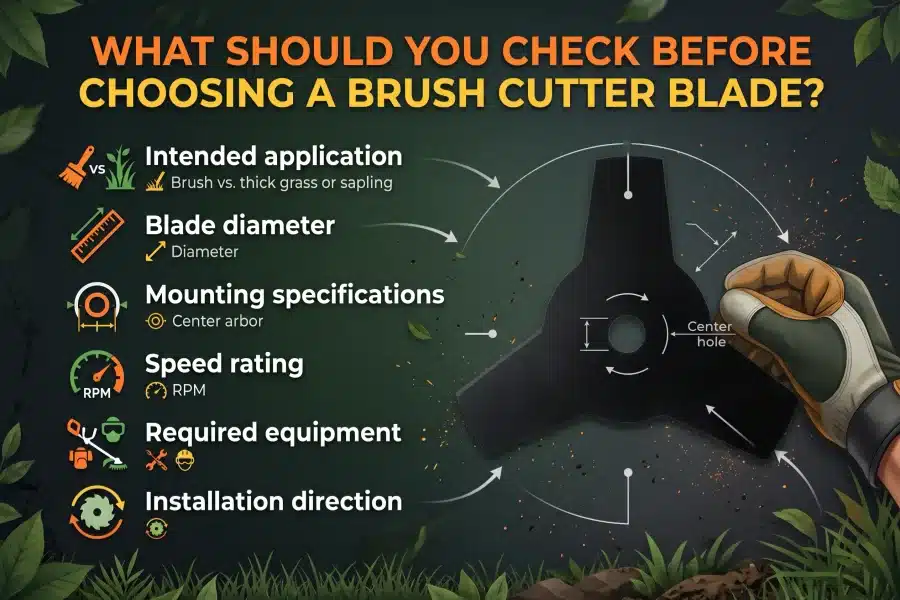
Before choosing either blade, confirm that your brush cutter approves the attachment and its required setup. A blade that fits over the mounting hole is not necessarily compatible with the machine.
- Intended application: Confirm that the blade is designed for the vegetation you need to cut.
- Blade diameter: Stay within the size or range approved for your brush cutter.
- Mounting specifications: Match the center hole and required retaining hardware.
- Speed rating: Confirm that the blade’s maximum permitted speed is compatible with the machine’s specified cutting-attachment speed.
- Required equipment: Use the guard, handle, harness, and other components specified for the attachment.
- Installation direction: Follow the manufacturer’s instructions and any rotation markings.
Engine displacement alone does not establish which blade a brush cutter can use. The machine’s design and approved attachments matter too.
For help with sizing, see our guide to choosing the right brush cutter blade size.
FAQs About 3-Tooth and 4-Tooth Brush Cutter Blades
Not every blade is reversible. Whether you can flip a blade depends on its design and the manufacturer’s instructions. Only reverse it when the manufacturer explicitly permits this.
Not automatically. Cutting stems and shredding vegetation into smaller pieces are different tasks. Use a blade for mulching only if the manufacturer specifies that application and your machine approves the attachment.
Not necessarily. Sharpening difficulty depends on the blade’s edge geometry, material, and prescribed sharpening method, not just the number of teeth. Follow the manufacturer’s instructions, and replace blades with cracks or structural damage rather than attempting to sharpen them.