A brush cutter blade can keep cutting long after it has lost its original edge. If yours is dull or not cutting as well as it used to, that does not mean you have to throw it away. It may only need sharpening and routine maintenance. But a blade that is cracked, bent, or otherwise damaged is a different matter. Continuing to use it can put your safety at risk.
Knowing when to replace a brush cutter blade is not always easy. There is no universal rule that says, “After using your blade 40 times, you need to replace it.” How often you use it, what you cut, the impacts it takes, and how well you care for it all make a difference. This guide will help you tell when a blade can be sharpened, when it needs replacing, and what to check if your brush cutter starts behaving differently.
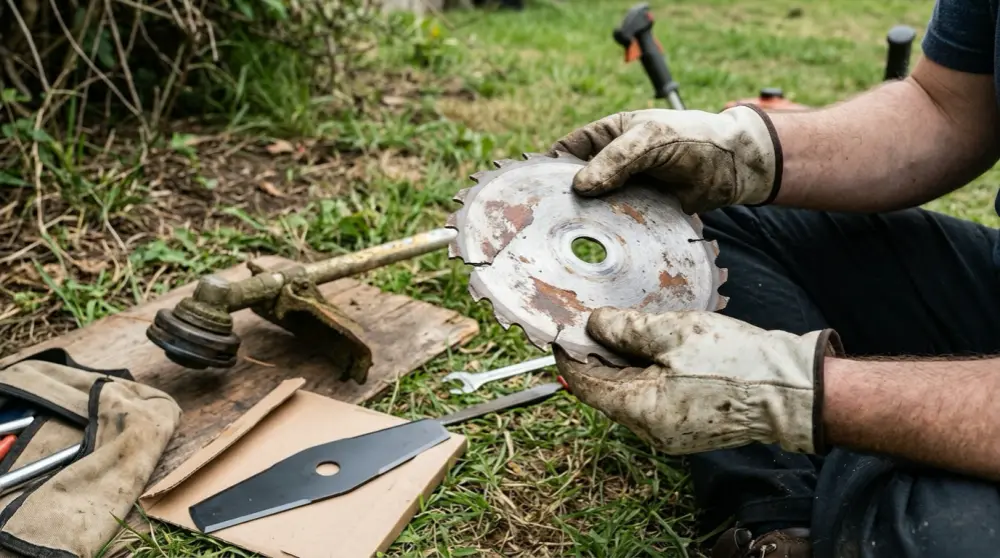
Table of Contents
- When Must a Brush Cutter Blade Be Replaced?
- Which Cutting Problems Can Be Fixed Without Replacing the Blade?
- What Should You Check If the Blade Vibrates or Makes Unusual Noise?
- How Often Should You Check a Brush Cutter Blade for Replacement?
- Conclusion
- FAQs About Replacing Brush Cutter Blades
When Must a Brush Cutter Blade Be Replaced?
Replace a brush cutter blade when you find a crack, a significant bend or warp, a broken tooth, or damage around the mounting hole. If the blade itself has an imbalance that cannot be corrected, take it out of service. These are problems with the blade itself, not just its cutting edge.
Start by looking over the entire blade. Check the body for cracks and bends, including areas that may be easy to miss at a quick glance. Look at the teeth or cutting edges for pieces that have broken away. Then check the mounting hole and the surrounding metal. Damage there matters because the blade needs to sit securely and correctly on the machine, however sharp its edge may be.
A blade does not have to stop cutting before it needs replacing. You may still get through a patch of weeds with a damaged blade, but that is not a good reason to make another pass. Sharpening cannot repair structural damage. If you find damage that affects the blade’s integrity or mounting, stop using it rather than trying to get a little more life out of it.
Balance also needs attention, but vibration does not automatically mean the blade itself is unbalanced. Incorrect mounting, worn components, or failing to comply with ISO 11806 safety standards for portable power tools can produce similar symptoms. Check the mounting and other possible causes first, following your machine’s instructions. If the blade manufacturer specifies a wear limit or other replacement condition, follow that guidance as well.
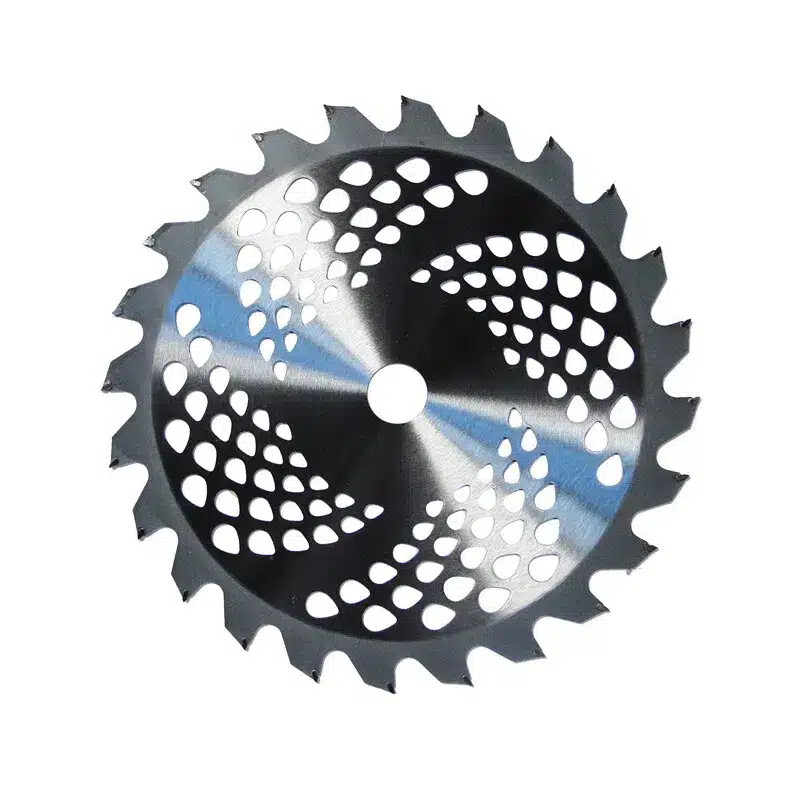
Which Cutting Problems Can Be Fixed Without Replacing the Blade?
A brush cutter blade that cuts poorly may only need sharpening if it is otherwise sound and its manufacturer allows sharpening. If you need several passes through vegetation that used to be easy to cut, or the blade starts ripping weeds instead of cutting them cleanly, a dull edge may be the problem.
A dull blade can also make the job feel harder. You may notice more resistance when cutting or feel that the machine is working harder than usual. These signs are worth checking, but they do not automatically mean the blade needs replacing.
If the edge is simply dull or has minor nicks, sharpening may bring it back into service. The correct sharpening method depends on the blade design and the manufacturer’s instructions. Our guide on how to sharpen a brush cutter blade covers the process. You do not need to replace every blade that has lost its original edge.
What Should You Check If the Blade Vibrates or Makes Unusual Noise?
Stop cutting if you feel excessive vibration or hear a noise you did not notice before. The cause may be the blade, but it can also come from incorrect mounting, worn components, or another problem with the cutting attachment.
Shut down the machine and disconnect it from its power source as directed in the manual before going near the cutting attachment. Check that the blade and mounting parts are fitted and secured correctly, then inspect the cutting attachment and blade for damage.
Do not keep cutting in the hope that the vibration will settle down. If the mounting is correct but the problem remains, identify the cause before using the machine again. Do not assume that the blade needs replacing until the inspection confirms a blade-related problem.
How Often Should You Check a Brush Cutter Blade for Replacement?
Follow the inspection intervals in your equipment and blade manuals, and inspect the blade again after an impact or a noticeable change in how the machine runs or cuts. There is no universal number of hours or uses after which every blade must be replaced.
A blade used on weekends to trim light vegetation will not necessarily wear like one used frequently in thick brush, especially around rocks and other debris. The blade material, the work it does, and how you maintain it all affect how long it lasts.
So do not rely on the calendar alone. Pay attention to the blade’s condition and follow any wear limits or replacement instructions from the blade and equipment manufacturers.
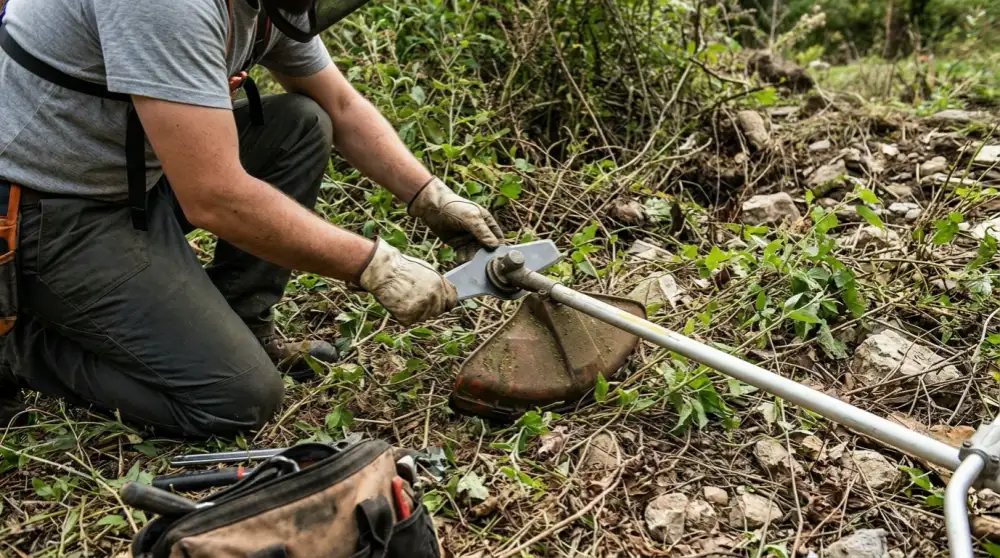
Conclusion
When deciding whether to replace a brush cutter blade, start with a proper inspection rather than its age or cutting performance alone. If the blade is sound and sharpening is permitted, you may be able to restore its edge.
If inspection finds a problem that cannot be safely corrected, replace the blade according to the manufacturer’s instructions.
FAQs About Replacing Brush Cutter Blades
No. Each sharpening removes some material, and the blade must remain within the manufacturer’s limits. If it can no longer be sharpened as specified, follow the manufacturer’s replacement guidance.
Only if that cutting attachment is approved for your brush cutter. Check the machine’s instructions for the permitted blade type and dimensions, mounting parts, guard, and speed requirements. A blade can fit onto a machine without being suitable for it.
Not necessarily. Inspect the mounting parts for damage or wear, and follow your brush cutter manufacturer’s instructions for reusing or replacing them. Do not fit a new blade with damaged or incompatible mounting parts.
Not automatically. Stop the machine and inspect the blade and mounting parts after a significant impact. If the inspection finds damage or another condition that makes the blade unsuitable for further use, replace it according to the manufacturer’s instructions.