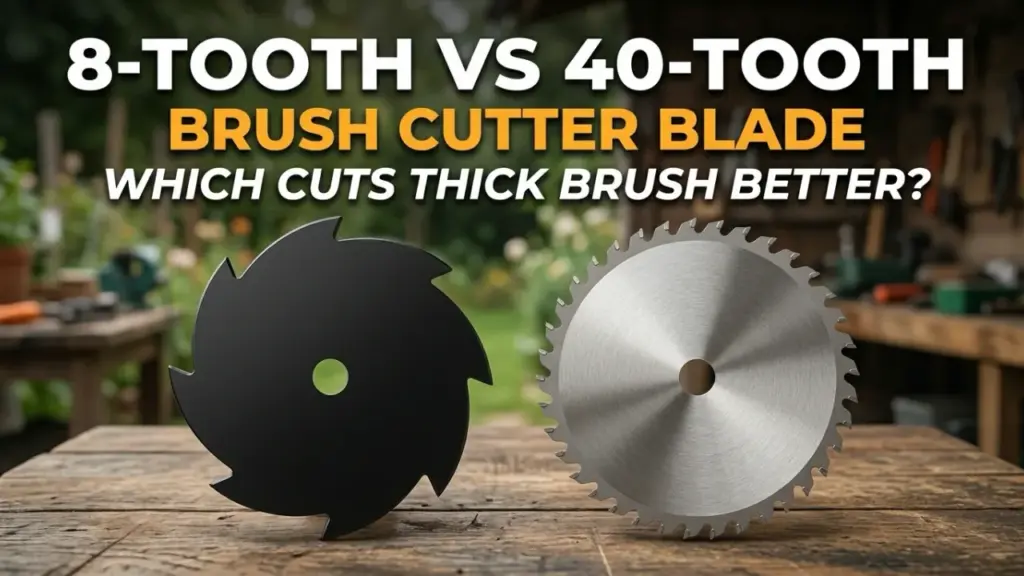
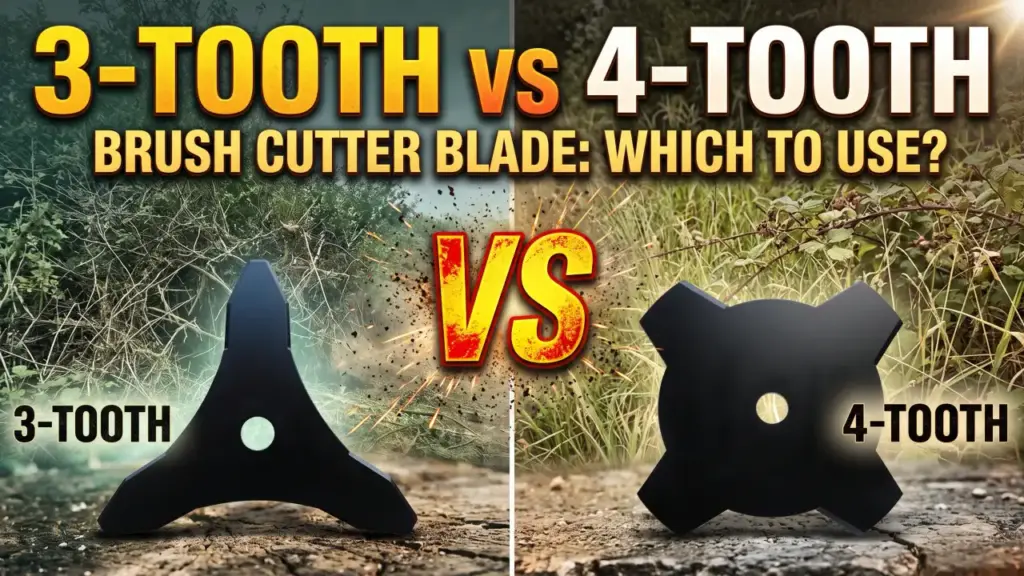
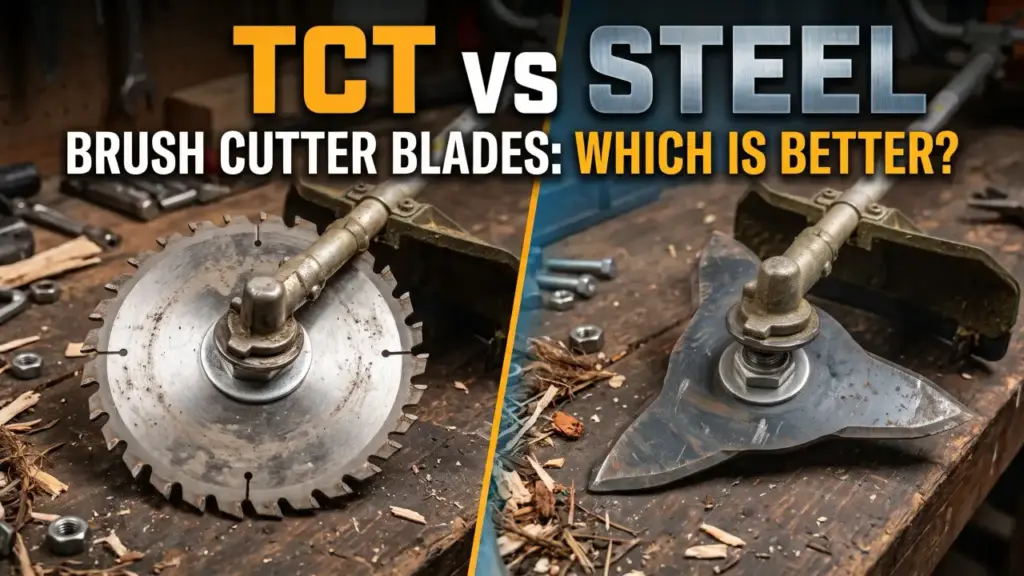
There’s plenty of information out there on cutting blades. In fact, there is almost too much. Buying guides focus on specific products. Product reviews compare individual blades. Technical articles explain tooth designs, materials, and cutting methods. But when you are trying to understand the differences between blade types, it can be difficult to see how everything fits together.
This guide takes a different approach. Instead of reviewing individual blades, we organize common cutting blade types by the materials they are designed to cut. This makes it easier to understand why different blades exist and how to choose the right blade before comparing specific designs.
Why Does the Material You’re Cutting Matter When Choosing a Blade?
The material you’re cutting matters because different materials have different levels of hardness, flexibility, and cutting resistance. These differences affect how a blade cuts, how much stress it experiences, and what type of blade design will work best for the job.
Don’t expect a blade designed for wood to cut steel the same way. It won’t. Wood has grain that affects cutting resistance and finish quality. Tall grass and brush are flexible, which means they can bend away instead of being cut cleanly. Aluminum is softer than steel but can create buildup and rough edges if the blade is not designed for it. Steel and iron require blades that can handle higher cutting resistance and heat.
Use the wrong blade for the job, and you will notice the difference. The cut becomes harder, the finish suffers, and the blade wears out much faster.
When you start choosing blades based on the material they are designed to cut rather than only the machine they fit, the selection process becomes much easier. This approach helps you narrow down your options before comparing specific blade designs, tooth patterns, or cutting applications.
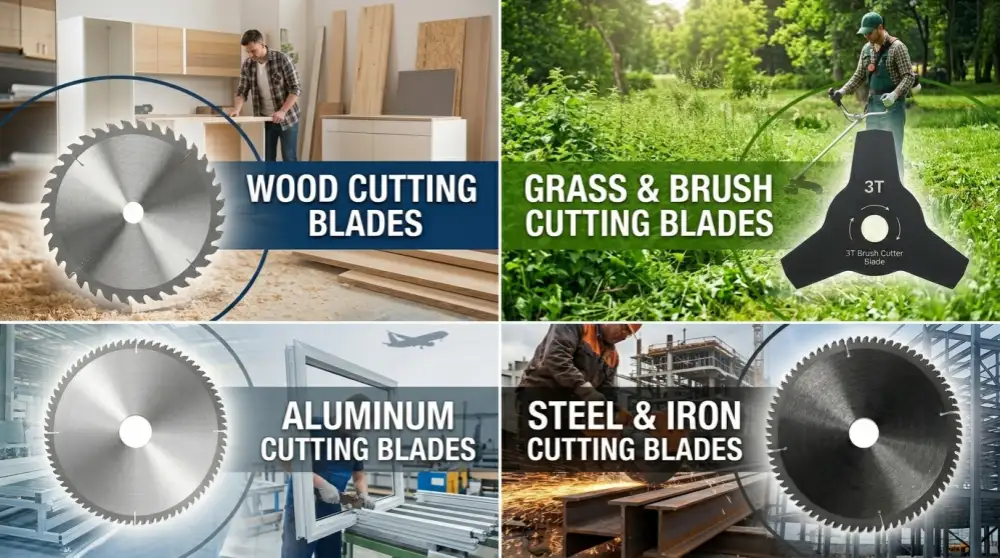
The main blade categories based on cutting material are:
| Blade Category | Designed For | Common Applications |
|---|---|---|
| Wood Cutting Blades | Natural and engineered wood | Carpentry, cabinetry, construction |
| Grass & Brush Cutting Blades | Grass, weeds, and dense vegetation | Landscaping, agriculture, property maintenance |
| Aluminum Cutting Blades | Non-ferrous metals such as aluminum | Fabrication, construction, manufacturing |
| Steel & Iron Cutting Blades | Ferrous metals such as steel and iron | Structural work, fabrication, heavy industry |
Wood Cutting Blades
Wood cutting blades are designed to handle the different cutting behaviors of wood, helping achieve cleaner cuts across a wide range of woodworking applications.
While wood might seem more straightforward to cut than metal, it’s certainly not without its complications. Wood has a grain that affects how the blade wants to cut. Hardwood can resist the cut, softwood can splinter, and sheet goods like plywood, MDF, OSB, and particleboard can chip easily without the right blade.
Some types of wood can also produce large chips or sticky resin that need to be cleared from the cut path quickly. Wood cutting blades therefore use different tooth profiles and gullet designs to help maintain cleaner, smoother cuts.
The table below highlights the main types of wood cutting blades and what each one is best suited for.
| Woodworking Blade Type | Primary Cutting Purpose | Performance Characteristics |
|---|---|---|
| Rip Blades | Cutting along the grain (longitudinal cuts) | Deep gullets, fewer teeth, fast cutting speed with low resistance |
| Crosscut Blades | Cutting across the grain (transverse cuts) | More teeth, clean and smooth finish, minimized wood splintering |
| Combination Blades | General woodworking (both rip and crosscut tasks) | Versatile multi-purpose design for standard workshop projects |
| Specialty Wood Blades | Specific tasks (plywood, dado, joinery) | Optimized tooth geometry and hook angles for clean specialized cuts |
Rip Blades
Rip blades are designed to cut along the grain of wood. They typically have larger gullets and fewer teeth to remove large wood chips quickly. This reduces resistance when ripping through solid lumber, allowing you to cut faster with less effort. The tradeoff is that the finish is usually rougher, so you’ll often need to sand the cut edges before finishing.
Crosscut Blades
Crosscut blades take the opposite approach. When cutting across the grain, the blade has to slice through wood fibers that naturally resist tearing. More teeth allow the blade to make finer cuts through those fibers, reducing splintering and leaving a smoother finish. That’s why crosscut blades are commonly used for cabinetry, trim work, furniture making, and other woodworking projects where appearance matters.
Combination Blades
Combination blades give you a balance between ripping and crosscutting. They allow you to handle different woodworking tasks without constantly switching blades when your projects involve both types of cuts. Combination blades won’t match the performance of a dedicated rip or crosscut blade for specialized work, but they are a practical choice for general carpentry and woodworking applications.
Specialty Wood Blades
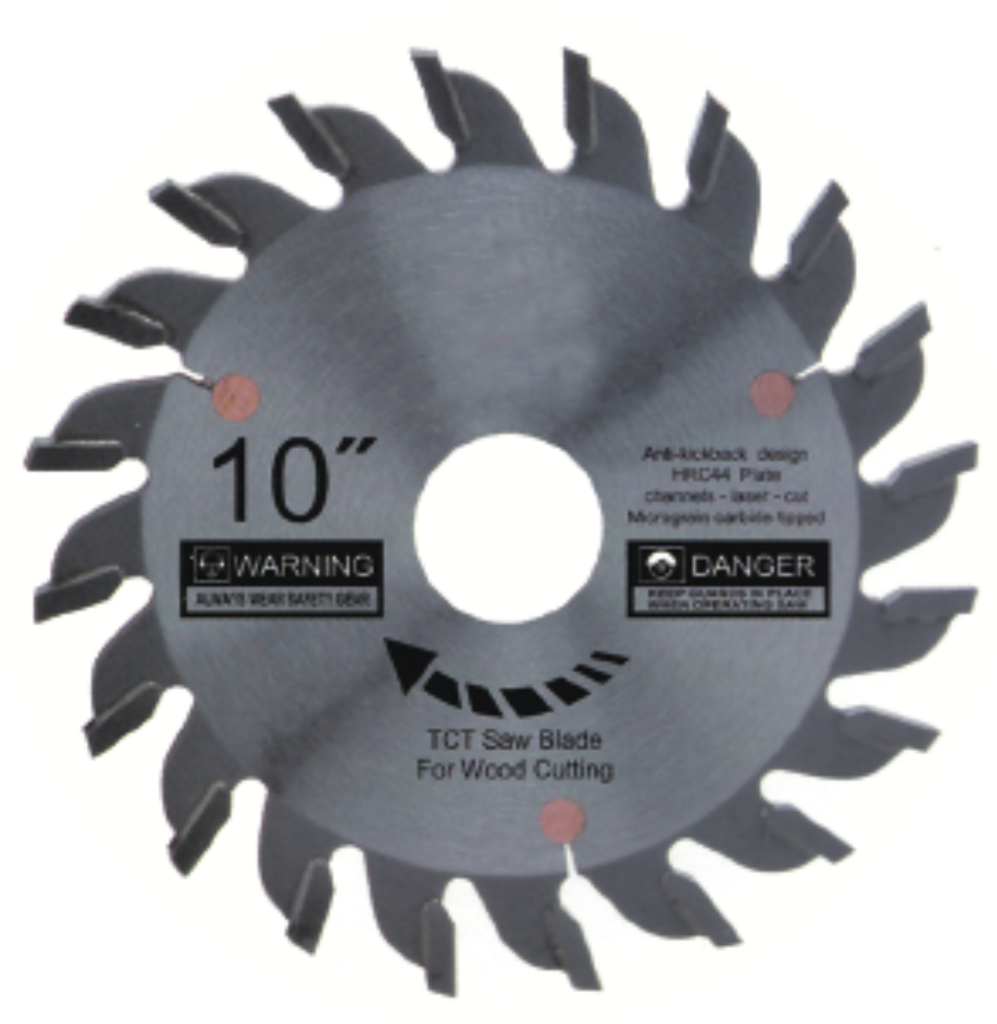
Some wood cutting blades are designed for more specialized tasks. Dado blades are used to create wide, flat-bottomed grooves for shelving, cabinetry, and joinery. Panel sizing blades are designed to produce smooth, precise edges on plywood, MDF, and other sheet materials. These blades are optimized for specific applications where standard blades may not deliver the same results.
Grass & Brush Cutting Blades
Grass & brush cutting blades are designed to handle different types of vegetation, from soft grass to thick brush and small saplings. Choosing the right blade improves cutting performance, reduces clogging, and delivers cleaner results.
Don’t let grass fool you. It may look soft and harmless, but it’s not. Vegetation twists, bends, and pulls away from the blade instead of staying rigid like wood. Dense weeds can clog a blade, vines wrap around it, and shrubs or thin saplings resist cutting with their woody stems. Whether you’re maintaining a lawn, clearing farmland, or reclaiming an overgrown lot, using the right blade will make the job faster, cleaner, and easier.
The table below highlights the main types of grass & brush cutting blades and what each one is best suited for.
| Blade Type | Best For | Key Benefit |
|---|---|---|
| 2-Tooth Blades | Tall grass and light weeds | Fast cutting with less clogging |
| 3-Tooth Blades | Thick weeds and coarse brush | Greater cutting power for dense vegetation |
| Multi-Tooth Blades | Everyday grass and light brush | Cleaner cuts and greater versatility |
| Circular Brush Blades | Shrubs, vines, and small saplings | Efficient cutting of woody vegetation |
2-Tooth Blades
When cutting speed is your primary concern, 2-tooth blades are an excellent choice. These blades have a simple design that allows vegetation to clear away quickly instead of building up around the blade. They cut through tall grass and weeds efficiently while reducing clogging, making them a practical option for clearing large overgrown areas.

3-Tooth Blades
3-tooth blades are designed for thicker vegetation that standard grass blades struggle to handle. They cut through coarse brush, stubborn weeds, and thicker stems more effectively, making them well suited for clearing overgrown fields, roadsides, and ditches.
Multi-Tooth Blades
Multi-tooth blades are the most common choice for everyday grass and light brush cutting. They handle grass, lighter weeds, and small plants with ease while producing a cleaner finish than lower-tooth-count blades. If appearance matters as much as cutting performance, they are generally the better choice.
Circular Brush Blades
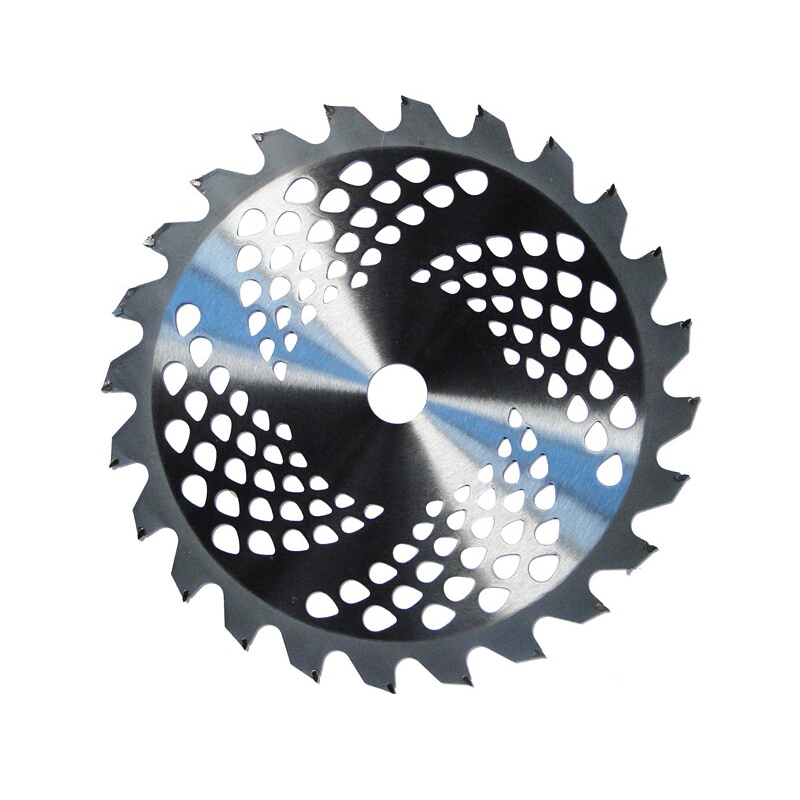
Circular brush blades are designed for heavier vegetation where standard brush blades reach their limits. Their saw-like teeth allow them to cut through woody shrubs, thick vines, and small saplings more efficiently while producing cleaner cuts.
Aluminum Cutting Blades
Aluminum cutting blades are designed to handle the unique challenges of cutting aluminum, including heat buildup, chip control, and maintaining clean edges. These blades are especially useful when precision matters as much as cutting speed.
People commonly think that aluminum must be easy to cut due to how soft it is compared to steel. While that’s true to an extent, it’s only half the battle. Aluminum can generate significant heat during cutting, and its soft chips tend to stick to the teeth rather than being cleared away. Before you know it, burrs are building up on the edge, the finish of your cut degrades, and your blade feels like it’s dragging across the material rather than cutting.
That’s why aluminum blades are designed the way they are. They use specific tooth designs to improve chip removal, reduce heat-related issues, and produce cleaner cuts.
The table below highlights the main types of aluminum cutting blades and what each one is best suited for.
| Blade Type | Best For | Key Benefit |
|---|---|---|
| General-Purpose Aluminum Blades | Everyday aluminum cutting tasks | Versatile performance across different applications |
| Triple-Chip Grind (TCG) Blades | Thick aluminum extrusions and solid pieces | Cleaner cuts with better heat management |
| Fine Finish Aluminum Blades | Decorative and visible aluminum components | Smoother edges with minimal cleanup |
General-Purpose Aluminum Blades
If your workload shifts from job to job, your best bet is typically going to be a general-purpose aluminum blade. These blades are made to handle most aluminum profiles, sheets, tubing, and extrusions without making you change blades every time you switch materials. They may not excel at any one thing, but they provide reliable performance across a variety of fabrication applications.
Triple-Chip Grind (TCG) Blades
Triple-Chip Grind (TCG) blades are one of the most popular tooth designs when it comes to cutting aluminum. As you may have guessed, they don’t have all teeth shaped the same. Instead, they alternate between a flat-top tooth and a chamfered tooth. This helps distribute the cutting load more evenly across the blade. The result is better heat management and cleaner edges overall.
They work particularly well when cutting thicker aluminum extrusions or solid pieces of aluminum that put more stress on your blade.
Fine Finish Aluminum Blades
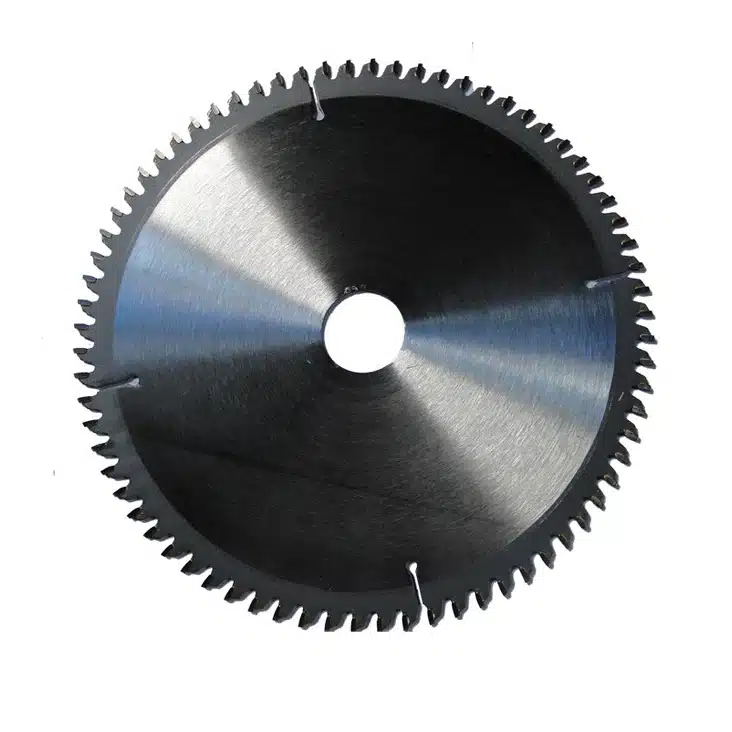
Sometimes your cuts don’t have room for rough edges. Fine-finish blades use a higher tooth count to provide smoother cuts with minimal cleanup. This type of blade is often used for decorative trim, architectural profiles, sign-making, and other aluminum components where appearance matters.
Steel & Iron Cutting Blades
Steel and iron cutting blades are designed to handle the high resistance, friction, and heat generated when cutting ferrous metals. Compared with wood or aluminum, steel requires blades that can withstand tougher cutting conditions while maintaining accuracy and durability.
Steel is a completely different challenge. It generates more heat, creates more friction, and has much higher cutting resistance than wood or aluminum. Some cutting methods produce sparks as the blade cuts through steel, especially on thicker pieces. Every cut puts significant stress on the blade itself.
Steel cutting blades are built to be harder and more heat-resistant than many other blade types. They are commonly used for cutting structural steel, pipes, machine parts, and fabricated metal pieces in construction and industrial settings.
The table below highlights the main types of steel & iron cutting blades and what each one is best suited for.
| Blade Type | Best For | Key Benefit |
|---|---|---|
| Cold Saw Blades | Precision metal cutting and fabrication | Accurate cuts with reduced heat buildup |
| Abrasive Cutting Blades | Demolition and heavy-duty cutting | Fast cutting through tough materials |
| TCT Metal Cutting Blades | Repeated metal cutting applications | Long-lasting performance and cleaner cuts |
Cold Saw Blades
Cold saw blades are designed to make highly accurate cuts while minimizing heat buildup. These cooler cuts reduce stress on the material and make finishing easier. They are commonly used in fabrication shops and production environments where precision is important.
Abrasive Cutting Blades
Abrasive cutting blades don’t have teeth. Instead, they grind through metal using abrasive materials. These blades are ideal for demanding cutting tasks such as demolition work, rebar, structural steel, large pipes, and other heavy materials. The finish may not be as smooth, but speed is often the main priority.
TCT Metal Cutting Blades
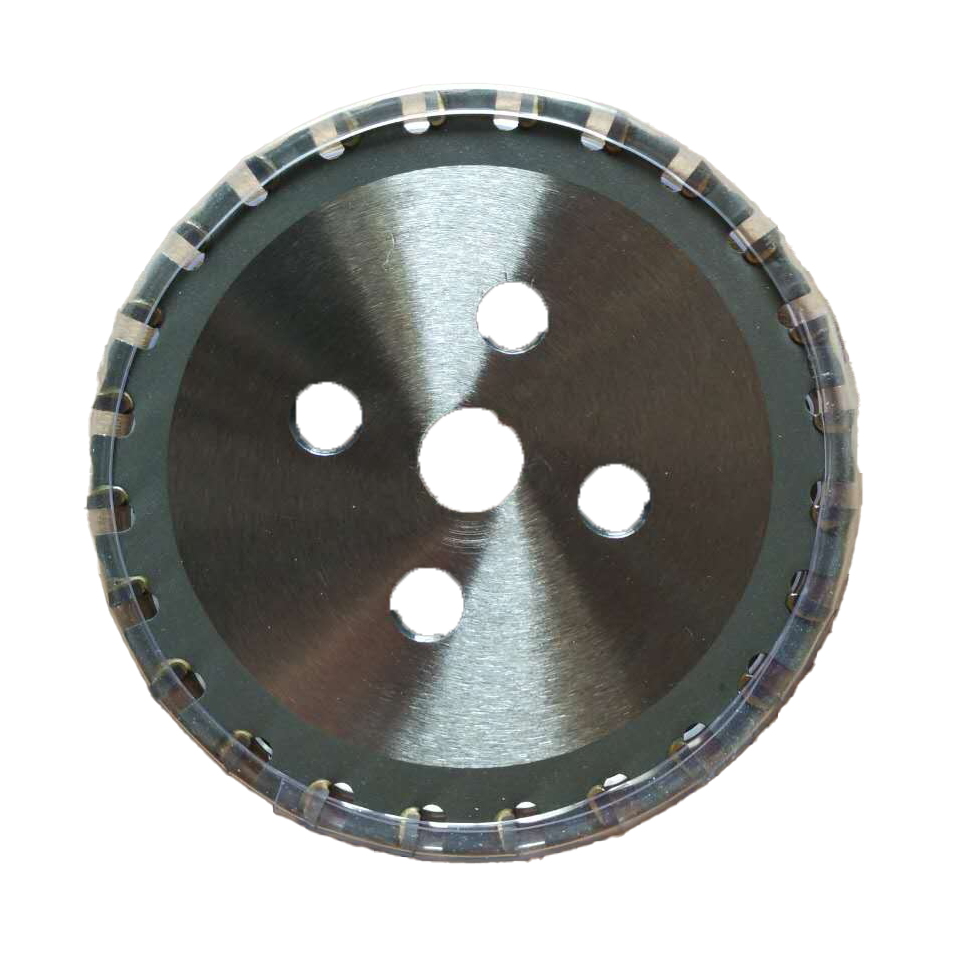
TCT metal cutting blades use tungsten carbide tips that stay sharp longer than traditional steel teeth. They can produce cleaner cuts while reducing the need for frequent blade replacement. These blades are commonly used for repeated metal cutting applications in fabrication settings.
Industrial workshops also use bi-metal and carbide-tipped bandsaw blades for specialized metal cutting. Bi-metal blades offer flexibility and heat resistance, while carbide-tipped bandsaw blades are better suited for cutting hard alloys.
Conclusion
The sharpest blade is not necessarily the best cutting blade. The right blade is the one designed for the material you are cutting. Wood, grass, aluminum, and steel all react differently during cutting, which is why different blade designs exist for different materials and applications.
Once you understand these four material-based blade categories and the common options within each one, choosing the right blade becomes much easier.
FAQs About Cutting Blades
Some multi-purpose blades can handle more than one material, but blades designed for specific materials usually provide better cutting performance, cleaner results, and longer blade life.
Using the wrong cutting blade can lead to rough cuts, excessive heat, vibration, and faster tooth wear. It can also increase safety risks, including a higher chance of kickback in some cutting applications.
Replace a cutting blade when you notice signs such as burning, unusual vibration, reduced cutting performance, or chipped and missing teeth. Inspecting your blade after each job can help prevent poor cuts and unexpected failures.
No. Higher tooth counts usually produce smoother finishes, while lower tooth counts remove material faster and clear chips more efficiently during heavy cutting. The best choice depends on the material and type of cut.
Carbide-tipped blades are a good choice when cutting harder, abrasive, or heat-generating materials such as hardwood, aluminum, and plastics. Carbide tips stay sharp longer and handle heat better than standard steel teeth.