All thick grass may look the same at first glance. Tall equals tall, right? Wrong. One area may flatten after a single pass, while another can fight you all day. Thick stems, hidden weeds, and young woody growth can turn what seems like a quick clearing job into hours of frustration.
That’s when many people realize the problem isn’t simply having a blade. It’s having the right blade for the type of thick grass they are cutting.
This guide will help you choose the right option for different conditions. You’ll learn which brush cutter blades work best for dense grass, wet grass, dry grass, and mixed vegetation, along with the common problems caused by using the wrong blade.
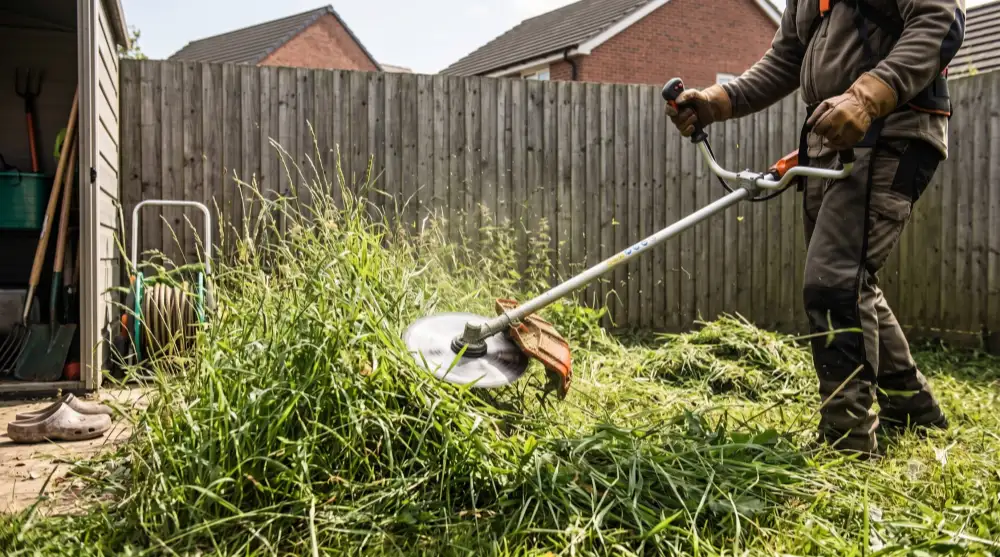
Table of Contents
- What Counts as Thick Grass?
- Best Brush Cutter Blade for Different Thick Grass Conditions
- Common Problems Caused by the Wrong Brush Cutter Blade
- Conclusion
- FAQs About Brush Cutter Blades for Thick Grass
What Counts as Thick Grass?
Thick grass refers to dense, heavy-growth grass with thicker, tougher stems that create more resistance during cutting. Height alone does not determine whether grass is thick, as shorter grass with dense stems can be harder to clear than taller but flexible grass.
The first thing to look at is not just how tall the grass has grown, but what kind of vegetation you are dealing with. A waist-high patch along a roadside may be easier to clear than knee-high grass packed with tough stems. Before choosing a blade, take a close look at the material you need to cut.
Common examples of thick grass include guinea grass, elephant grass, napier grass, and cogon grass. These varieties often grow densely together, creating more resistance and placing a heavier load on a brush cutter. By comparison, thinner-stemmed grasses with more open growth are usually much easier to clear, even when they appear tall.
Moisture is another factor that can change cutting difficulty. Wet grass tends to bend and mat together, causing it to cling to cutting heads and making cleanup more frequent. Dry grass weighs less, but its tough, fibrous stems can wear down cutting edges faster. You may also encounter patches mixed with vines, broadleaf weeds, or juvenile woody stems. These plants may not look significant from a distance, but they can make a cutting job much more demanding.
Best Brush Cutter Blade for Different Thick Grass Conditions
The best brush cutter blade for thick grass depends on the type and condition of the vegetation you are cutting. Dense grass, wet grass, dry grass, and mixed vegetation all create different challenges for a blade.
The guide below matches common thick grass conditions with the blade types that are better suited for each situation.
| Cutting Condition | Best Blade | Alternative | Best For |
|---|---|---|---|
| Tall open grass | 2-tooth blade | 3-tooth blade | Fast clearing in open areas |
| Dense thick grass with tough stems | 3-tooth blade | Heavy-duty 2-tooth blade | Better control through heavy growth |
| Wet thick grass | Heavy-duty 2-tooth blade | 3-tooth blade | Reducing grass buildup and wrapping |
| Dry, fibrous thick grass | Hardened steel 2-tooth blade | Carbide-tipped blade | Handling tough stems with less wear |
| Thick grass with light weeds | 3-tooth blade | 4-tooth blade | Mixed vegetation and small weeds |
| Grass turning into brush | TCT or circular saw blade* | Heavy-duty brush blade | Woody stems and young saplings |
*Only use TCT or circular saw blades if they are approved and compatible with your brush cutter model.
Tall Open Grass
Tall grass may look menacing, but when the stems have room to move around, it rarely creates a difficult cutting challenge. A 2-tooth blade works well in this situation because it takes longer, smoother cuts through open growth instead of creating unnecessary resistance.
This makes it a practical choice for large areas where the grass is tall but not tightly packed.
Dense Thick Grass
Dense thick grass creates a different challenge because the stems grow tightly together. Guinea grass, elephant grass, napier grass, and cogon grass do not just grow tall; they grow in dense clusters. As the stems press against each other, the blade has to work harder with every pass.
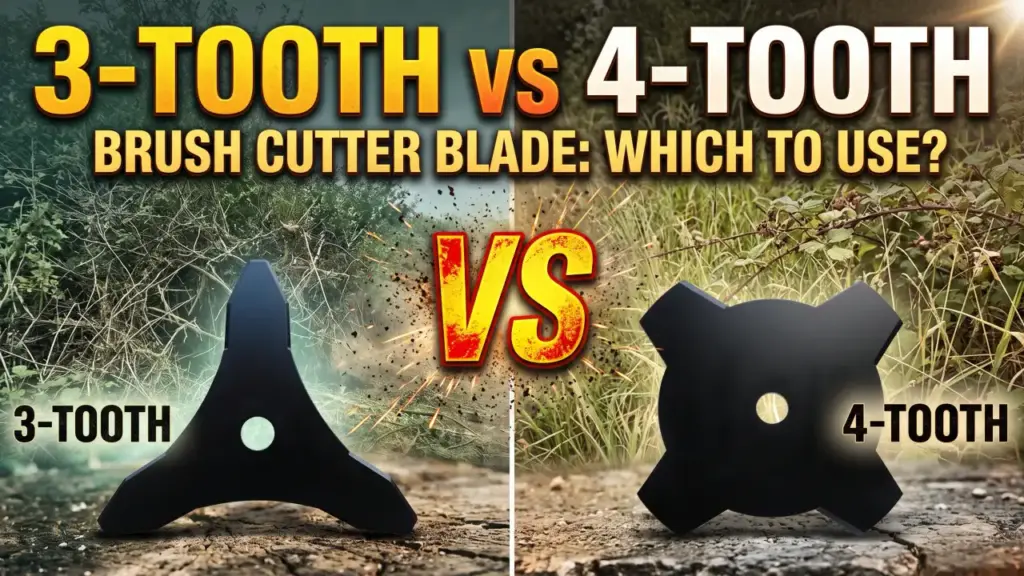
A 3-tooth blade provides a good balance of cutting power and control in these conditions. It can handle heavier grass growth without making the machine feel difficult to manage.
Wet Thick Grass
Ever cut grass after several days of rain? You make a couple of decent cuts, then suddenly have to stop because everything starts tangling around the blade.
Wet grass tends to bend and stick together instead of clearing away easily. A 3-tooth blade performs better in these conditions because the spacing between the teeth gives cut material more room to move away, helping reduce buildup around the cutter.
Dry Thick Grass
Dry grass is another story altogether. It may feel lighter, but the stems become hard and stringy. These tough fibers can wear down ordinary blades much faster.
For occasional clearing, a hardened steel 2-tooth blade provides good durability. If you regularly cut rough pasture or run your machine for long periods, a carbide-tipped blade can stay sharp longer under heavier use.
Thick Grass Mixed with Light Weeds
Rarely will you find a field that contains only grass. Broadleaf weeds are often mixed in, creating changing cutting conditions throughout the same area.
A 3-tooth blade is usually a better choice here because it handles thicker grass patches while still working smoothly when you move into lighter vegetation. This makes it a more versatile option for areas with mixed growth.
Thick Grass Turning to Brush
Eventually, some areas stop being just grass. Thin saplings and young woody shoots can begin appearing throughout the field.
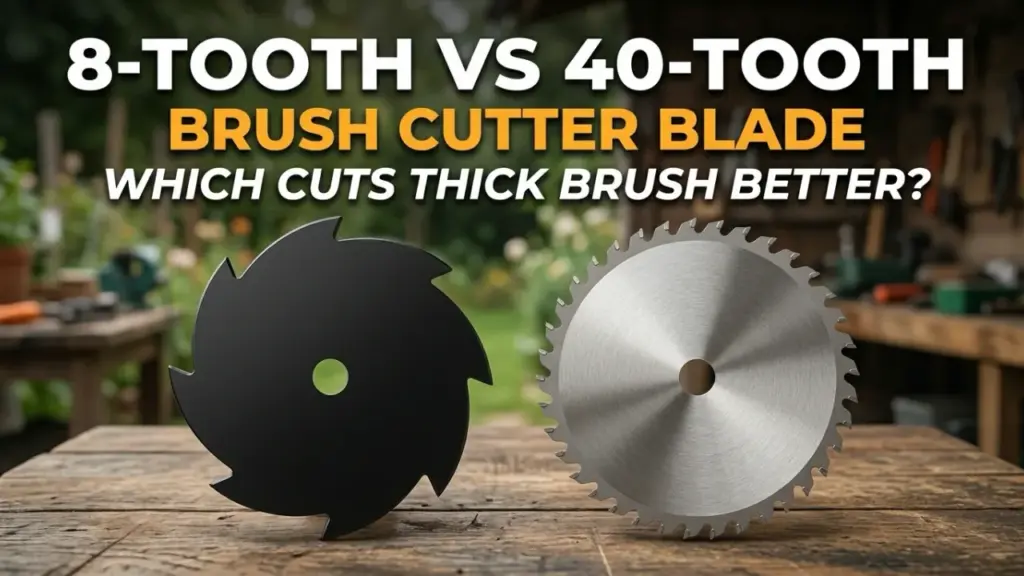
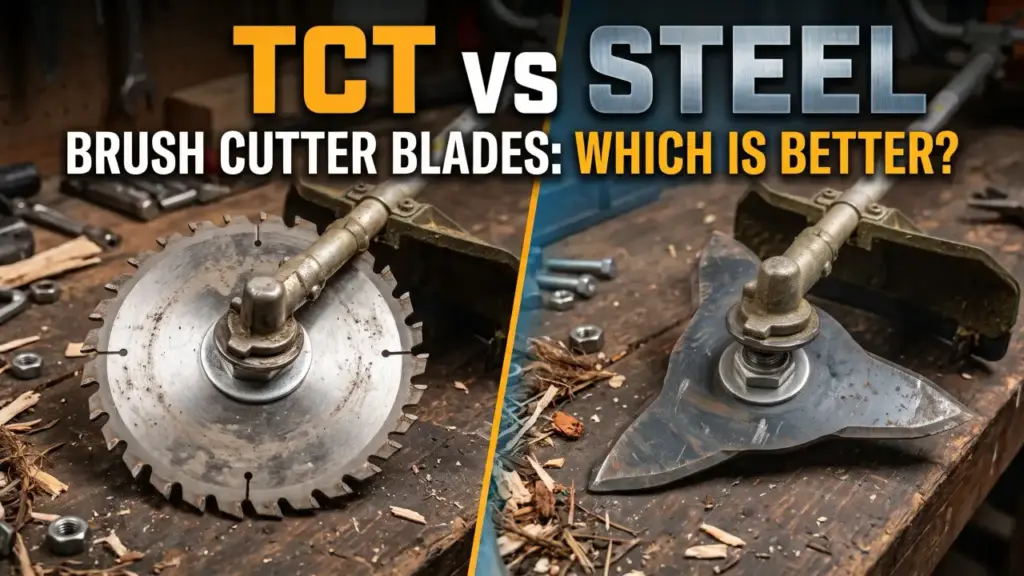
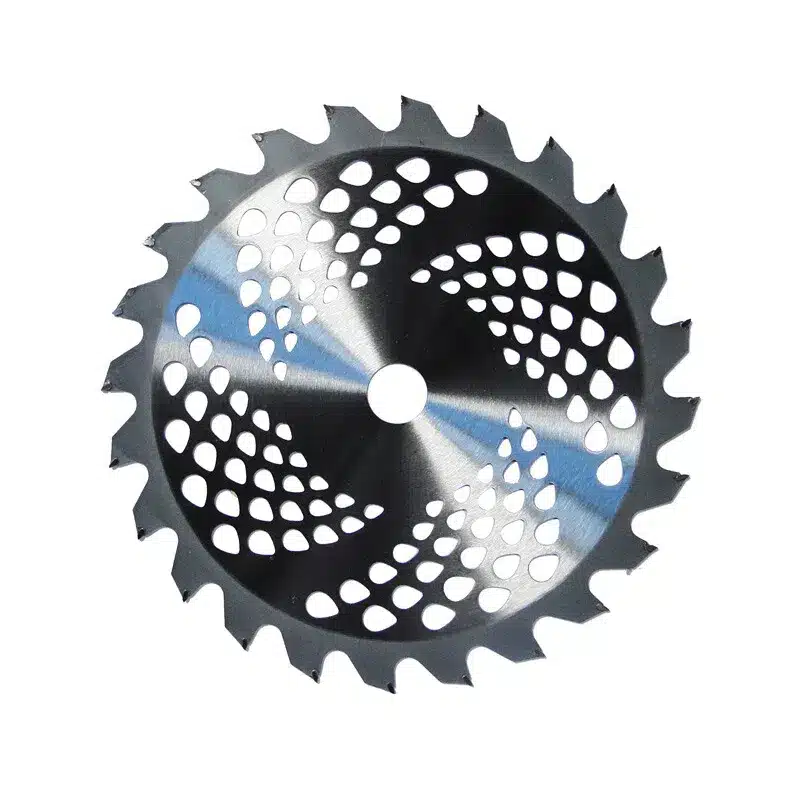
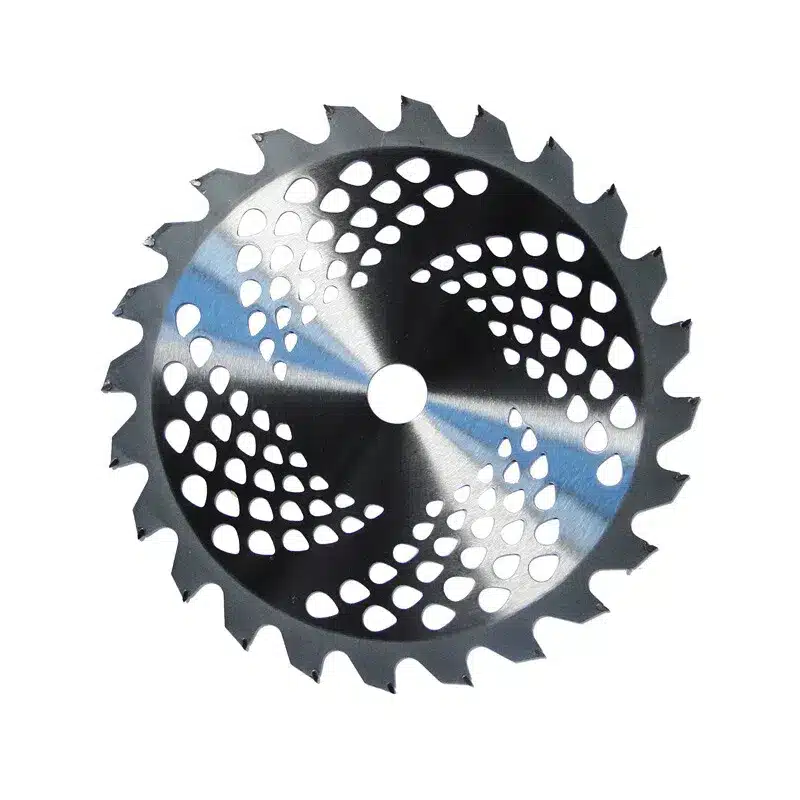
When vegetation starts moving toward light brush, consider switching to a TCT blade or circular saw blade if your brush cutter supports those options. These blades are designed for tougher stems where a standard grass-cutting blade may struggle or require repeated passes.
Common Problems Caused by the Wrong Brush Cutter Blade
Using the wrong brush cutter blade can lead to common problems such as grass wrapping, repeated passes, engine strain, and faster blade wear. Matching the blade to the vegetation helps improve cutting performance and reduces stress on the machine.
Grass Wraps Around the Blade
Wet grass often wraps around the blade because it bends and sticks together instead of cutting cleanly. A 3-tooth blade leaves more space between the cutting edges, allowing material to clear more easily and reducing the need to stop and remove tangled grass.
The Blade Cannot Cut Through Dense Grass Efficiently
If you need several passes over the same area, the blade may not be suitable for the vegetation density. Tough grasses such as Guinea grass and Elephant grass require a blade designed for higher resistance.
The Blade Causes Excessive Vibration or Wears Out Quickly
If the engine is bogging down or the cutter vibrates excessively, the blade may be oversized, damaged, or not suited for the application. Dry, fibrous grass and hidden rocks can also cause blades to wear faster. Hardened steel works well for general clearing, while carbide-tipped blades are better for frequent heavy-duty use.
Conclusion
You’ve probably realized by now that there is no such thing as a perfect brush cutter blade. A blade that easily cuts through tall roadside grass will likely struggle when it encounters a patch of dense, tangled Guinea grass. That’s why choosing the “strongest” looking brush cutter blade is not always the best decision.
Instead, choose a blade based on the type of work you do most often. Don’t buy a blade designed for the one difficult area you only clear a few times a year. Select one that fits your machine, matches your vegetation, and is built with durable materials. The right blade will help you make cleaner cuts, reduce downtime, and put less strain on your brush cutter.
Ready to find the right blade for your next clearing job? Explore our selection of brush cutter blades.
FAQs About Brush Cutter Blades for Thick Grass
There is no single blade that works best for every type of thick grass. A 2-tooth blade is often better for tall, open grass, while a 3-tooth blade can provide better control in dense grass with tougher stems. For areas with woody growth, a TCT or circular saw blade may be a better option if compatible with your brush cutter.
A 2-tooth blade is designed for faster cutting in open grass areas because it creates less resistance and clears material quickly. A 3-tooth blade offers more cutting control when dealing with denser vegetation and thicker stems.
Yes, a 3-tooth blade can handle thick grass mixed with light weeds. However, if the area contains woody stems or young brush, a dedicated brush-cutting blade such as a TCT blade may provide better results.
Carbide blades are worth considering if you regularly cut tough vegetation or spend long periods clearing rough areas. They stay sharp longer than standard steel blades and can reduce the frequency of blade replacement.
Grass usually wraps around the blade when wet or flexible vegetation bends and collects instead of being thrown away. Using a blade suited for the cutting condition and avoiding overly wet grass can help reduce buildup.