A dull circular saw blade doesn’t just waste wood. It slows your entire workflow. Cuts take longer, the saw feels like it’s fighting you through plywood, and clean edges turn rough and chipped.
That’s usually when the question comes up: should you sharpen the blade or replace it?
The answer depends on the type of blade. A $15 framing blade is not built the same way as a $100 carbide-tipped blade. Some are designed to be sharpened multiple times, while others are essentially disposable once they dull.
In this guide, we’ll break down when sharpening makes sense and when replacement is the better option, including blade quality, carbide size, sharpening cost, downtime, and cutting material.
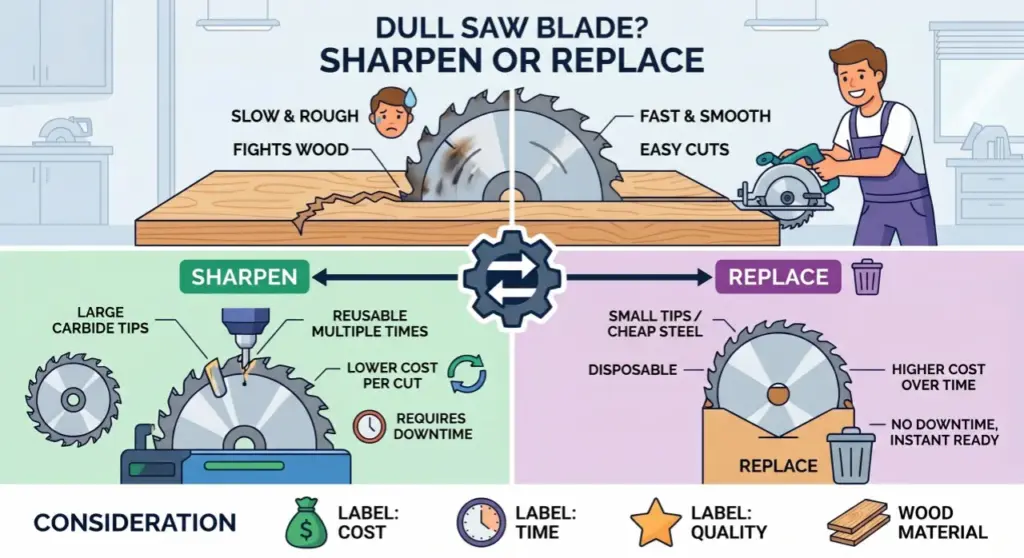
Table of Contents
- Quick Answer: How to Decide
- Which Circular Saw Blades Are Worth Sharpening and Which Aren’t?
- Why Cleaning Your Blade is a Good First Step
- What Does Professional Saw Blade Sharpening Actually Restore?
- When Replacement is the Better Option
- How Cutting Material Affects Blade Life
- Can Sharpening Blades Save You Money in the Long Run?
- What Makes Sense for DIY Users vs Professional Users?
- FAQs
- Conclusion
Quick Answer: How to Decide
Deciding whether to sharpen or replace a blade ultimately comes down to shop economics and structural integrity. A cheap framing blade rarely justifies the service fee or downtime. Conversely, a premium blade with large carbide teeth is an investment built specifically to be serviced multiple times.
The Golden Rule: Always clean the blade before making a call. What feels like a dull cutting edge is often just pitch, resin, or glue residue, which increases friction and causes burn marks.
If a thorough cleaning doesn’t restore cutting performance, use the decision matrix below to evaluate your next step.
| Blade Condition / Type | Recommended Action | Technical Rationale |
|---|---|---|
| Cracked or warped blade | Replace immediately | Structural damage creates safety risks |
| Multiple missing carbide teeth | Usually replace | Repair cost often exceeds blade value |
| Heavy pitch buildup / clogged gullets | Clean first | Buildup can mimic dull cutting performance |
| Premium blade (ATB / TCG / fine finish) | Sharpen | Higher-quality blades support multiple sharpening cycles |
| Cheap framing blade | Usually replace | Low replacement cost and limited sharpening value |
Which Circular Saw Blades Are Worth Sharpening and Which Aren’t?
Not all blades are worth sharpening. A lot of cheap framing blades get treated like sandpaper on high-production jobsites. Once the cuts get rough, people usually throw them away and move on. Let’s break it down by blade type:
Premium Carbide Blades
Quality carbide blades are another story entirely. You can usually tell the difference once you start using them. The saw cuts through hardwood more smoothly, with cleaner edges and less resistance.
Most quality blades are built with larger carbide teeth, precision grinding, and thicker blade bodies so that they can handle several sharpening cycles without falling apart.
Specialty Blades
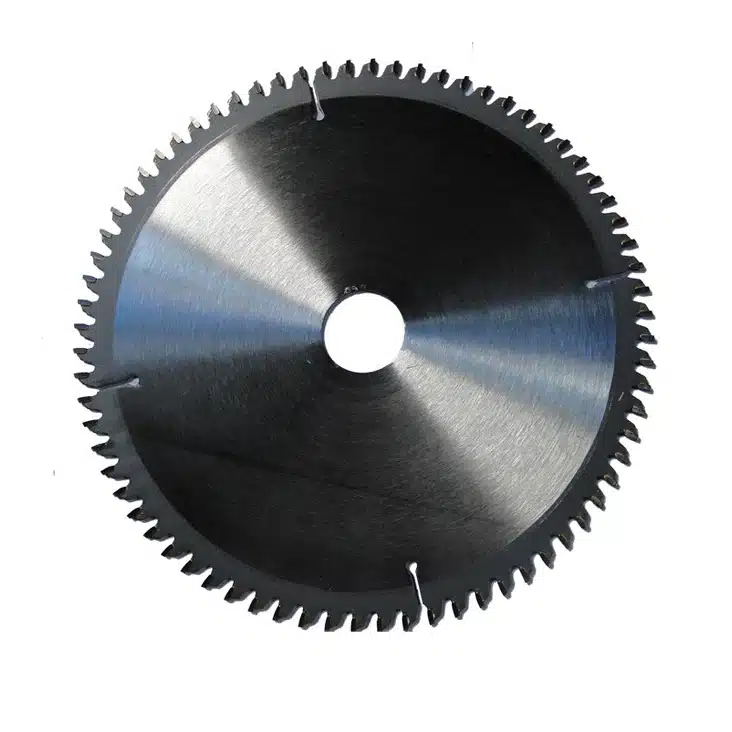
Specialty blades fall into a similar category. High-tooth-count crosscut blades, melamine blades, and aluminum cutting blades: those costs go up because the geometry of the teeth is more intricate. Some might use ATB tooth styles for super-clean wood cuts. Others might use a triple-chip grind design to cut metal or composite better.
And honestly, those are normally the blades you want to maintain. With a good finish blade, you can usually have it sharpened and have it cutting almost like new again. This is assuming the carbide teeth aren’t too far gone.
Cheap Framing Blades
Cheap flooring or construction blades are where sharpening usually stops making financial sense. They have smaller carbide tips, thinner steel bodies, and less overall material to work with, which limits how many times they can be sharpened effectively.
In most cases, by the time you pay for sharpening, the cost is already close to buying a new blade.
That’s why these blades are often treated as disposable on job sites, especially after cutting dirty wood, nails, or demolition materials over time.
Why Cleaning Your Blade is a Good First Step
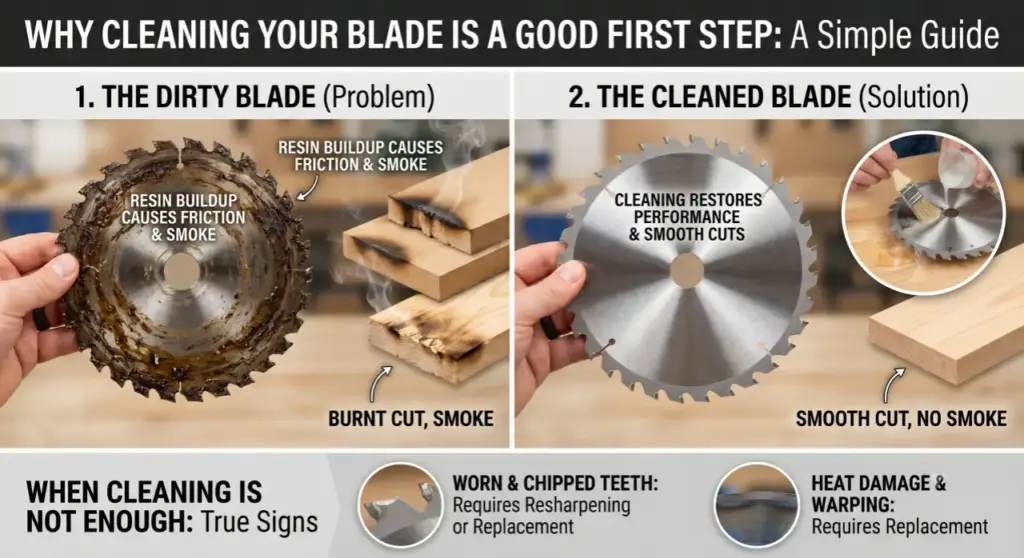
A dirty blade can easily make you think it is dull when it actually just needs cleaning. Burn marks, rough cuts, and smoking wood are often caused by buildup rather than blade wear.
MDF is one of the worst offenders, but glue residue and pitch from softwoods can also build up quickly. Over time, this layer of residue increases friction, which leads to more heat, resistance, and poor cutting performance.
Cleaning the blade can often make a night-and-day difference. Many woodworkers will clean their blades two or three times before even considering sharpening.
That being said, cleaning only removes buildup. It cannot restore worn carbide teeth or fix a blade that has been damaged by excessive heat or warping. In many cases, what looks like a dull blade is actually just coated in pitch, resin, or glue residue, and performance improves significantly once it is removed.
If the cutting edges themselves are worn down, however, cleaning will only go so far. At that point, sharpening or replacement becomes necessary.
What Does Professional Saw Blade Sharpening Actually Restore?
Professional sharpening does much more than simply restore the teeth’s sharpness. In reality, it restores the overall geometry of the blade, not just the cutting edge.
A blade that cuts poorly is often no longer just dull. The tooth geometry gradually changes over time, which affects feed pressure, cutting smoothness, and vibration. When properly sharpened, these factors are corrected: hook angles are restored, tooth height variations are removed, and the blade returns to a smoother, more stable cutting motion.
This difference is especially noticeable on finish blades, particularly ATB designs and triple-chip grind blades used for aluminum or composite materials. Even small deviations in tooth geometry can quickly reduce cut quality.
For this reason, many woodworking shops avoid hand-sharpening carbide blades. Excessive heat can damage the carbide, and uneven grinding can misalign teeth or round over cutting edges. Once this happens, the blade rarely performs as it did originally.
When Replacement is the Better Option
Sometimes a blade reaches the point where sharpening is no longer the best option. You may notice the saw developing a slight wobble during cuts or a vibration that was not there before. In some cases, burn marks start appearing even when you slow the feed rate and do everything right. When that happens, it often means there is more going on than simple dullness.
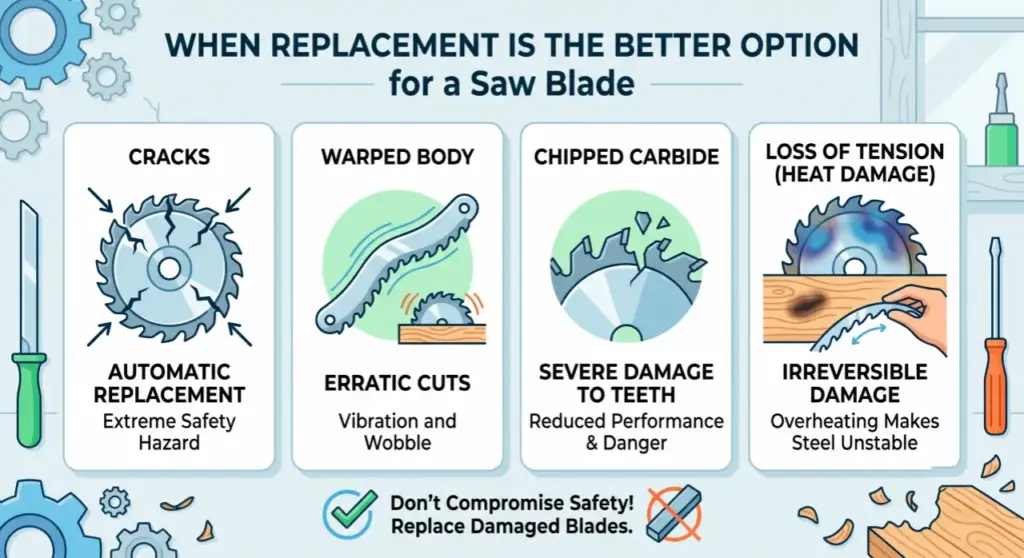
Cracks mean automatic replacement. So does a warped blade body or excessive chipping of the carbide. A damaged blade won’t just cut badly; it can cut erratically, making it significantly more dangerous when operating at full RPM. Heat damage is something else people miss. Forcing cuts with a dull blade can cause the steel body to lose tension from excessive heat. Once that happens, no amount of sharpening will bring it back.
Another issue is downtime. Having a production tech wait 4 days for a blade to be sharpened during the peak period costs more than the blade is worth. That is why many shops use blade rotation systems, keeping one blade in service, one ready to use, and another out for sharpening.
And let’s not forget cheap blades. Thin-tipped carbide teeth only handle so many sharpenings before there isn’t enough material left to hold an edge.
How Cutting Material Affects Blade Life
The material you cut has a major impact on how long a blade lasts. Two people can use the same blade and get very different results simply because they are cutting different materials.
Softwoods are generally easier on blades. Pine and spruce are less abrasive, allowing carbide edges to stay sharp longer. The biggest issue is usually buildup rather than wear. Over time, pitch and resin can coat the teeth, causing a standard blade to drag. In high-production shops, upgrading to a blade with carbide wipers resolves this before the cutting edge is actually dull.
Hardwoods and engineered wood products are much harder on blades. MDF is one of the most demanding materials because the resins and adhesives used in its construction can act like fine abrasives at high cutting speeds. As friction increases, heat builds up faster, and blade wear accelerates.
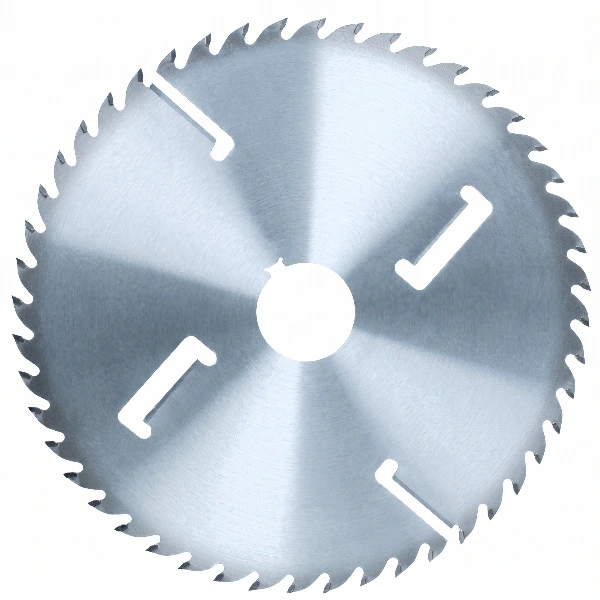
Aluminum and composite materials create an entirely different set of challenges. These materials are typically cut with triple-chip grind (TCG) blades because standard wood-cutting tooth geometries wear down much more quickly. Use the wrong blade long enough, and the cutting edge can deteriorate surprisingly fast.
Can Sharpening Blades Save You Money in the Long Run?
Yes, kind of. It depends. Sharpening can save you money if you maintain the blade before the teeth become badly worn or chipped.
Professional sharpening typically costs between $10 and $30 per blade, depending on blade size, tooth count, and local service rates. Premium carbide blades that cost around $60 to $150 or more often justify repeated sharpening, while inexpensive construction blades are usually cheaper to replace outright.
In general, higher-quality carbide blades are designed to be resharpened multiple times. A well-made blade with a hardened body and balanced grind can maintain cutting accuracy across several sharpening cycles, as long as it is serviced before excessive wear sets in. Cheaper blades, on the other hand, tend to degrade faster due to smaller carbide tips and lower manufacturing precision, leaving less material for each sharpening cycle.
The real cost of a dull blade is not just the blade itself. Cuts slow down, finishes become rougher, and more time is spent sanding and correcting mistakes. Over time, this hidden cost often exceeds the price of the blade or even sharpening services. Saw motors also work harder under resistance, which adds another layer of long-term wear.
What Makes Sense for DIY Users vs Professional Users?
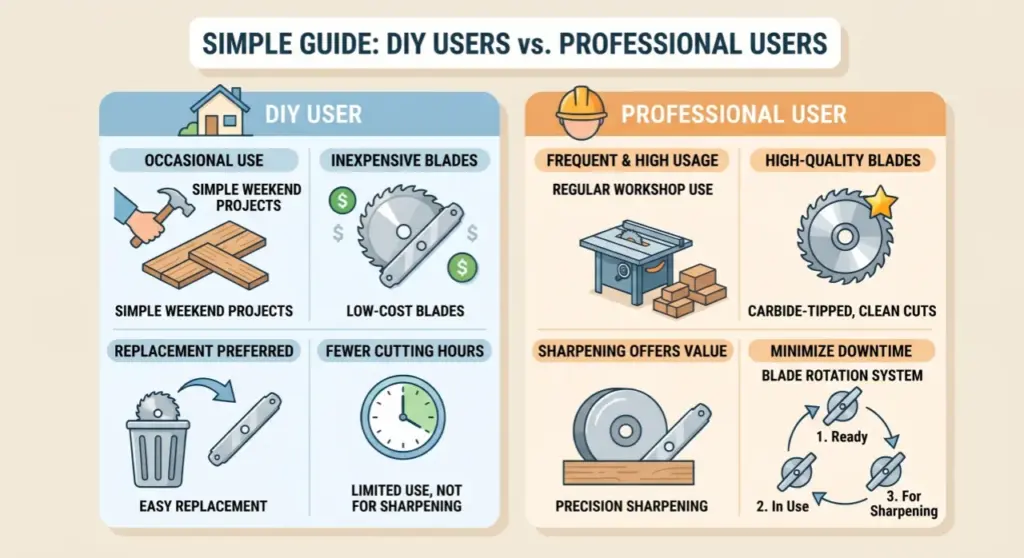
The right choice often depends on how frequently you use your saw. For many DIY users, replacement is usually the more convenient option, while professionals often get more value from sharpening high-quality blades.
The average DIYer is typically focused on convenience. If the saw only comes out for the occasional weekend project or deck repair, it often makes more sense to replace an inexpensive blade than spend time finding a sharpening service. That’s perfectly reasonable. A low-cost blade that sees limited use may never accumulate enough cutting hours to make sharpening cost-effective.
Finish carpenters and woodworkers usually see things differently. Clean cuts matter. Tear-out matters. These issues become much more noticeable when cutting plywood, melamine, or expensive hardwoods with a dull blade. A quality carbide blade that is sharpened before excessive wear can remain accurate and predictable for years.
Production shops take this a step further. Downtime is expensive. Nobody wants an entire production schedule disrupted because a blade was left in service too long. That is why blade rotation programs are common in larger shops: one blade in use, one sharpened and ready, and one out for sharpening. Quality industrial blades cost more upfront, but they are designed to withstand multiple sharpening cycles rather than being replaced every few weeks.
FAQs
Most premium carbide-tipped blades can be sharpened 3 to 10 times before replacement becomes necessary. The exact number depends on carbide size, blade quality, and how much material is removed during each sharpening.
Yes, if the blade is high quality and still in good condition. Premium carbide-tipped blades can often be sharpened multiple times, making sharpening more cost-effective than replacement. However, inexpensive blades with small carbide teeth are often cheaper to replace than to sharpen.
It depends on the blade’s quality and replacement cost. Professional sharpening typically costs less than replacing a premium carbide blade, making it a cost-effective option. For low-cost blades, however, sharpening can cost nearly as much as a new blade, so replacement often makes more sense.
A circular saw blade should be replaced if it is cracked, warped, missing carbide teeth, or damaged beyond repair. Excessive vibration, poor cut quality, and burn marks that persist after cleaning may also indicate that replacement is a better option than sharpening.
Yes. When a blade is dull, it will naturally cause additional resistance when cutting, making the saw motor work harder.
Conclusion
There is no perfect rule for every blade. The right choice depends on what you cut, how often you use the blade, the quality of the blade itself, and how much downtime you can tolerate. Premium carbide blades are usually built to survive repeated sharpening and long production use. Cheap framing blades are often cheaper to replace and keep moving with.
The mistake is replacing every struggling blade automatically. Sometimes it needs sharpening. Sometimes it just needs cleaning. And sometimes it really is finished. A quick inspection usually tells you more than the label ever will.