If you have spent any time shopping for saw blades, you have likely encountered ATB, FTG, and TCG many times. But which tooth grind is the right choice for your material and project?
The right choice depends on how each tooth grind performs in different materials. One grind may leave clean cuts on plywood but struggle with aluminum. Another may rip through solid wood quickly but produce rougher results in fine woodworking applications. There is no single “do it all” grind.
In this guide, we’ll break down how ATB, FTG, and TCG tooth grinds work, where each one performs best, and how to choose the right tooth grind for your next project.
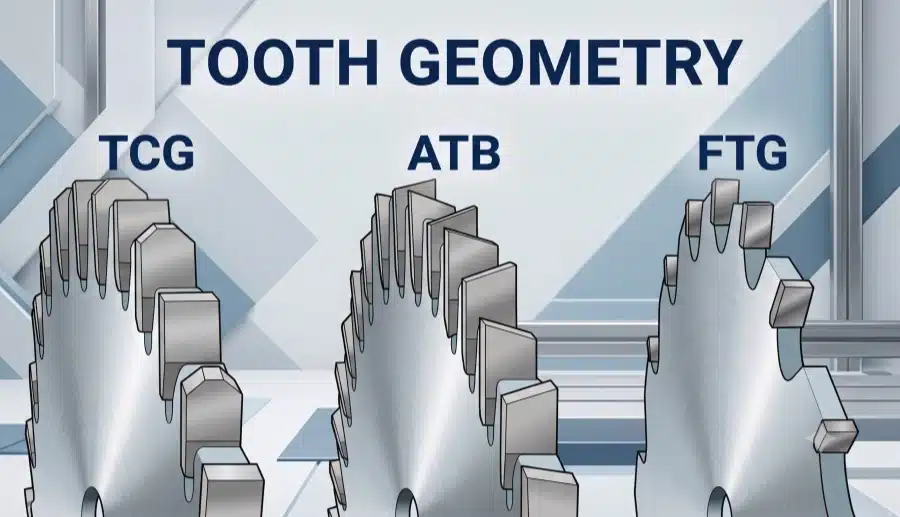
Table of Contents
- Why Does Tooth Geometry Matter on a Saw Blade?
- What Is an ATB Saw Blade and How Does It Work?
- Why Is ATB the Preferred Grind for Plywood and Fine Woodworking?
- What Are the Limitations of an ATB Saw Blade?
- What Is an FTG Saw Blade and How Does It Cut?
- Why Is FTG Preferred for Ripping Solid Wood?
- What Are the Limitations of an FTG Saw Blade?
- What Is a TCG Saw Blade and How Does It Work?
- Why Is TCG the Preferred Grind for Laminate and Aluminum?
- What Are the Limitations of a TCG Saw Blade?
- Which Tooth Grind Should You Choose for Different Materials and Applications?
- Conclusion
- FAQs About ATB, FTG, and TCG Saw Blades
Why Does Tooth Geometry Matter on a Saw Blade?
A saw blade’s tooth geometry, or tooth grind, determines how the blade cuts different materials by controlling how it enters the material, removes chips, and finishes the cut edge.
When you make a cut, the saw delivers power, but the tooth design determines how that power is transferred to the workpiece. ATB teeth slice through fibers with a knife-like cutting action. FTG teeth remove material with a chisel-like motion. TCG teeth divide the cutting work between two complementary tooth designs.
These different cutting actions affect cut quality, cutting speed, tear-out, chip removal, and blade performance. The same principle applies when choosing a saw blade. Just like you wouldn’t use the same knife for every kitchen task, you shouldn’t expect one tooth grind to excel at every cutting application. This is why different tooth geometries such as ATB, FTG, and TCG were developed.
What Is an ATB Saw Blade and How Does It Work?
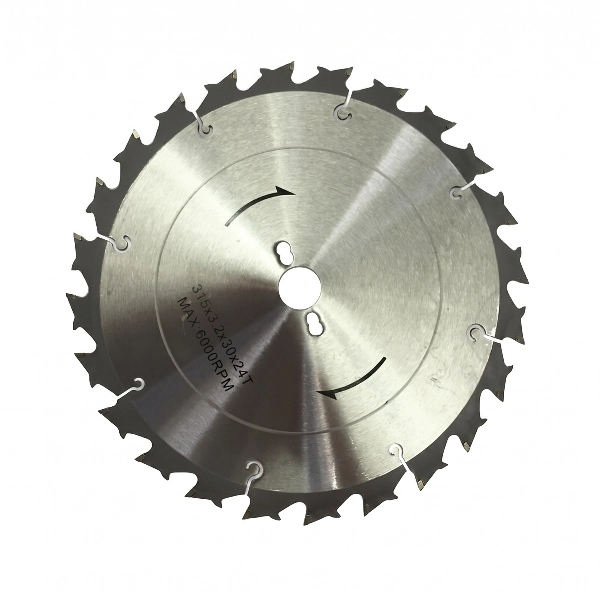
ATB (Alternate Top Bevel) is a saw blade tooth grind that uses alternating beveled teeth to score and slice wood fibers, producing cleaner cuts with less tear-out.
Each tooth is ground at an angle that alternates direction left and right all the way around the blade. The angled tips score the edge of the cut rather than hitting the material head-on. The remainder of the tooth clears out the waste. The knife-like cutting action of ATB makes it the most popular grind for clean cuts in woodworking.
One tooth will score one side of the kerf. The next tooth scores the other side of the cut. The wood fibers are cut before they can tear away from the board. By severing the wood fibers cleanly, splintering is reduced on crosscuts. The clean-cutting action also prevents the material from breaking apart, which keeps the cut clean.
As a result, ATB blades leave a smoother finished edge. Less tear-out makes them ideal for hardwood crosscuts, plywood, veneers, and other finish-focused cuts where edge quality is important. Most high-end woodworking blades designed for cutting plywood and hardwood will use some sort of ATB geometry to enhance edge quality and minimize sanding after the cut.
Why Is ATB the Preferred Grind for Plywood and Fine Woodworking?
ATB is the preferred tooth grind for plywood and fine woodworking because it scores and cuts surface fibers before they tear out. The alternating left- and right-beveled teeth score the edges of the cut before clearing material from the kerf. This leads to less tear-out and an overall smoother surface. It should come as no surprise that ATB is commonly used when performing finish work.
Clean crosscuts in hardwoods like oak, maple, walnut, and others rely on cutting through the grain before it breaks. ATB teeth slice into the wood fibers like a knife, reducing tear-out during crosscuts. This means less time cleaning up behind the blade.
ATB provides these advantages when cutting softer woods like pine, fir, and cedar as well. These woods are prone to splintering along the cut line and chipping near unsupported edges. Again, the scoring action of ATB keeps more of the surface intact and helps minimize splintering.
Of all materials, plywood sees the greatest advantage from using ATB geometry. Because each veneer layer is so thin, it can chip easily and surface damage stands out. ATB helps reduce breakout by scoring the veneer before cutting into the material.
For that reason, many cabinet, furniture, shelving, and interior trim cuts use ATB. Appearance is just as important as accuracy. That is why ATB geometry is widely used on premium blades for plywood, hardwood, and other finish-focused woodworking applications.
What Are the Limitations of an ATB Saw Blade?
ATB saw blades are not the best choice for abrasive materials or non-ferrous metals because their sharp beveled teeth wear more quickly than other tooth grinds. MDF, laminate, and other composite sheet goods are harder on the sharp beveled points of ATB teeth. They just will not last as long as they do in normal wood.
Cutting aluminum is another area where ATB is not ideal. Wood fibers are cleanly severed by a slicing action. Non-ferrous metals require a tooth geometry designed to handle harder, more abrasive materials and different cutting forces. ATB can cut aluminum, but it isn’t the best choice for the job.
As you can see, there is a fairly obvious trade-off. The same teeth that produce excellent edges on plywood and hardwood wear much faster when cutting abrasive sheet goods. They also struggle with metal cutting applications.
What Is an FTG Saw Blade and How Does It Cut?
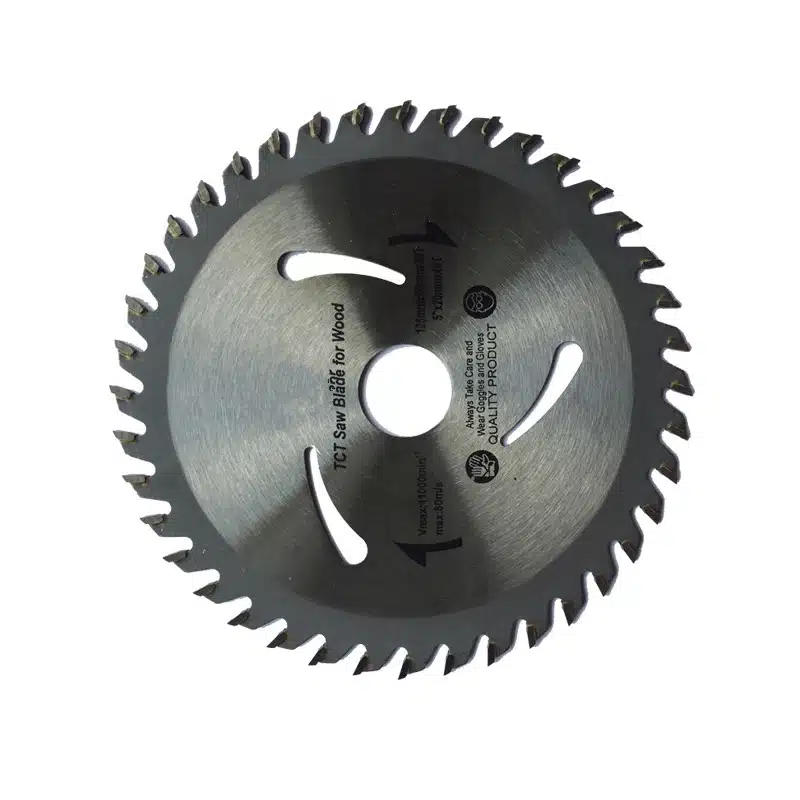
FTG (Flat Top Grind) is a saw blade tooth grind that uses flat-topped teeth to remove material with a chiseling action, making it ideal for fast ripping cuts. Each tooth has a square cutting edge at the top of the tooth’s profile. This creates a wood chisel-like shape.
Instead of using beveled teeth to score the cut first, an FTG tooth cuts straight into the wood and removes material across the full width of the kerf. Due to its simplicity, FTG is the default grind when choosing dedicated ripping blades.
FTG teeth are designed to clear a lot of material with every tooth. Square edges create larger chips that clear the kerf more efficiently. It allows the blade to maintain momentum on long rip cuts. What’s more, this design is most effective when cutting with the grain. When ripping parallel to wood fibers, speed is more important than finish.
FTG blades and ATB blades are quite different in how their teeth approach the cutting process. ATB teeth cut fibers with alternating bevels. FTG blades chop right through them. FTG generally produces faster cuts but sacrifices edge quality. That makes FTG less suitable for crosscuts and plywood. However, many woodworkers love FTG for ripping lumber. In that application, speed and chip clearance are valued more than finish. You’ll often find FTG geometry on high-end ripping blades.
Why Is FTG Preferred for Ripping Solid Wood?
FTG is the preferred tooth grind for ripping solid wood because it removes material quickly and efficiently along the grain.
When ripping wood, you’re letting the blade travel with the grain of the wood instead of cutting across it. An FTG tooth cuts directly into the material with a flat top and clears out waste quickly. These characteristics make ripping easier on the blade and promote smoother feed rates during long rip cuts.
Softwood cuts are even faster because the fibers are willing to separate along the grain. FTG geometry easily rips through framing lumber, construction-grade stock, and other ripping applications where productivity matters.
It is often employed when milling lumber, prepping stock, and building projects. Many times in these applications, speed is more desirable than a finer edge.
What Are the Limitations of an FTG Saw Blade?
FTG saw blades are not the best choice for crosscuts, plywood, or other materials where clean edges are the priority. Each flat-topped tooth cuts directly into the material rather than scoring the top surface first. As a result, more of the edge fibers are prone to tear-out. This is especially true when making crosscuts.
The issue is also more noticeable with plywood. The thin surface veneer is more likely to chip because the blade doesn’t have any slicing action to help support the face layers. Whenever the edge will be visible in the finished project, you’ll notice more damaged edges.
This also rings true for veneer, laminate, and melamine. Like plywood, these materials benefit from a slicing action that helps reduce chipping. FTG will cut these materials without issue. It’s just not optimized for preserving decorative surfaces. Other tooth grinds will usually produce cleaner edges when appearance is important.
What Is a TCG Saw Blade and How Does It Work?
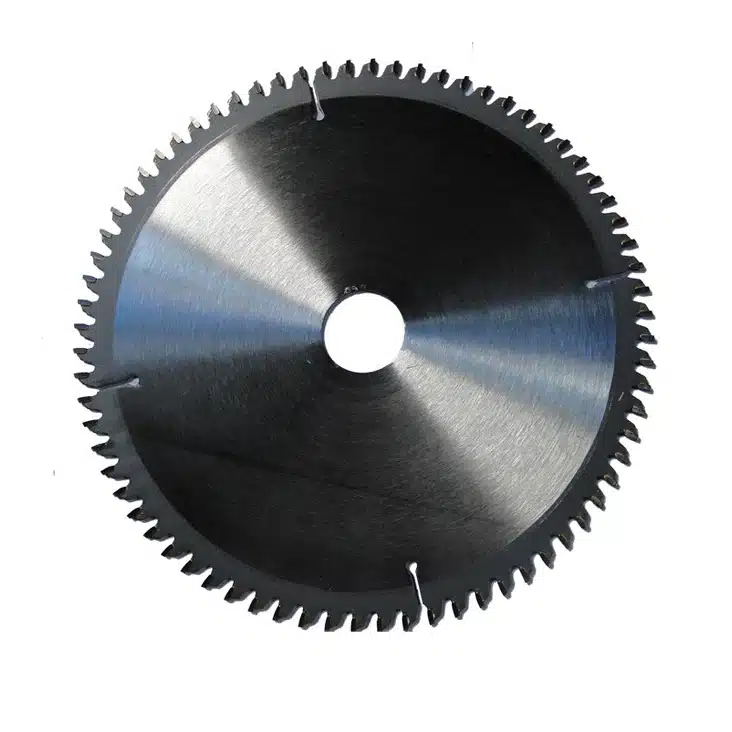
TCG (Triple Chip Grind) is a saw blade tooth grind that alternates chamfered and flat-top teeth. This two-stage tooth design distributes cutting forces across two complementary tooth profiles, making it ideal for abrasive materials and non-ferrous metals.
The chamfered corners of one tooth are followed by a flat-top tooth, and this pattern is repeated around the entire blade. Together, these two tooth profiles remove material in two cutting stages.
The chamfered tooth begins the cut by creating a shallow groove in the material. The flat-top tooth then removes the remaining material and squares up the cut. Dividing the cutting work into two steps allows each tooth to remove less material with every pass.
Less aggressive cutting means less stress on each individual tooth. Spreading out the workload reduces the strain placed on any single cutting edge. Because TCG teeth aren’t sharpened to a fine point like some other tooth grinds. They are generally better suited for cutting laminate, melamine, plastics, composite panels, and non-ferrous metals like aluminum. These abrasive materials tend to wear down more aggressive tooth geometries quickly.
Why Is TCG the Preferred Grind for Laminate and Aluminum?
TCG is the preferred tooth grind for laminate, aluminum, and other abrasive materials because it distributes cutting forces across two complementary tooth profiles, reducing stress on each cutting edge.
Laminate and aluminum behave differently than solid wood. Their hard, abrasive surfaces place greater stress on the blade and require a more durable tooth geometry. Decorative laminate is especially prone to chipping because its surface layer is thin and brittle. If too much material is removed by a single tooth, small fragments can break away from the cut line.
TCG minimizes this issue by cutting in two steps. The chamfered tooth begins the cut, and the flat-top tooth removes the remaining material. With each tooth sharing the workload, less material is removed by each cutting edge during every pass. As a result, laminate, melamine, and other decorative panels typically experience less chipping.
The same principle applies when cutting aluminum. Aluminum extrusions, trim, and profiles can be taxing on a blade. By spreading the workload across multiple teeth instead of concentrating it on a single cutting edge, TCG produces a smoother, more controlled cut.
The downside of TCG is cut quality when working with natural wood. It doesn’t slice through wood fibers as cleanly as ATB. For hardwood crosscuts, plywood, and veneered panels, an ATB blade will typically produce smoother edges with less tear-out.
What Are the Limitations of a TCG Saw Blade?
TCG saw blades are not the best choice for fine woodworking, plywood, or other applications where the cleanest possible wood cuts are the priority. The chamfered and flat-top tooth combination is designed for durability rather than producing the smoothest cut in natural wood. As a result, TCG blades generally leave more tear-out than ATB blades when making hardwood crosscuts or cutting veneered panels.
While TCG performs exceptionally well on laminate, melamine, MDF, plastics, and non-ferrous metals, it doesn’t match the clean slicing action of ATB when cutting solid wood. If appearance is the priority, especially on visible hardwood or plywood edges, an ATB blade will usually produce smoother edges with less tear-out.
Like every tooth grind, TCG involves a trade-off. It offers excellent durability and wear resistance in abrasive materials, but that durability comes at the expense of the cleaner cut quality that ATB blades provide in fine woodworking.
Which Tooth Grind Should You Choose for Different Materials and Applications?
The best saw blade tooth grind depends on both the material you are cutting and the type of cut you need to make. ATB is best for clean cuts in plywood, hardwood, and other finish woodworking applications. FTG excels at fast material removal when ripping solid wood. TCG performs best on abrasive materials such as laminate, MDF, and non-ferrous metals like aluminum.
Each grind has its own strengths and trade-offs. The table below shows which tooth geometry is best suited for different materials and applications, along with why each grind works well in those situations.
| Material / Application | Best Grind | Cutting Action | Why It Works |
|---|---|---|---|
| Hardwood Crosscuts (Oak, Maple, Walnut) | ATB | Slicing | Cuts dense wood fibers cleanly before they can tear out |
| Hardwood Ripping | FTG | Chiseling | Removes material quickly along the grain |
| Softwood Crosscuts (Pine, Fir, Cedar) | ATB | Slicing | Reduces splintering and produces cleaner cross-grain cuts |
| Softwood Ripping | FTG | Chiseling | Provides fast cutting and efficient chip removal |
| Plywood | ATB | Slicing | Scores veneer layers before cutting to reduce breakout |
| Veneered Panels | ATB | Slicing | Protects decorative surfaces from tear-out and edge damage |
| Laminate | TCG | Stage-Cutting | Two-step cutting action helps reduce surface chipping |
| Melamine | TCG | Stage-Cutting | Handles brittle decorative surfaces with less edge damage |
| MDF | TCG | Stage-Cutting | Provides better durability in abrasive materials |
| Particleboard | TCG | Stage-Cutting | Distributes cutting forces across multiple tooth profiles |
| Plastics & Acrylics | TCG | Stage-Cutting | Produces controlled cuts with less edge damage |
| Aluminum Profiles & Extrusions | TCG | Stage-Cutting | Handles non-ferrous metals with controlled cutting forces |
Conclusion
There is no single best saw blade tooth grind. The right choice depends on the material you are cutting and the type of cut you need to make.
If you’re after clean cuts and minimal tear-out, ATB is the best choice for plywood, hardwood crosscuts, and fine woodworking applications. If ripping efficiency and speed are your priorities when cutting solid wood, FTG delivers fast material removal and efficient chip clearance. TCG is the better option for laminate, aluminum, MDF, and other abrasive materials where durability matters.
Once you understand how ATB, FTG, and TCG grinds differ, you can choose the right blade for each project with confidence.
FAQs About ATB, FTG, and TCG Saw Blades
ATB uses beveled teeth to slice wood fibers for cleaner cuts, FTG uses flat-top teeth for fast material removal, and TCG combines chamfered and flat-top teeth for cutting abrasive materials. Each grind is designed for different cutting needs.
ATB is generally better for plywood because its beveled teeth score the veneer before cutting, helping reduce tear-out and splintering. TCG can cut plywood, but it is usually better suited for abrasive materials.
TCG is commonly used for aluminum because its alternating tooth design spreads cutting forces across multiple teeth, improving durability and cut control. It is better suited for non-ferrous metals than most wood-focused grinds.
Yes, an FTG blade can cut plywood, but it may leave more tear-out and chipped edges than an ATB blade. FTG is better suited for ripping solid wood where speed matters more than finish quality.
ATB typically leaves the cleanest cuts in woodworking because its beveled teeth slice through wood fibers and reduce tear-out. It is commonly used for plywood, hardwood crosscuts, and finish work.