Ask any woodworker what blade size and tooth count they’re using, and you’ll get a quick answer. Ask them what kerf is, and you may get a blank stare. That’s surprising, considering kerf affects every cut a circular saw blade makes.
Kerf is often one of the most overlooked blade factors, even though it can influence how efficiently a saw cuts and how much material is used in a project.
We’ve all had projects where parts don’t quite fit, or where more material seems to disappear than expected. It’s not always about technique. Sometimes it comes down to details that aren’t always considered during setup.
In this article, we’ll explain what kerf is, why it matters, and how it affects cutting speed, saw performance, material waste, and overall accuracy.
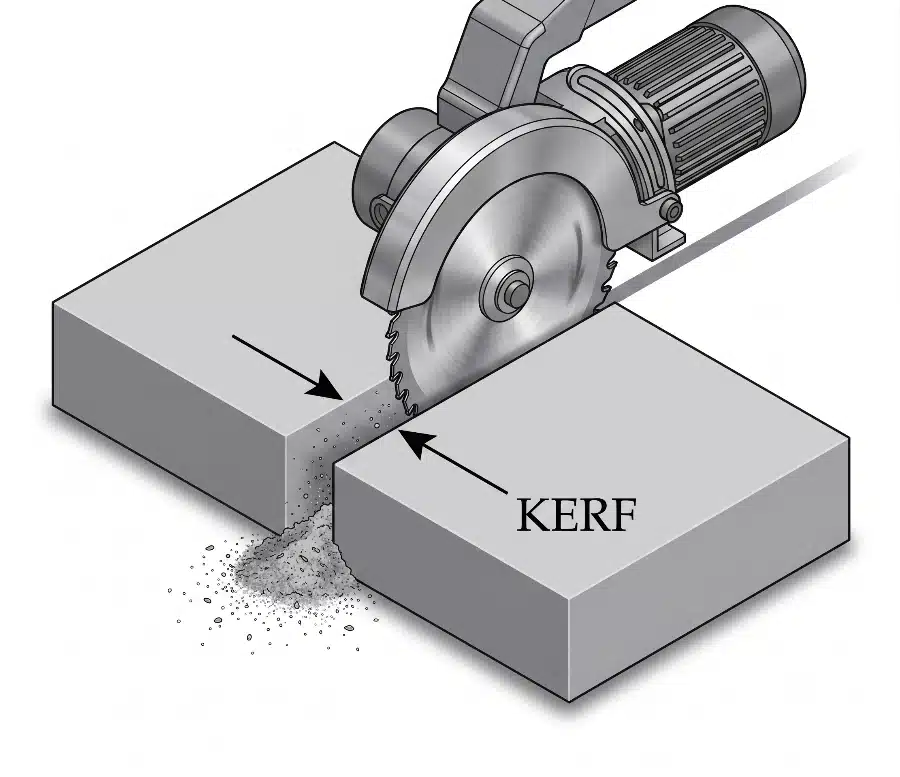
Table of Contents
- What Exactly Is Kerf?
- Why Does Kerf Impact Cutting Speed?
- How Kerf Impacts Saw Performance
- How Kerf Affects Material Waste and Accuracy
- Common Kerf Mistakes That Lead to Poor Results
- FAQs
- Conclusion
What Exactly Is Kerf?
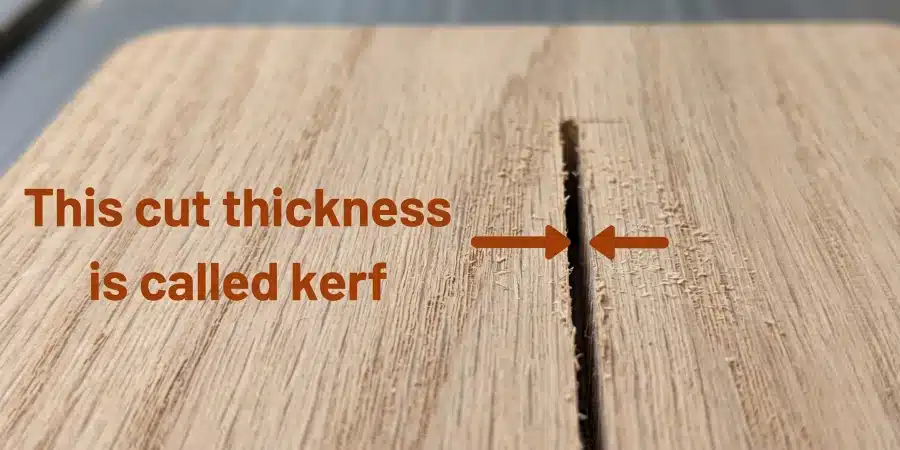
The term “kerf” refers to the width of material removed by a circular saw blade during a cut. When your blade slices into a piece of wood, it leaves behind a slot that splits your workpiece in two. Kerf is simply the width of that slot. Although it may seem trivial, it affects how much material is lost with every cut you make.
So why don’t more people take kerf into consideration? For one, the difference kerf makes is directly tied to how much material you have left to work with. Professional woodworkers account for kerf when planning cuts, laying out projects, and estimating material usage.
Kerf is not necessarily the same measurement as the thickness of your saw blade. In many cases, the cut is actually wider than the blade body itself because the teeth extend beyond the blade plate. This extra width helps prevent the blade body from binding in the cut and allows it to pass through the material more easily. Small differences in kerf may seem insignificant at first, but they can have a noticeable impact on material usage, cutting efficiency, and project accuracy over time.
Why Does Kerf Impact Cutting Speed?
Kerf affects cutting speed because it determines how much material the blade must remove during each cut. Every time you cut, the saw has to clear material from the cut path. The wider the kerf, the more material must be removed, which increases cutting resistance and requires more power to maintain the same feed rate. This is one reason why cuts can feel different even when you are using the same saw and technique.
You’ll usually notice this effect during longer cuts. For example, when ripping a wide board, the blade must remove material continuously over a greater distance. As cutting resistance increases, it becomes harder to maintain a smooth, consistent feed rate. This can slow the cut and sometimes affect cut quality.
That’s why woodworkers try to minimize unnecessary cutting resistance whenever possible. A narrower kerf generally removes less material, allowing the blade to move through the wood more easily. Kerf is an important factor in cutting efficiency, although it is not the only factor that affects how smoothly a blade travels through the material.
How Kerf Impacts Saw Performance
Kerf impacts saw performance by influencing how much work the saw must do during a cut. A wider kerf removes more material, which increases the load placed on the motor. Over long cuts or demanding projects, that additional workload can make it harder for the saw to maintain consistent performance.
You’ll usually notice this effect more with cordless saws than with corded models. Since battery-powered tools operate with a limited energy supply, increased cutting resistance can drain the battery more quickly. That is why many woodworkers opt for thin kerf rather than full kerf blades on cordless setups. During larger projects, even small improvements in cutting efficiency can help extend runtime between charges.
Kerf width also affects the amount of sawdust produced during a cut. The more material removed, the more sawdust is generated. Excess sawdust can reduce visibility along the cut line and place greater demands on dust collection systems.
Greater cutting loads can also generate more heat and vibration during operation. Excessive vibration may reduce cut quality and contribute to user fatigue during extended use. To help manage these forces, some higher-end blades feature laser-cut expansion slots that help dissipate heat and improve cutting stability.
How Kerf Affects Material Waste and Accuracy
Every time you make a cut, you lose material. While a single cut removes only a thin strip of wood, most woodworking projects require dozens of cuts. Over time, those small losses add up and can affect how much material you get from a board or sheet.
Imagine you’re building cabinets from plywood. You’ll need to cut sides, shelves, dividers, and backing panels. Every pass of the blade turns a small amount of usable material into sawdust. A layout may look perfect on paper, but if kerf is ignored, you can end up short on material before all the parts are cut.
Kerf also affects the final dimensions of your workpieces. If you divide a board into equal sections without accounting for the material removed by the blade, the last piece will be shorter than expected. Similar issues can occur when cutting shelves, cabinet components, or furniture parts that must fit together precisely.
When multiple pieces need to align correctly, even small dimensional errors can create fitting problems during assembly. Accounting for kerf helps reduce waste, improve accuracy, and produce better-fitting finished projects.
Common Kerf Mistakes That Lead to Poor Results
Thinking Kerf Equals Blade Thickness
Many beginners assume kerf is the same as the blade body thickness, but this is not accurate. In most circular saw blades, the kerf is slightly wider because the teeth extend beyond the blade plate. This built-in offset ensures the blade can move through the material without binding, and it can make a noticeable difference when measuring or planning cuts.
Neglecting Cumulative Material Loss
Each cut only removes a small amount of material, but most woodworking projects involve many cuts. While a single kerf loss is easy to ignore, repeated cuts quickly add up. Over time, these small losses can reduce the total usable material more than expected.
Cutting Directly on the Layout Line
It’s common for beginners to align the blade directly with the pencil mark. However, this removes material from the intended final dimensions. Instead, the cut should be made on the waste side of the layout line to maintain accuracy.
Forgetting Each Cut Alters Finished Dimensions
Every cut changes the size of the remaining material. After the first cut, your original measurements may no longer apply exactly. For this reason, many woodworkers reference freshly cut edges when making subsequent measurements.

FAQs
Thin kerf blades are commonly around 3/32 inch (approximately 2.4 mm), while full kerf blades are typically around 1/8 inch (approximately 3.2 mm), although exact dimensions vary by manufacturer.
A thin kerf blade is a circular saw blade designed to remove less material during cutting. It creates less resistance, making it ideal for lower-powered saws or cordless tools where efficiency matters.
Blades with higher tooth counts and designs matched to the material being cut generally produce the cleanest results. However, cut quality also depends on feed rate, saw stability, and blade sharpness.
A full kerf blade is wider than a thin kerf blade and is typically used for stability and heavy-duty cutting. The exact width varies by blade design and manufacturer, but it is generally the standard kerf size for professional use.
No, kerf is not the same as the blade thickness. Kerf is the width of the cut made by the blade, which is usually slightly wider than the blade body because the teeth extend beyond the plate.
Conclusion
Kerf is not just the width of a saw cut. It affects cutting speed, saw workload, material usage, and overall accuracy. This small measurement plays a role in nearly every stage of a woodworking project, and its effects become more noticeable with every cut you make.
Many common woodworking issues can often be traced back to kerf. Parts may end up slightly too short, material may run out sooner than expected, or assemblies may not fit together as planned. These problems are usually not caused by poor skill, but by not accounting for kerf during layout and cutting.
By planning for kerf before making cuts, these issues become much easier to avoid. You can use material more efficiently, improve cutting accuracy, and achieve cleaner, better-fitting finished projects.