A blade that stays sharp longer sounds appealing. But what if it costs more, needs different sharpening tools, or isn’t right for the growth you’re trying to clear?
Choosing between TCT and hardened steel raises exactly these questions. This guide explains their practical differences and helps you choose based on your vegetation, working conditions, and budget.
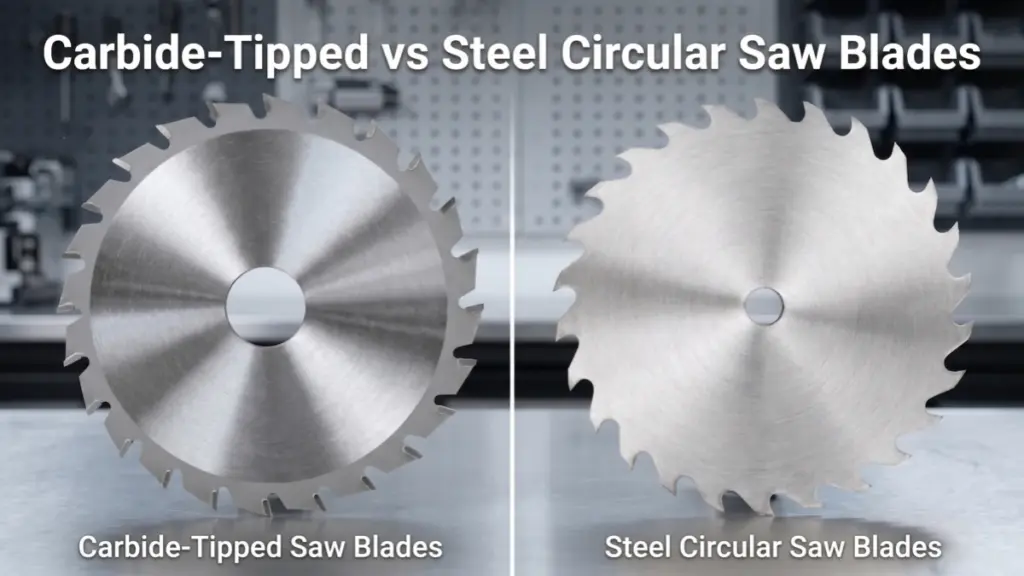
Table of Contents
- What Are the Differences Between TCT and Hardened Steel Brush Cutter Blades?
- Which Blade Should You Choose for Your Vegetation and Cutting Conditions?
- Conclusion
- FAQs About TCT vs Steel Brush Cutter Blades
What Are the Differences Between TCT and Hardened Steel Brush Cutter Blades?
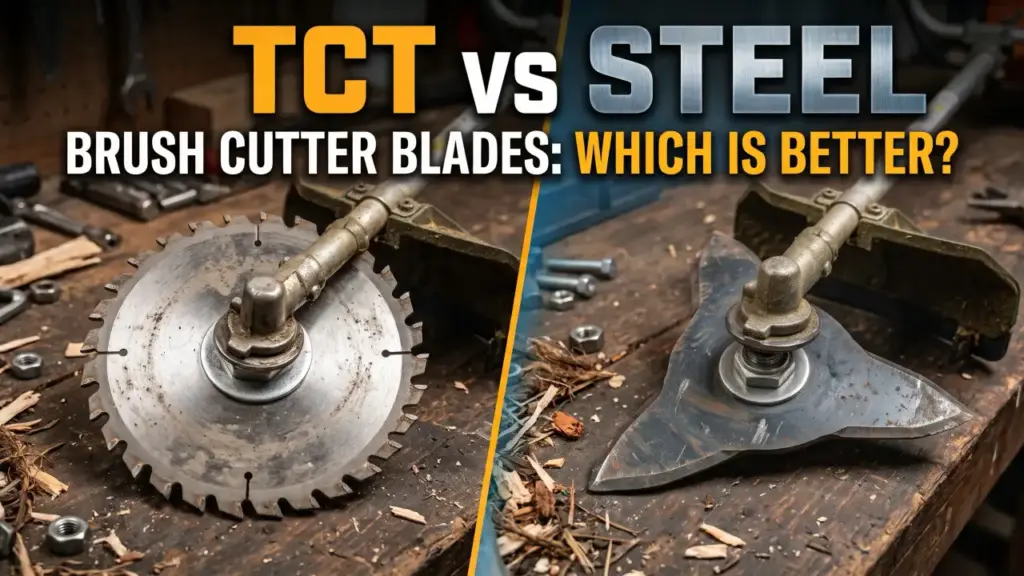
TCT brush cutter blades have tungsten-carbide tips on a steel body, while hardened-steel blades use steel cutting edges. Carbide generally resists wear better; steel edges are usually tougher and easier to sharpen. These differences affect maintenance and cost, but blade design also plays a major role in cutting performance.
Here’s how the two materials compare. Edge-retention differences assume comparable blade designs and working conditions.
TCT vs Hardened Steel Brush Cutter Blades: Quick Comparison
| Factor | TCT blade | Hardened-steel blade |
|---|---|---|
| Cutting edge | Carbide tips on a steel body | Hardened-steel cutting edges |
| Edge retention | Generally stays sharp longer | Generally needs sharpening sooner |
| Impact response | Carbide tips can chip or crack | Cutting edges can nick or deform |
| Sharpening | Requires carbide-compatible equipment | Often easier to sharpen at home |
| Purchase price | Typically higher | Typically lower |
| Ongoing costs | Sharpening services and replacement after tip damage | Sharpening time and blade replacement |
The trade-offs become clearer when you consider what happens to the edge during use—and what it takes to keep that edge cutting well.
Material and Cutting Edge Construction
If there’s one thing that separates the two, it’s the cutting edge. TCT stands for tungsten carbide tipped. The carbide tips provide the cutting surfaces, while the steel body supports them.
A hardened-steel blade has no separate carbide tips. Its cutting edges are part of the steel blade, which is heat-treated to balance hardness and toughness.
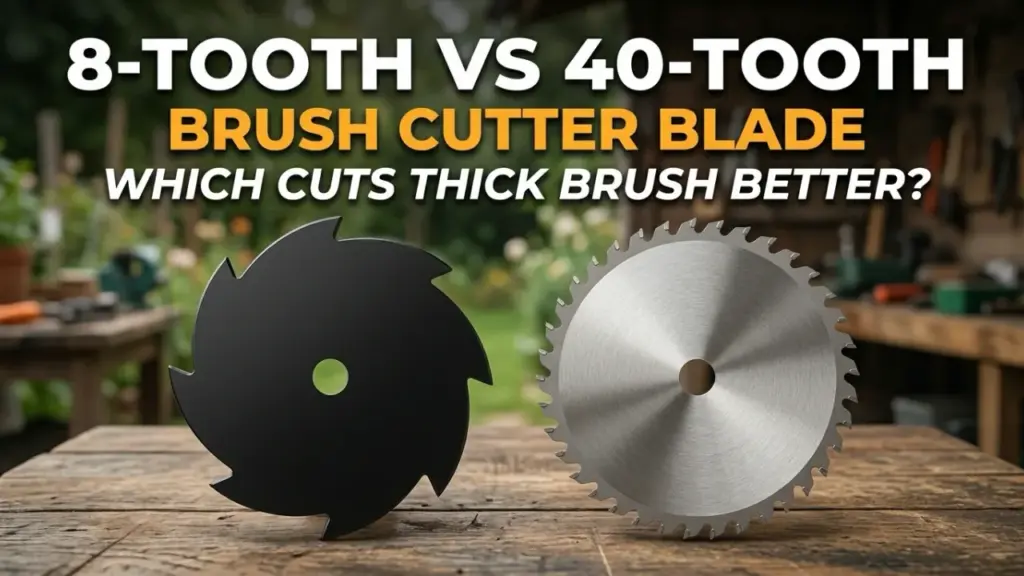
Both materials are available in different blade designs. A steel grass knife and a TCT saw-style blade do more than wear differently: their shapes also determine how they handle vegetation.
For an overview of these designs, see Brush Cutter Blade Types and Uses. Here, the focus is on what the cutting-edge material changes.
Edge Retention and Wear Resistance
Carbide generally resists cutting-edge wear better than hardened steel. Under comparable conditions, that can mean longer between sharpening sessions.
The benefit becomes noticeable when a dulling edge interrupts your work. A blade that cuts well at the start of the morning but needs attention before the job is finished creates an interruption. Longer edge retention can help reduce those stops.
It does not guarantee a longer overall blade life, though. Wear develops gradually, but damage can happen in a single strike. A TCT blade with a broken tip may need replacing even if much of its cutting edge remains sharp.
Steel hardness, carbide grade, tooth geometry, and cutting conditions also vary. A claim such as “TCT lasts twice as long” requires comparative test data, not just the material name.

Hardness and Impact Toughness
Greater hardness helps carbide resist wear, but hardness does not mean greater toughness. A hard strike can chip or crack a carbide tip.
Hardened steel takes a slightly different tack. Its cutting edges generally have greater toughness, so damaging contact may nick or bend an edge rather than break away a carbide tip. Steel can still crack or suffer serious damage, depending on the blade and the impact.
Neither material makes rocks, concrete, or wire acceptable cutting targets. Both can produce dangerous kickback or flying debris when they strike hard obstacles. Inspect the area before cutting, especially where vegetation hides the ground.
If a blade becomes bent or damaged, stop using it. Damage can affect its balance and cause vibration.
Maintenance and Sharpening
Hardened-steel blades are generally easier to sharpen at home. TCT blades may need sharpening less often, but their carbide tips require different equipment and techniques.
With steel, proper sharpening can restore the cutting edge of a blade that is otherwise in good condition. That’s appealing if you’re the type of person who likes to maintain your own tools rather than replace them whenever performance drops.
The method depends on the blade design. A broad knife edge and a saw-style tooth may require different tools and sharpening angles. Follow the manufacturer’s instructions, including any requirements for checking blade balance.
Carbide is not just a fancier version of steel. Resharpening a TCT blade may require diamond abrasives or professional service, where the manufacturer permits it. Check the available maintenance options before buying, especially if you prefer to handle sharpening yourself.
A cracked blade, loose carbide tip, or damaged mounting hole is a structural problem, not a sharpening job.
Purchase Price and Running Costs
Steel blades typically cost less upfront. Whether TCT saves money over time depends on how much sharpening it avoids and what servicing or replacement costs you incur.
The purchase price is easy to compare. The time spent maintaining a blade is less obvious. If sharpening interrupts paid work or requires a trip to a service shop, those interruptions have a cost too.
On the other hand, occasional sharpening at home may cost very little. Paying extra for longer edge retention might not offer much benefit if your blade sees only limited use.
For a fair comparison, consider the work completed between sharpening or replacement, along with maintenance and damage-related replacement costs. TCT may justify its higher price, but longer edge retention alone does not guarantee lower running costs.

Which Blade Should You Choose for Your Vegetation and Cutting Conditions?
Hardened steel is often a practical choice for grass, nonwoody weeds, and tangled growth when paired with a suitable grass blade or brush knife. For woody brush, steel and TCT saw-style blades can both be options. Consider TCT when ordinary edge wear creates a maintenance problem, rather than choosing it simply because you use the machine often.
Start with a blade design and size approved for your brush cutter, then use the table below to narrow down the material choice.
Choosing Steel or TCT for Your Vegetation and Workload
| Vegetation or workload | Material choice | Blade design and deciding factor |
|---|---|---|
| Tall grass and soft weeds | Steel is often sufficient | Grass blade designed for sweeping cuts |
| Dense, nonwoody weeds | Steel is a practical starting point | Grass or brush blade rated for the growth |
| Brambles, vines, and mixed overgrowth | Steel is often practical; assess woody stems separately | Choose a brush knife or saw-style blade for the stems involved |
| Woody brush and small saplings | Steel or TCT, depending on wear and maintenance needs | Approved saw-style blade within the machine’s limits |
| Frequent edge wear during suitable cutting work | Consider a comparable TCT blade | Will fewer sharpening sessions offset the higher price and carbide servicing costs? |
Vegetation helps determine the cutting design. The following situations show how to choose the material without paying for benefits your work may not need.
Grass and Nonwoody Weeds
Grass, weeds, and general maintenance often suit hardened steel well. These jobs may not require maximum edge retention, and a blade designed for flexible vegetation can make cutting easier.
If you only pull out your brush cutter once a season, a less expensive steel blade may be enough. Occasional sharpening might be all the maintenance you need.
Dense growth does not automatically call for TCT. A thick patch of soft weeds is different from a patch of woody stems. Look at the vegetation itself, not just how crowded it is.
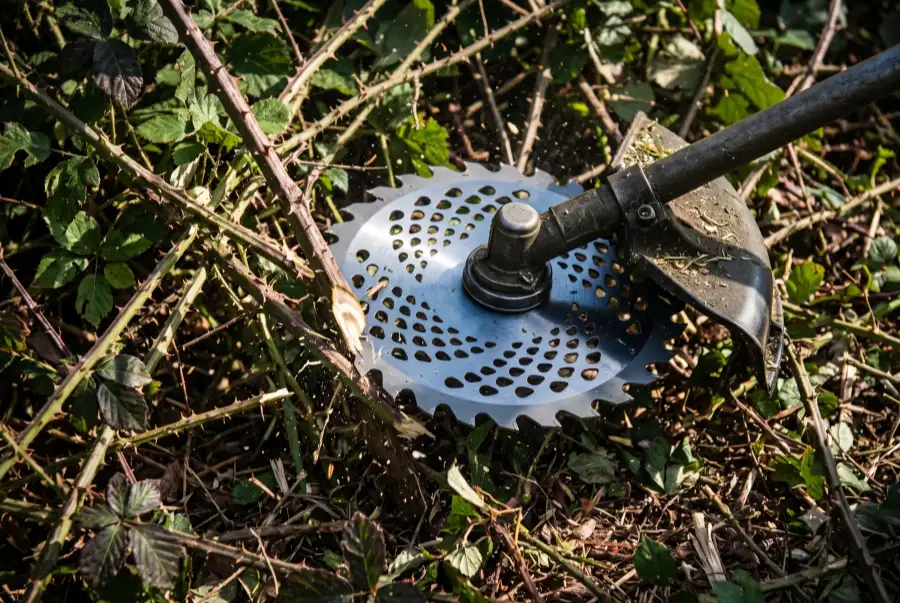
Brambles and Mixed Overgrowth
An overgrown patch may contain grass, vines, brambles, and woody shoots. The main challenge could be tangled growth, thicker stems, or both.
If flexible, tangled growth makes up most of the job, a hardened-steel brush knife designed for it is often a sensible choice. Where substantial woody stems dominate, a suitable saw-style blade may be more appropriate. That design decision comes before choosing steel or carbide tips.
Check the blade’s stated applications and the stem sizes involved. “Brambles” alone does not tell you enough about a patch to choose the right cutting attachment.
You may also need to change attachments between parts of the job. A blade that handles woody stems well may be less convenient for clearing the surrounding tangled grass.
Woody Brush and Small Saplings
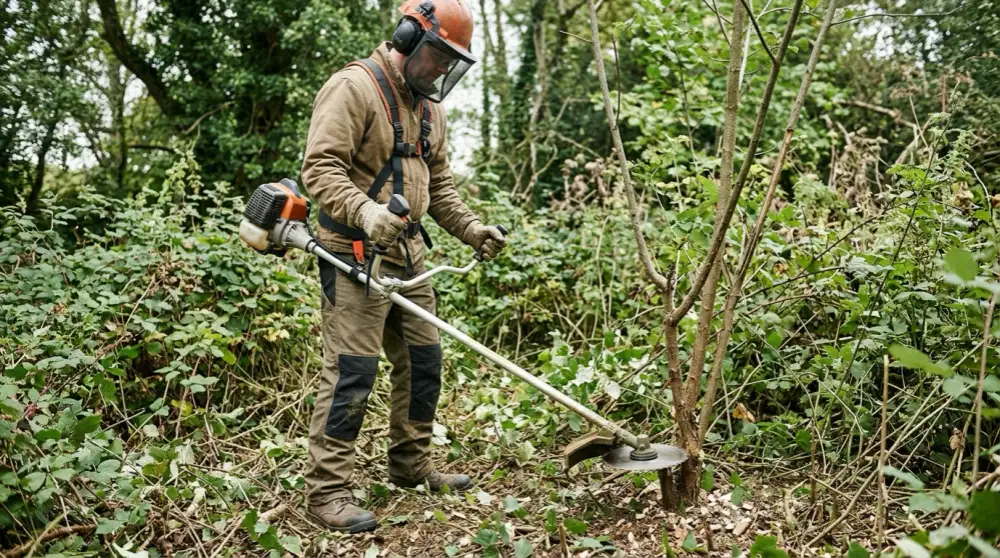
Steel and TCT saw-style blades can both handle woody growth when their designs suit the task and the machine permits their use. Carbide tips are not necessary for every woody cutting job.
If a steel blade cuts the stems effectively, it remains a valid option. TCT becomes worth considering when ordinary edge wear reduces cutting performance too quickly. A premium material offers little benefit if the blade design is wrong for the stems in the first place.
Do not assume carbide tips increase the size of stem your brush cutter can safely handle. Cutting capacity depends on the machine, blade design, and plant characteristics. Stay within the manufacturer’s permitted applications.
Regular Use and Frequent Dulling
Frequent maintenance does not automatically mean you need a TCT blade. First, check why cutting performance has dropped.
Gradual edge wear may make a compatible TCT blade worth considering. Chipped teeth, bends, or repeated impact damage point to other problems that a harder cutting edge will not solve.
Your maintenance preferences matter too. Steel may suit you if you sharpen blades yourself. TCT may be more appealing if longer intervals between sharpening are worth the added servicing cost.
If your current blade cuts well and its upkeep is manageable, there is no need to switch just because TCT is available.
Conclusion
The better blade is the one that handles your vegetation well and has maintenance requirements you can manage.
Before buying, identify what you want to improve: cutting performance, sharpening frequency, or running costs. Then compare blades designed for the job and approved for your machine, checking their specifications and mounting requirements. That gives you a practical reason to choose steel or pay extra for TCT, rather than relying on the material name alone.
FAQs About TCT vs Steel Brush Cutter Blades
Do not assume a woodworking blade is suitable, even if the mounting hole fits. Use a brush-cutting blade approved for your machine, with the correct size, speed rating, mounting parts, and required protective equipment.
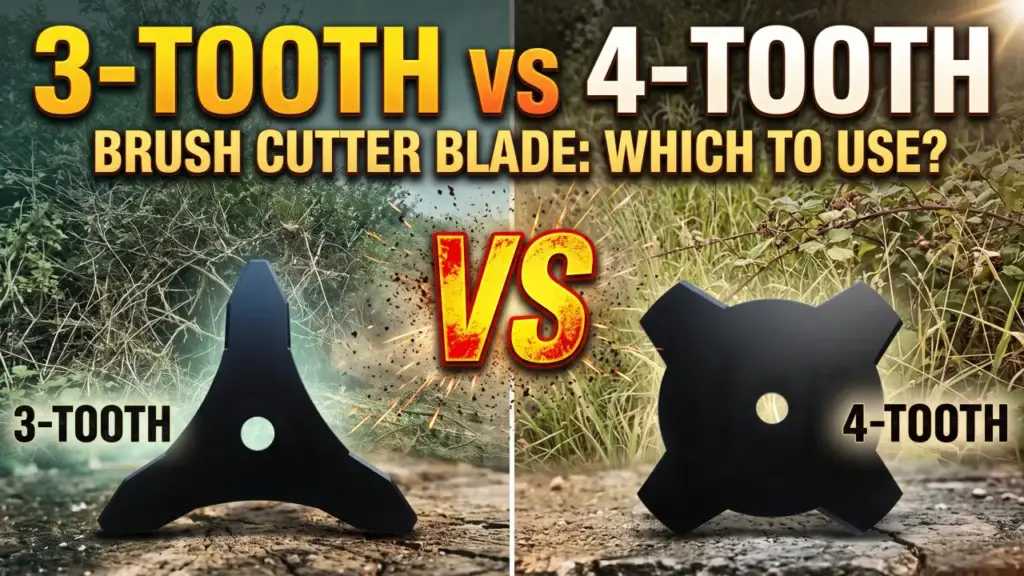
No. Multi-tooth blades can have steel cutting edges or carbide tips. Tooth count describes the blade design; TCT describes the cutting-edge material. Check the product specifications.
Compare similar designs on the same type of vegetation under similar conditions. Track cutting performance, work completed between sharpening sessions, maintenance costs, and damage, not lifespan alone.
Yes. Its steel body can rust. Clean and dry the blade before storage, keep it somewhere dry, and follow the manufacturer’s corrosion-protection instructions.