A supplier can pass all these initial requirements and still fail when it comes time to fulfill your order. While good samples, competitive pricing, and quick response times are important, they won’t always tell you if they can produce a blade consistently.
These are some of the things you want to know when evaluating a TCT saw blade manufacturer. You want to make sure they can do what they say, without risking your investment.
In this article, we will cover ways to identify who is making your blade and evaluate their knowledge of the application. We will also discuss specifications, samples, manufacturing processes, traceability, and handling complaints. Finally, we will provide a list to help you evaluate your supplier.
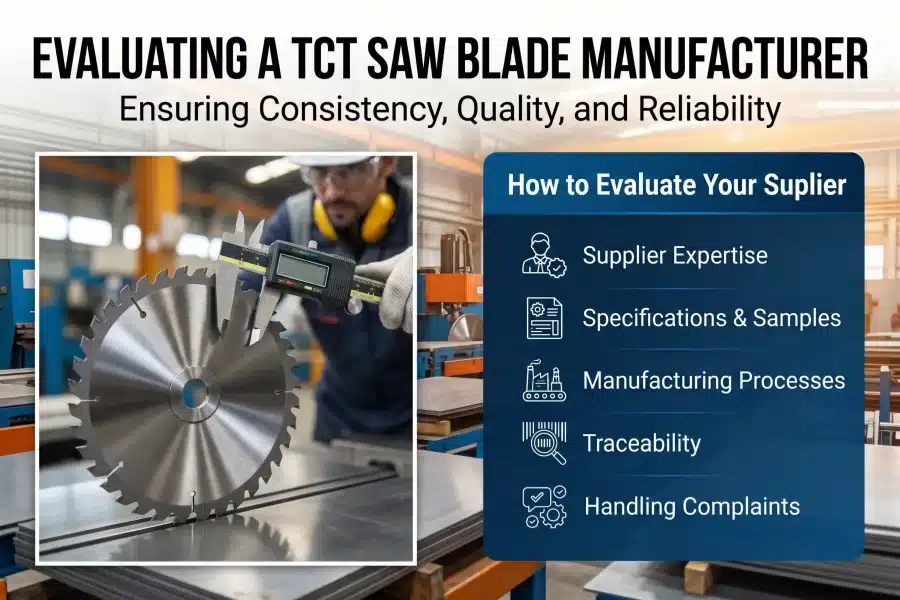
Table of Contents
- Who Actually Makes Your Blades?
- Does the Supplier Understand Your Cut?
- How Does the Supplier Keep Your Specification Fixed?
- What Should a Supplier’s Sample Process Look Like?
- Which Production Steps Should You Look At?
- How Can a Blade Be Traced Back to Its Batch?
- What Documents Should a Supplier Be Able to Show You?
- How Are Complaints and Daily Communication Handled?
- What Should Your Evaluation Checklist Include?
- Conclusion
- FAQs
Who Actually Makes Your Blades?
There are great blades that are made by companies that don’t even have a grinder, and bad ones that leave the factory. So who is doing what?
A manufacturer will typically produce at least some of the blades on-site. Which means you are more likely to speak to someone who knows how the machine works. In contrast, a trading company will source from one or multiple factories and manage your order. A good trading company will have more variety and local knowledge.
To be sure you are getting quality products, find out from your supplier which factory produces your blades and what operations they handle there. Cross-reference this with their company registration. If your supplier is a trading company, ask if they use one factory or many. Make sure they tell you about any changes, as these might impact your blades.
Does the Supplier Understand Your Cut?
The questions a supplier asks when requesting an RFQ can tell you a lot about their expertise. A supplier should be asking you what you’re cutting into. What saw are you running, and what are your feed and finish requirements? These details will dictate tooth grind, hook angle, kerf, and carbide more than diameter.
Additionally, describe a problem you’re having with your current blade. Maybe you’re getting bottom face chips when cutting melamine. Or a burr on an aluminum profile. If the engineer knows their stuff, they should ask how you’re supporting the panel or clamping the profile. If they just give you a higher grade tooth, you are probably dealing with someone who sells from a catalog.
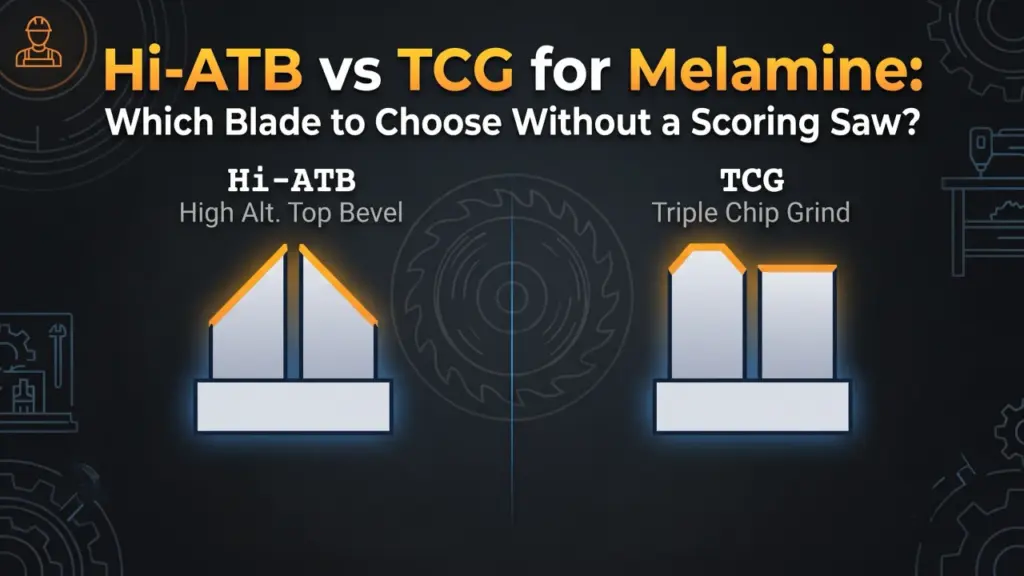
A clear TCT saw blade RFQ gives suppliers the facts, and their replies show how closely they read it. Our articles on ATB vs FTG vs TCG tooth grinds and hook angle can help you weigh those replies.
How Does the Supplier Keep Your Specification Fixed?
There are many factors that will cause a drift in your batch. Most are due to small changes that may not have been communicated. New carbide, plates from a different source, or even a slight change in grinding parameters can affect how your blade will perform.
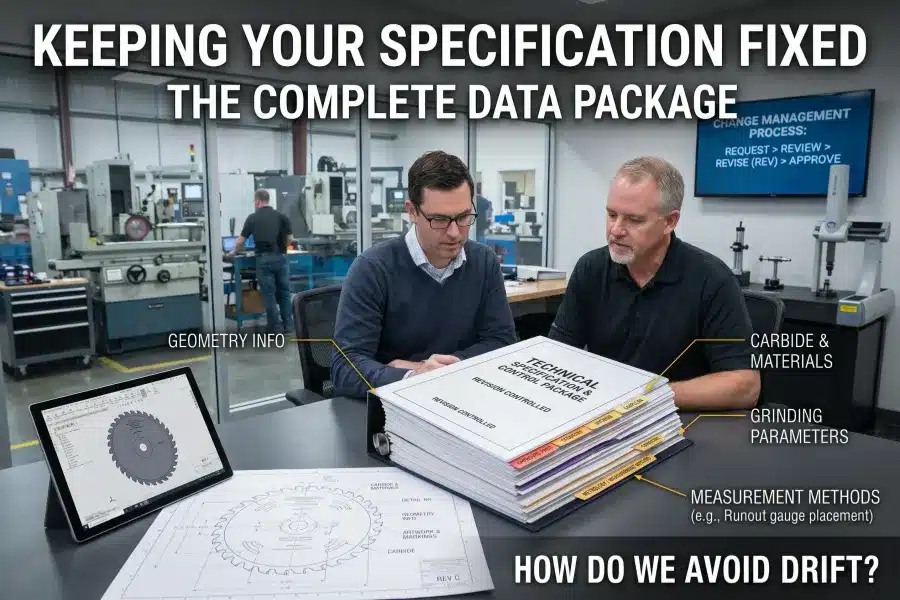
This is why most reputable suppliers will keep all information on one package. This package will include your approved print, geometry info, artwork, and sample number, all marked with a revision. Find out where this package is stored and who has access to it.
What happens when a change needs to be made? From you or them. There should be a revision issued, and you should be notified and approve before any changes are made. Everyone does this differently. Listen to their explanation and ask for an example.
Something else to remember is that the package should contain how key features are measured. An example would be runout. When measuring runout on a blade, it can vary depending on the arbor and flange used, as well as where you place your gauge. You could have a blade that meets specification at the supplier and not meet specification at your facility.
What Should a Supplier’s Sample Process Look Like?
The sample must be made in the same manner as it will be produced. Ask if samples are pulled from the line or if they are made in a different location. If the blade was hand-finished, it may look great but not represent what will be in the carton down the road.
Every sample should have its code number, specification revision, and results noted with it. When you accept a sample, you and your supplier should both retain a blade from that sample. This way you have a blade to compare to when the next cartons come in.
Ask what your supplier will do if a sample fails. A good supplier will tell you what they plan on doing to correct the issue. Here is our article on sample evaluation, which covers how to run the trial itself.
Which Production Steps Should You Look At?
Every step in making a TCT blade protects a different part of the cut and deserves its own question. The table below shows what each step controls and what to ask.
| Production Step | What It Controls | Worth Asking |
| Plate cutting and heat treatment | Plate shape, hardness and toughness | Is this done in-house or by a partner? |
| Tensioning | Flatness and stability at speed | How is flatness checked before tipping? |
| Tip brazing | How well carbide tips hold under impact | How is joint quality checked on each batch? |
| Grinding | Tooth height, angles and edge quality | Is the cycle programmed, or set by an operator? |
| Balancing | Vibration during the cut | Is every blade checked, or only a sample? |
| Coating or finishing | Surface protection and buildup on the plate | Who applies it, and to which areas? |
| Marking | Identity and traceability of each blade | What code is applied, and what does it link to? |
Then, focus on what matters most for your blade. If you’re using a thin kerf panel blade on a sliding table saw, you will want to know about plate tension and flatness. If you’re using an aluminum blade on an automatic saw, you want to know about their ability to grind the blade consistently. It doesn’t matter if the supplier has a big facility if they overlook this critical step.
Find out what they do in-house and what they outsource. Outsourcing heat treatment, laser cutting, or coating is fine. Just ask what they check when outsourced work comes back and whether they use the same company each time. The same questions apply when they tell you about their machines. Machines are only as good as how they are run. A live video walkthrough, or an audit for larger orders, shows how your blade type is really made.
How Can a Blade Be Traced Back to Its Batch?
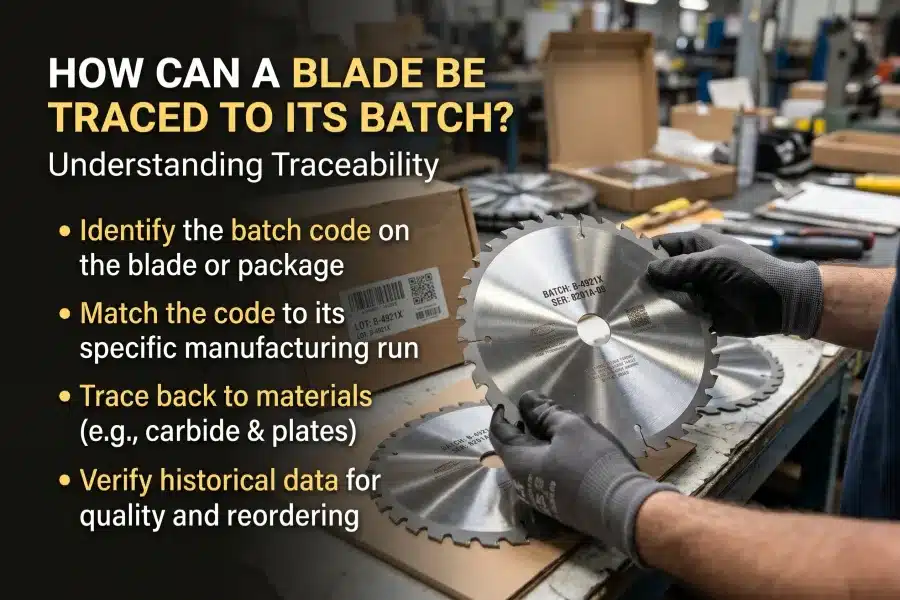
When a customer reports a problem, the first thing you need is the blade’s history. Traceability allows you to trace that blade back to its manufacturing run and all information that can be associated with that run. If you can’t do this for the blade at hand, neither you nor the supplier will know where to start.
Find out what coding is used on the blade or package. What information can you associate with that code? This will vary depending on who you sell to. A distributor selling general-purpose blades may manage lots of codes on their boxes. If your supplier is someone that sells to industries, they may want a code on each blade that can trace back to the carbide and plates used. This will also help when reordering, as you can look at the code and know what was done on that blade.
What Documents Should a Supplier Be Able to Show You?
A website can claim they have a process, but can you see that process? So, before placing your order, request documentation that shows their process, not just promotional materials.
First, you want a product drawing or spec sheet that is under revision control. Also, ask for a process flow diagram that has inspection points and maybe some current inspection reports. Material documentation is also helpful, but it should be associated with the lot you’re buying, not just any lot.
If it is relevant to your market or specification, request relevant certificates. An ISO 9001 will tell you that a quality system is in place, but it will not tell you that the blade you are buying will meet your requirements. Always verify the company name and location, then contact the issuing agency to confirm the credentials.
How Are Complaints and Daily Communication Handled?
Suppliers will inevitably have issues; it’s all about how they handle them. When you bring up an issue, ask what information they need, such as pictures, lot number, and details on how you are cutting. Additionally, inquire about how they quarantine bad product, who will look into it, and how you will be notified.
Listen for whether the investigation includes your machine. A bad bearing or dirty flange can cause a good blade to wobble.
Everyday contact gives you a preview of all this. Do they give you detailed answers and stay consistent with who answers technical questions? If they say Let me look into it you have a better chance than if they say yes to everything.
What Should Your Evaluation Checklist Include?
Use this checklist during your first conversations with a supplier.
TCT Saw Blade Manufacturer Evaluation Checklist
| Area | What to Ask | What to Request |
| Supply model | Who manufactures the blade and where? | Name of plant, business registration, steps used |
| Application knowledge | Do they ask about your cut and machine? | Written recommendation with reasons |
| Specification control | Does every order get made from the same fixed package? | Drawing and sample code with revisions |
| Measurement | Do both sides measure key features the same way? | Agreed method, fixture and gauge position |
| Change handling | How are changes from either side approved? | Change procedure or a past example |
| Sample support | Are samples made on the regular production line? | Sample record and retained blade policy |
| Production steps | What processes are done in house or subcontracted? | Sample record and retained blade procedure |
| Traceability | What does the blade or lot code link to? | Example traceability record |
| Certifications | Does it apply to your company, facility and product? | Certification verified with certifying body |
| Complaints | How is affected stock held, investigated and closed? | Complaint procedure or example report |
| Communication | Who answers technical questions after ordering? | Named contacts and escalation route |
Conclusion
First impressions are important as they can lead to the success or failure of a deal. How a supplier acts when you first start working with them can shape your initial perception. Additionally, samples and documents can also play a role in how a supplier makes you feel. However, first impressions only allow you to know that a supplier can do what they are supposed to at that moment. It’s up to you to determine if they will continue to do so after the first shipment. By asking the right questions found in this guide and doing your due diligence, you can ensure you know what to look for.
Need TCT saw blades made to your application? Reach out and let us know what you’re looking for. We can provide specifications, samples, and OEM work.
FAQs
It all depends on the risk involved. If you are ordering standard blades for a trial, you can most likely get away with work papers and samples. Maybe even a video tour. However, if you’re going to order a custom design or larger program, it would be wise to do an audit on-site or have someone else do it for you.
Yes, if there are any changes to the factory, material, or what you’re ordering. It is a good practice to review any previous complaints and keep records, including samples on hand to verify your findings from your last audit.
It is advisable to involve someone who purchases your saws and someone who uses or repairs them. The buyer can go through the documentation and read the contract terms. There should also be an operator who is available to pick up on any technical deficiencies.