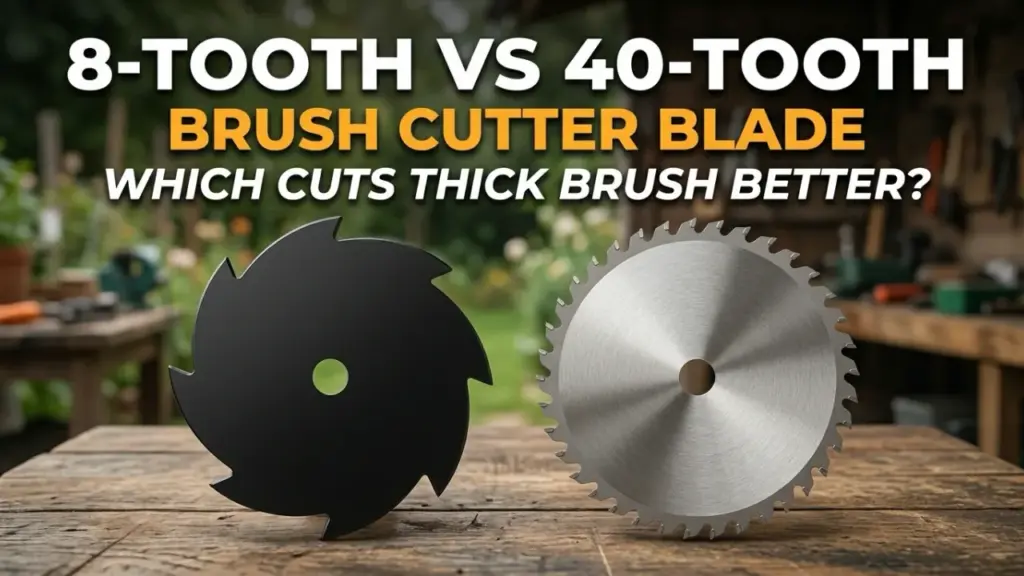
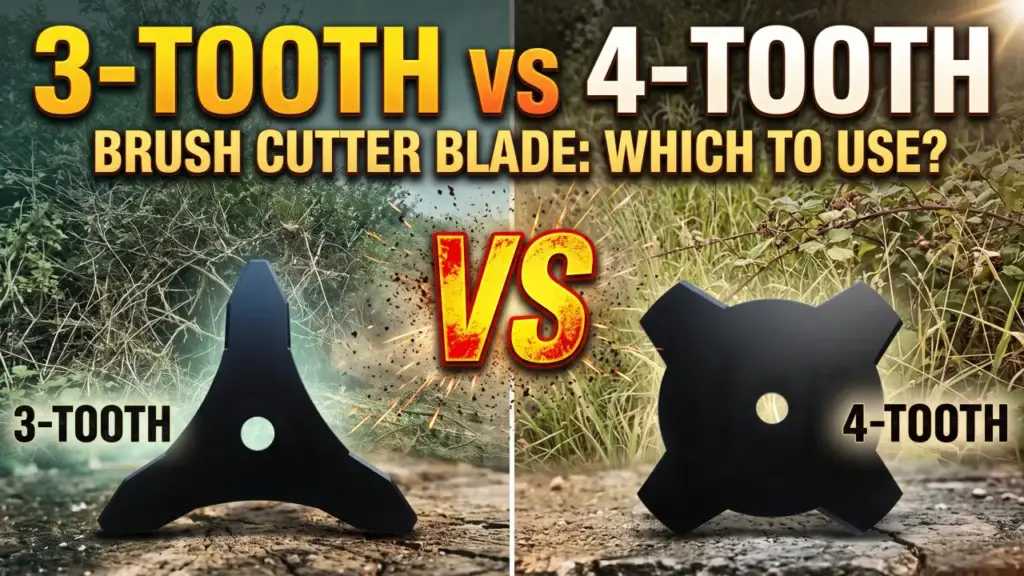
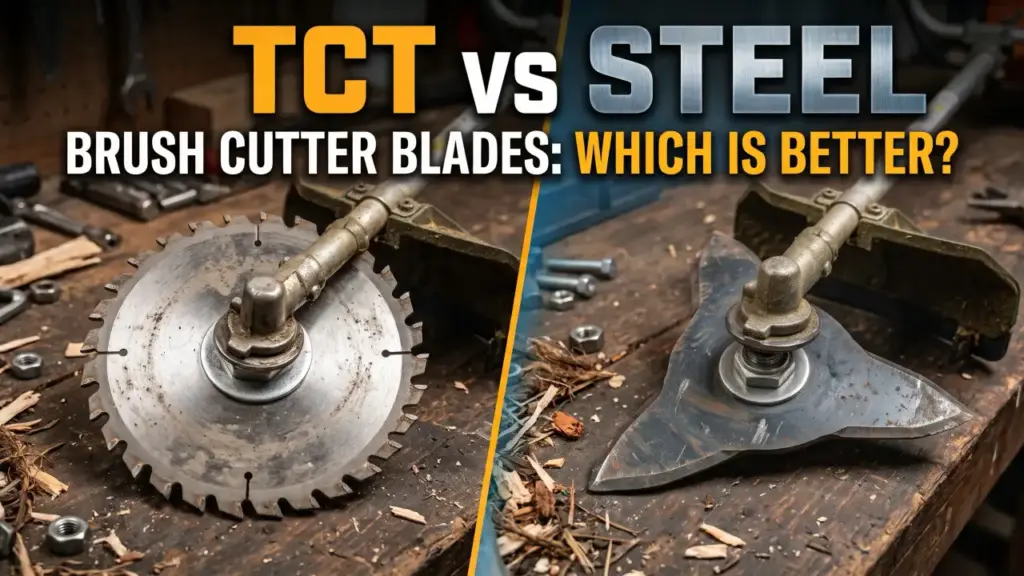
When thick brush takes over your yard, the last thing you want is to spend half the day fighting with the wrong blade. An 8-tooth blade might make quick work of tall grass, but what happens when you run into tangled vines or young saplings? A 40-tooth blade may look like the heavier-duty option, but that doesn’t automatically make it the better choice for every job.
The difference comes down to the vegetation you’re clearing and what each blade is designed to handle. This guide compares 8-tooth grass-cutting blades and 40-tooth saw blades, looks at how they perform across different types of thick brush, and explains when another tool might save you time and effort.
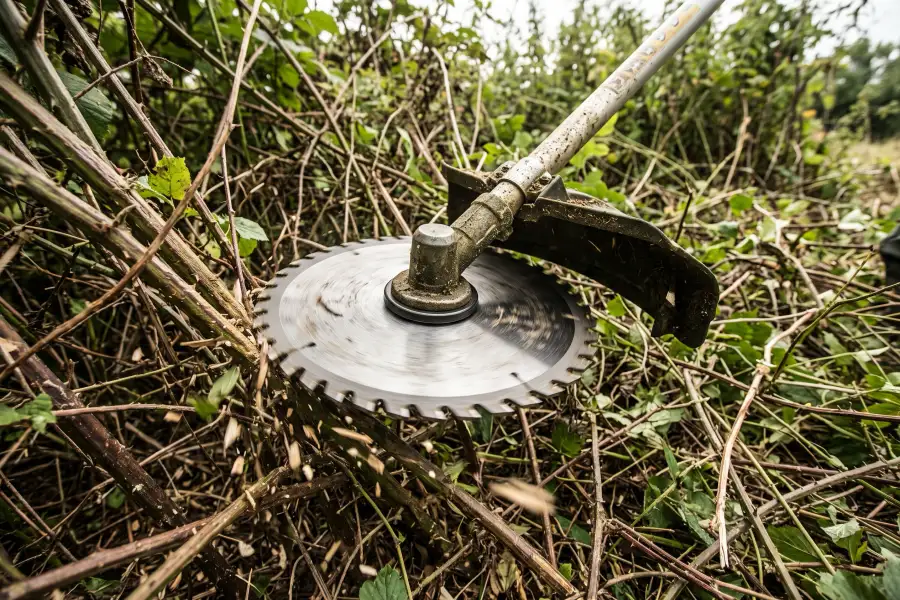
Table of Contents
- What Is the Difference Between an 8-Tooth and 40-Tooth Brush Cutter Blade?
- Which Blade Should You Use for Different Types of Thick Brush?
- What Should You Check Before Choosing a Brush Cutter Blade?
- Conclusion
- FAQs About 8-Tooth vs. 40-Tooth Brush Cutter Blades
What Is the Difference Between an 8-Tooth and 40-Tooth Brush Cutter Blade?
An 8-tooth grass-cutting blade is generally intended for thick grass and herbaceous weeds, while a 40-tooth saw blade is designed for suitable woody growth. That difference affects not only what each blade can cut, but also which one makes more sense for the job in front of you.
The table below compares their typical uses, cutting action, and limitations. Keep in mind that these are general differences between the two blade types, not universal rules for every blade with eight or 40 teeth.
Table 1. 8-Tooth vs. 40-Tooth Brush Cutter Blade: Key Differences
| Feature | 8-Tooth Grass-Cutting Blade | 40-Tooth Saw Blade |
|---|---|---|
| Primary use | Thick grass and herbaceous weeds | Woody brush and suitable saplings |
| Cutting action | Cutting edges suited to grass and fibrous weeds | Multiple teeth arranged for sawing through suitable woody stems |
| Best suited to | Areas dominated by grass and soft-stemmed growth | Areas with woody stems within the blade’s permitted cutting capacity |
| Performance on woody stems | Generally not intended for substantial woody growth | Better suited to woody growth when the blade is approved for that use |
| Performance in dense grass | Often a practical choice for grass-dominant clearing | May be less suitable for some grass-heavy conditions, depending on blade design |
| Main limitation | Not a substitute for a blade approved for woody cutting | Not automatically the best choice for grass, and may not be approved for every machine |
More teeth don’t automatically mean a blade is better at every task. Tooth shape, blade construction, and the manufacturer’s intended use all matter. Two blades with the same tooth count can have different cutting capabilities, so check the specifications of the blade you’re actually using.
For a broader look at how tooth count affects cutting performance, see our guide to how many teeth a brush cutter blade should have.
Which Blade Should You Use for Different Types of Thick Brush?
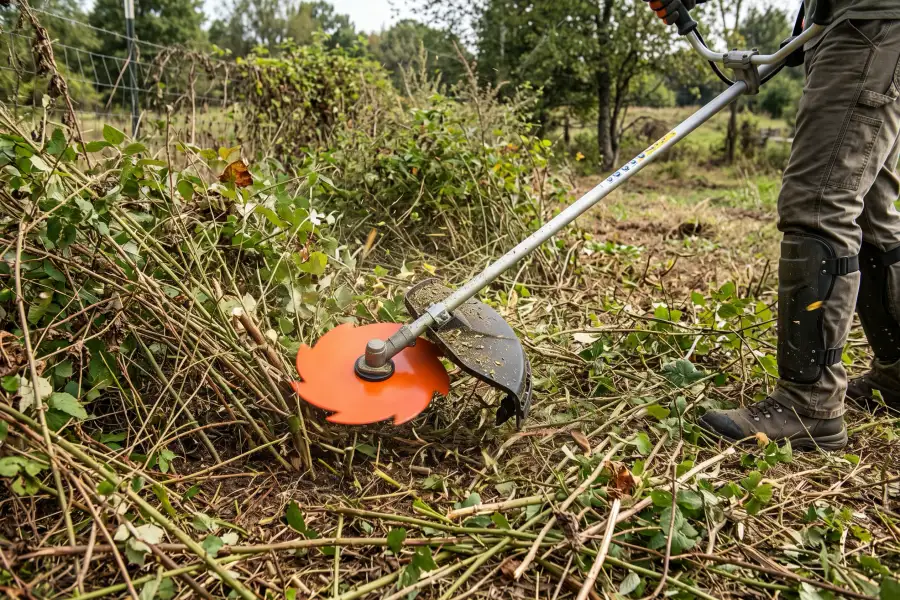
A patch of thick brush rarely consists of just one kind of plant. You might have tall grass along the edges, coarse weeds in the middle, and woody stems tangled underneath. The best starting point is to identify what makes up most of the growth, then account for the tougher sections.
The table below gives you a quick recommendation for common clearing jobs, including a few situations where a different tool may be more practical.
Table 2. Best Brush Cutter Blade for Different Types of Thick Brush
| Thick Brush Type | Blade to Consider | Practical Tip |
|---|---|---|
| Thick grass and nettles | 8-tooth grass-cutting blade | For mostly soft growth, a heavy-duty grass-cutting blade may be more practical than a saw blade. |
| Coarse weeds and dense mixed vegetation | 8-tooth grass-cutting blade | Consider a heavy-duty brush knife designed for coarse grass and weeds. |
| Vines and brambles | 40-tooth saw blade for woody growth; 8-tooth grass-cutting blade for soft growth | Use loppers to separate tangled vines before cutting. A pruning saw may be better for thicker woody stems. |
| Young saplings and woody growth | 40-tooth saw blade approved for woody cutting | Use loppers or a pruning saw if stems exceed the blade’s permitted cutting capacity. |
| Mixed grass, vines, and saplings | Use an 8-tooth blade for grass-dominant areas and a suitable 40-tooth saw blade for woody growth, if the machine permits | For a few scattered saplings, hand tools may be quicker than changing blades. |
These recommendations are a starting point, not a reason to force one blade to handle every plant in the area. The type of stem, how the vegetation grows, and how much of it you need to clear can all change the most practical approach.
Thick Grass and Nettles
An 8-tooth grass-cutting blade is generally a good choice for thick grass and nettles. These plants can be tall and dense without having the woody stems that call for a saw blade.
If the grass is mixed with tougher, coarse weeds, the blade’s design becomes more important. A heavy-duty grass-cutting blade made for that kind of vegetation may be a better fit than a standard design. There’s little benefit in choosing a saw blade simply because the grass looks intimidating; what matters is whether the blade is suited to the material you’re cutting.
Coarse Weeds and Dense Mixed Vegetation
For coarse weeds and dense vegetation dominated by soft-stemmed plants, an 8-tooth grass-cutting blade may still be suitable. Where the growth is particularly tough or packed tightly together, a heavy-duty brush knife designed for coarse grass and weeds may be worth considering.
Density alone doesn’t tell you which blade to use. A thick stand of herbaceous weeds is a different cutting job from a patch of woody brush, even if both are difficult to get through. If you find woody stems mixed in with the weeds, assess those separately rather than assuming a more aggressive blade will be better for the entire area.

Vines and Brambles
Vines and brambles are trickier because the problem isn’t always the thickness of the stems. Growth can be tangled together, wrapped around other plants, or hidden beneath grass, making it difficult to reach and cut individual stems cleanly.
A 40-tooth saw blade approved for woody cutting may suit woody vines and stems within its permitted cutting capacity. Softer, herbaceous growth may be better handled with an appropriate grass-cutting blade.
For a heavily tangled patch, though, switching blades won’t necessarily solve the problem. Cutting accessible stems with loppers first can open up the area and make the remaining growth easier to manage. A pruning saw may be the more practical choice for thicker woody stems that are difficult to reach safely with a brush cutter.
Young Saplings and Woody Growth
For suitable young saplings, a 40-tooth saw blade approved for woody cutting is generally more appropriate than an 8-tooth grass-cutting blade. The important question is whether the particular blade is rated for the size of stem you’re trying to cut.
Don’t assume every 40-tooth blade can cut the same diameter. The manufacturer’s instructions may specify limits for woody growth, and the machine must also be approved for that blade. If a sapling is beyond the permitted cutting capacity, use loppers if the stem is within their rated capacity, or a pruning saw for thicker growth. Forcing a blade beyond its intended use isn’t a shortcut worth taking.
Mixed Grass, Vines, and Saplings
When grass, vines, and saplings grow together, the most suitable blade may change from one part of the area to another. An 8-tooth grass-cutting blade makes sense for grass-dominant sections, while a compatible saw blade may be needed for substantial woody growth.
That doesn’t mean you have to switch blades for every stray sapling. If there are only a few scattered stems, cutting them separately with loppers or a pruning saw may take less time than changing the brush cutter setup. If woody growth is widespread, switching to a suitable saw blade may be worthwhile. Think about how much of each type of vegetation you need to clear, not just whether it’s present.
What Should You Check Before Choosing a Brush Cutter Blade?
Before choosing a blade, check that it suits both the vegetation and the machine. A blade that fits the mounting point isn’t necessarily approved for use on your brush cutter.
- Intended use and cutting limits: Check whether the blade is designed for grass, weeds, or woody growth. If the manufacturer specifies a maximum stem diameter, stay within that limit.
- Machine compatibility: Confirm that the blade, mounting hardware, guard, and any other required components meet the machine manufacturer’s specifications.
- The actual clearing job: Consider how much of the area is grass, how much is woody growth, and whether tangled sections would be easier to separate with hand tools before cutting.
These checks matter more than the tooth count printed on the packaging. If you’re unsure whether a blade is suitable for a particular task, consult the blade and machine instructions before using it.
Conclusion
An 8-tooth grass-cutting blade is generally the practical choice for thick grass and herbaceous weeds, while a suitable 40-tooth saw blade is intended for approved woody cutting. Mixed vegetation takes a little more thought: sometimes switching blades makes sense, and sometimes a pair of loppers or a pruning saw gets the awkward parts out of the way faster.
Rather than choosing by tooth count alone, match the blade to the growth you’re cutting and check its permitted use before you start.
FAQs About 8-Tooth vs. 40-Tooth Brush Cutter Blades
An 8-tooth grass-cutting blade is generally intended for grass and weeds, not woody saplings. Use a blade specifically approved for woody cutting, and follow its permitted stem-size limits.
A 40-tooth saw blade is primarily designed for suitable woody growth. For thick grass and herbaceous weeds, a suitable grass-cutting blade is usually the more practical choice.
Switching blades can make sense when woody growth is widespread and your machine permits the replacement blade. For a few scattered saplings, hand tools may save time and avoid an unnecessary blade change.